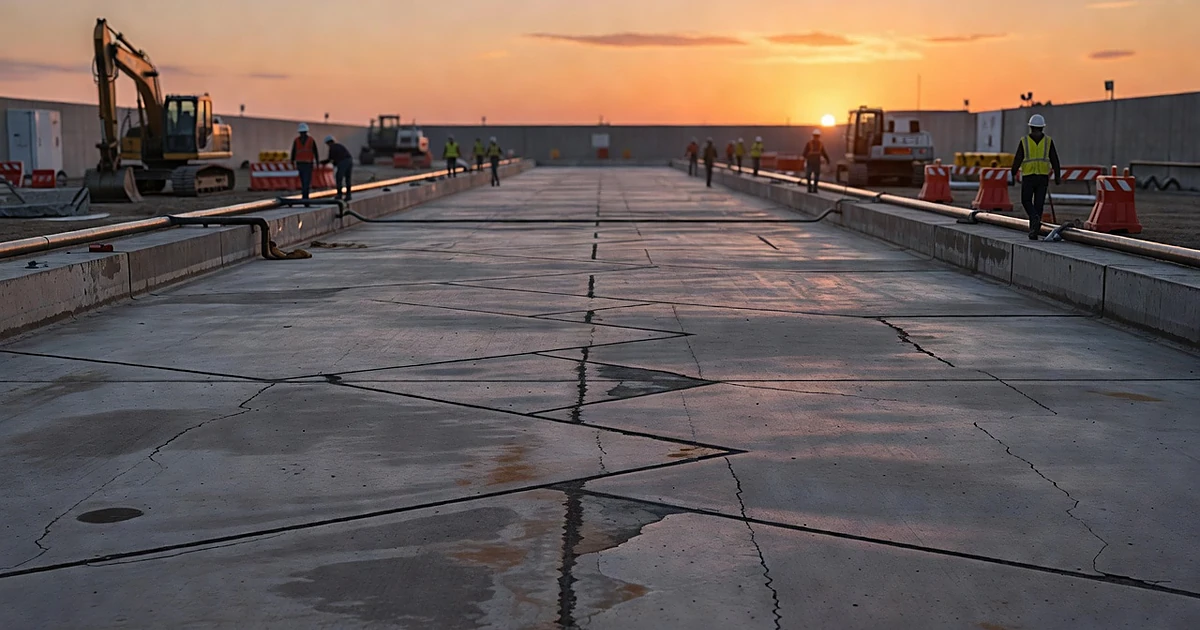
Excavation begins at Irish site holding remains of nearly 800 children
The long-awaited excavation has commenced at the grounds of a former religious institution in western Ireland, where hundreds of infants and young children are believed to be buried in unmarked graves.
According to Fox News, Irish authorities have started recovering the remains of an estimated 800 children from the site of the former Bon Secours Mother and Baby Home in Tuam, a facility that symbolized the mistreatment of unmarried mothers and their children for decades.
The excavation effort, led by Daniel MacSweeney, officially began in Tuam, County Galway, where the Bon Secours Mother and Baby Home once operated under the management of Catholic nuns from the early 20th century until its closure in 1961.
This particular institution was one of many in Ireland that housed unmarried pregnant women and their children during the 1900s. It came under intense scrutiny after revelations of systemic neglect and high infant mortality rates emerged nearly a decade ago.
Historian Catherine Corless played a central role in bringing national attention to Tuam in 2014 when she discovered close to 800 death certificates for children associated with the home between the 1920s and 1961, yet only a single corresponding burial record was found.
Discovery of Mass Grave Sparks Public Outcry
The subsequent discovery of a mass grave within a former sewage structure on the site confirmed long-held suspicions. Forensic analysis validated that the remains belonged to children ranging in age from a little over 35 weeks of gestation to approximately 3 years old.
An unofficial memorial was created at the Tuam graveyard, featuring a card listing the 796 names found during Corless’s research. This discovery intensified public debate, eventually leading to a government inquiry.
In 2021, the Irish government released findings from a formal investigation into mother-and-baby homes, including the Bon Secours site. The final report acknowledged wide-scale neglect and documented that approximately 9,000 children had died across 18 similar facilities.
Public Apologies and Official Action
As the report was made public, Irish Prime Minister Micheal Martin issued a state apology, admitting the state’s role in failing vulnerable mothers and children. The Bon Secours Sisters who ran the Tuam home also apologized, expressing sorrow for their failure to safeguard women and infants under their care.
“It’s a very, very difficult, harrowing story and situation,” Martin said earlier this week. “We have to wait to see what unfolds now as a result of the excavation.”
MacSweeney, who is leading the excavation, described the operation as “unique and incredibly complex.” The two-year process will involve detailed forensic work to analyze, preserve, and, where possible, identify remains.
Plans for Remains and Support for Families
Authorities have outlined plans to return any identified remains to the next of kin. Those that cannot be identified will be respectfully reburied following analysis.
Family members and survivors will be permitted to view parts of the excavation process—an effort intended to promote transparency and provide some measure of closure to those affected.
As of June 2025, no response was provided by MacSweeney or Ireland’s National Police and Security Service, An Garda Síochána, to media inquiries regarding the project's current status or findings.
Legacy of Institutional Abuse Still Unfolding
The Tuam case has become emblematic of Ireland’s broader reckoning with abuses committed in Church-run institutions throughout the 20th century. Survivors and advocates continue to push for greater accountability and reparations.
Ongoing interest in the excavation reflects a national desire to uncover the truth and offer dignity to the children whose lives were lost. Many hope the work at Tuam will set a precedent for similar investigations at other sites across the country.
For now, the site remains a solemn reminder of the state and Church’s failings—and a place where history is slowly being unearthed, one careful layer at a time.