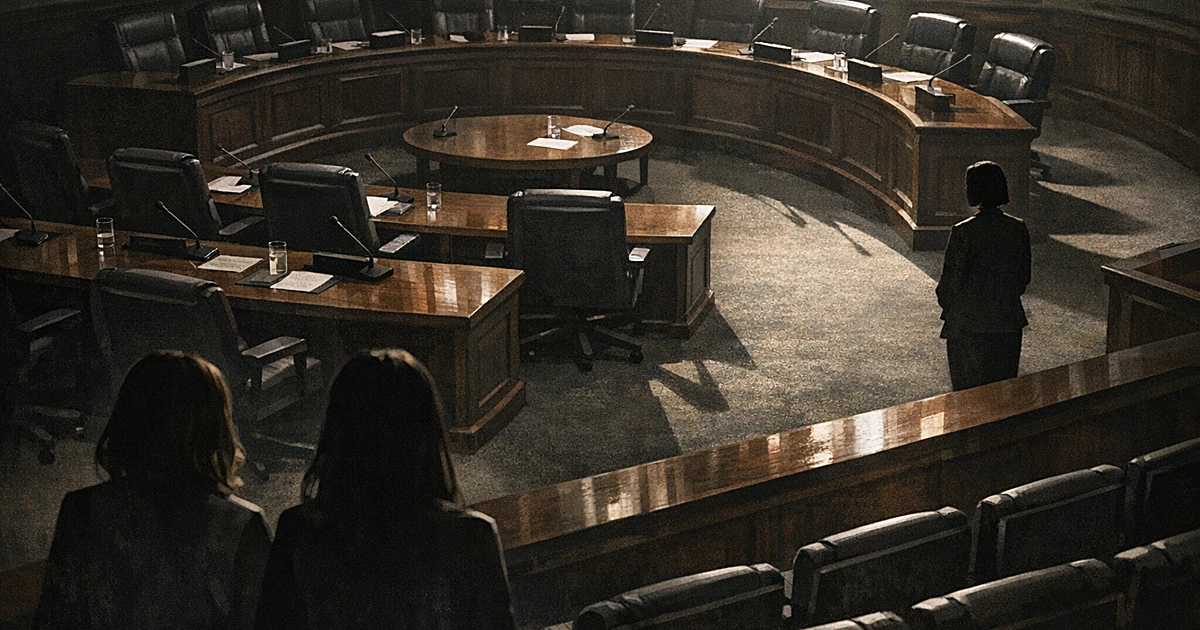
Supreme Court rulings bolster Trump’s agenda
A string of recent Supreme Court decisions has handed President Donald Trump significant latitude to push forward with contentious policies. This term's rulings, heavily favoring the administration, have sparked sharp debate over the balance of power in our government.
According to ABC News, the court's conservative majority, in a term covering 56 argued cases and over 100 emergency matters, consistently sided with Trump on critical issues. From limiting federal judges' oversight to granting presumptive immunity for "official acts," the justices have reshaped the landscape of executive authority.
Legal scholar Erwin Chemerinsky remarked that the court came down "solidly" on the "very conservative side." While his critique carries weight, it overlooks how these rulings reflect a strict interpretation of constitutional boundaries, prioritizing the separation of powers over judicial overreach.
Key Decisions Favoring Executive Power
The court’s most striking move was curbing federal judges' ability to check presidential actions, as seen in Justice Amy Coney Barrett’s opinion allowing Trump’s plan to end birthright citizenship, a policy rooted in over a century of precedent. Her words, "Federal courts do not exercise general oversight of the Executive Branch," signal a hands-off approach that many see as long overdue.
Additionally, in 12 out of 14 emergency appeals brought by Trump, the justices granted his requests at least partially, greenlighting mass layoffs of federal workers, removal of transgender military members, and deportations to third countries with minimal due process. These decisions underscore a judiciary unwilling to micromanage executive policy, even when it’s divisive.
While the court did block a freeze on $2 billion in foreign aid to nonprofits and denied a dismissal in the case of a deported Maryland migrant, these exceptions seem more like minor speed bumps than roadblocks. The broader trend is clear: the administration has a wide berth to act swiftly.
Liberal Justices Push Back Hard
The court’s liberal wing has not taken these rulings quietly, with Justice Sonia Sotomayor dissenting sharply over a decision to deport eight migrants to South Sudan, stating the administration has the court "on speed dial." Her frustration is palpable, but it sidesteps the reality that emergency appeals are often fast-tracked by design, not favoritism.
Justice Ketanji Brown Jackson went further, accusing her conservative colleagues of creating an "existential threat to the rule of law" in the birthright citizenship case. Such dramatic language feels more like a rallying cry for activists than a sober legal critique, ignoring the court’s role to interpret, not legislate.
Their dissents highlight a deeper divide, but they also reveal a reluctance to accept that the judiciary isn’t meant to be a constant brake on executive action. If every policy disagreement becomes a courtroom battle, governance itself grinds to a halt.
Legal Minds Weigh In Critically
Some scholars and attorneys, even those critical of Trump, downplay fears of judicial collapse, with conservative lawyer George Conway III predicting nationwide injunctions will soon counter the birthright citizenship policy as "absolutely absurd, insane, and unlawful." His confidence in lower courts pushing back is telling, though it raises questions about why the Supreme Court should be expected to play savior in every policy dispute.
Conway also argued that courts alone "can’t save us" and that people must take responsibility for change. This cuts to the heart of the matter: relying on black-robed arbiters to settle political scores undermines the very democratic process we claim to protect.
Meanwhile, Chief Justice John Roberts defended the court against "sharp adjectives" from critics, noting that public anger often stems from losing, not from flawed legal principles. His point stings with truth; disappointment in outcomes shouldn’t morph into distrust of the institution itself.
Future Rulings Loom Large
Looking ahead, the justices are poised to rule on a nationwide injunction blocking Trump’s large-scale federal workforce reductions across 19 agencies and offices. They’ll also decide whether to allow the elimination of most Department of Education employees as litigation over the agency’s future unfolds.
Critics like law professor Sherrilyn Ifill lament the court’s refusal to explain the impact of its rulings, accusing them of gaslighting the public. Yet, expecting detailed play-by-play commentary from justices risks turning the bench into a political podium, a role it was never meant to fill.
These pending decisions will test whether the court’s deference to executive power holds firm or if cracks begin to show under mounting public and legal scrutiny. Either way, the balance between judicial restraint and executive action remains a tightrope, one this administration seems adept at walking.