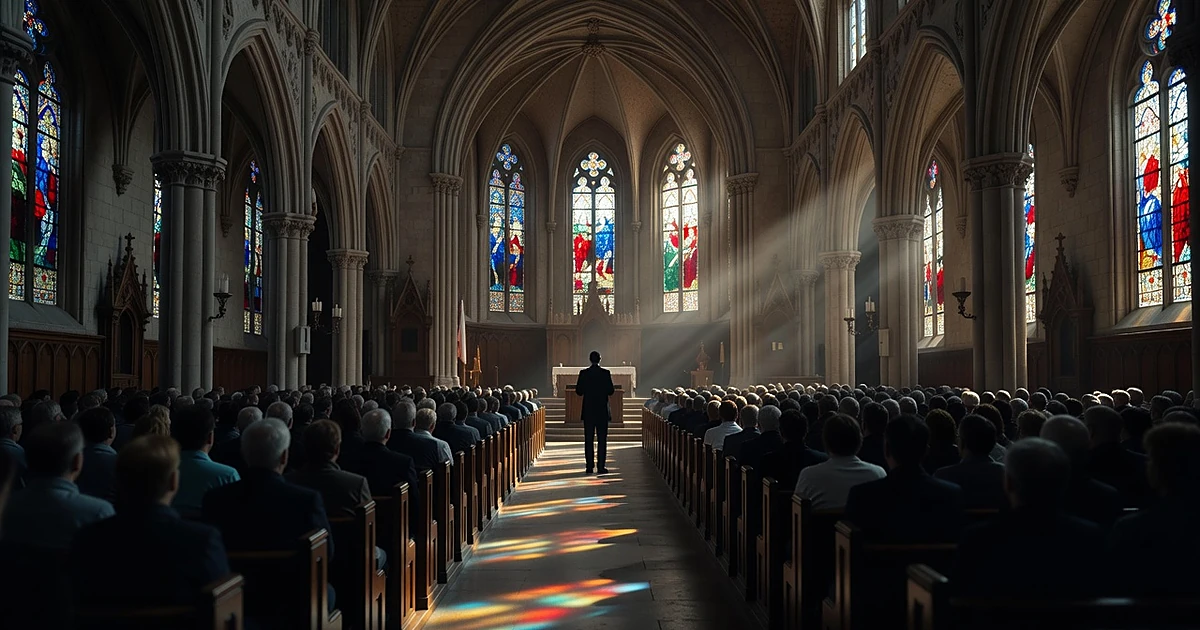
British royals attend rare Catholic funeral for duchess
For the first time in centuries, the British royal family took part in a Catholic funeral, marking a moment of deep historical significance for the monarchy and the church.
According to CNA, her Royal Highness the Duchess of Kent was laid to rest during a Requiem Mass at Westminster Cathedral on Sept. 16, 2025, following her death earlier in the month at age 92.
The duchess, born Katharine Lucy Mary Worsley, passed away on Sept. 4, 2025. Raised in the Anglican faith, she married Prince Edward, Duke of Kent, a first cousin to Queen Elizabeth II. Her decision to marry into royal life initiated decades of public and private service.
In 1994, she entered the Catholic Church, becoming the first senior royal to do so since the 17th century. Her conversion was described at the time as a personal and deeply considered choice. She noted that she had been drawn to the faith for its comfort and sense of clarity.
At her request, a Catholic funeral was held in London at Westminster Cathedral. This made her funeral a milestone, as royal funerals are traditionally Anglican in observance. The service drew hundreds of mourners, many of them family and prominent figures.
King Charles III Makes Historical Appearance
Among those attending was King Charles III, whose presence marked a historic shift. He became the first reigning British monarch to formally attend a Catholic funeral in the United Kingdom since the 16th-century Reformation.
Other senior royals at the ceremony included Prince William, Princess Catherine, Princess Anne, and Sophie, Duchess of Edinburgh. Queen Camilla was absent, reportedly due to illness. The duke of Kent, now a widower, was seated alongside their three children throughout the solemn proceedings.
The Requiem Mass was led by Cardinal Vincent Nichols, the Archbishop of Westminster. The duchess’s burial was conducted later in the day, jointly presided over by the Dean of Windsor and the Auxiliary Bishop of Westminster.
A Pontifical Tribute From the Vatican
A message from Pope Leo XIV was delivered during the Mass by Archbishop Miguel Maury Buendia, apostolic nuncio to Great Britain. The pontiff expressed sorrow at her passing.
“I was saddened to learn of the death of Her Royal Highness the Duchess of Kent,” the pope wrote in his telegram to the king and royal family. He extended his condolences and shared prayers with the duchess’s family, especially her husband and children.
The pope also acknowledged the duchess’s devotion to public duty, her charitable work, and her religious life. He praised her legacy of faith and compassion towards society’s most vulnerable.
Legacy of Faith, Music, and Service
The duchess had long been recognized for her contributions to the arts, especially her love of music. Her family described her as a woman of empathy, committed to helping young people and numerous organizations.
A fondly remembered moment from 1988 captured her playfully holding a koala on a visit to Brisbane, Australia—a reminder of her warm and approachable presence on international visits. This and many other memories were shared among mourners both in person and across the country.
Though she never held constitutional influence, her personal convictions made a lasting impression. Her conversion to Catholicism in 1994 and her decision to request a Catholic funeral both challenged and enriched royal tradition.
An Unprecedented Chapter in Royal History
The duchess's funeral not only honored a member of the royal family but also bridged deep-rooted historical divides. The monarchy, once defined by its separation from Rome, opened a new chapter by standing in solidarity with a Catholic service.
Cardinal Nichols emphasized the unique nature of the moment during the Mass, welcoming the monarch and expressing gratitude for the duchess’s witness of faith. He highlighted her example and the lasting influence her life may have on both the church and the nation.
As the ceremony concluded and the duchess was laid to rest, many observed the day as one not only of mourning but of significance, emblematic of a royal family evolving with its time while honoring the beliefs and wishes of one of its most quietly transformative figures.