Justice Alito discusses mercy’s role in law during Vatican visit
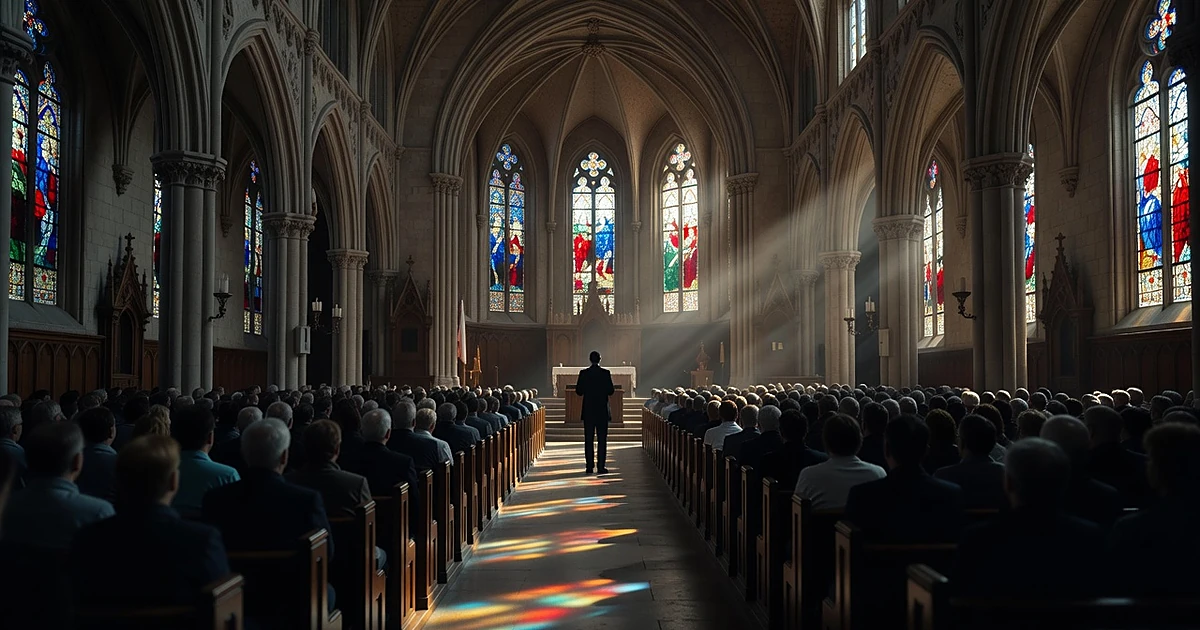
The gathering took place at the Vatican’s judicial center, the Cancelleria, a Renaissance-era building in central Rome that houses three of the Catholic Church’s major tribunals. Justice Alito, a practicing Catholic and member of the United States Supreme Court since 2006, was invited to speak as part of a special event organized by the U.S. Embassy to the Holy See, the U.S. Conference of Catholic Bishops and the Vatican’s Dicastery for Evangelization.
Jubilee event highlights justice leaders from around the world
The program was held as part of the Church’s ongoing Jubilee of Hope, with this particular event being themed as the Jubilee of Justice. Earlier in the day, Alito joined other leaders from around the world for a Jubilee audience with Pope Leo XIV in St. Peter’s Square, during which he greeted the pope personally.
In the afternoon, Alito sat down for a public conversation with Monsignor Laurence Spiteri, an American clergy member and former judge with experience in the Vatican’s marriage appeals court. The discussion lasted one hour and provided a platform for Alito to articulate his philosophical and legal thoughts on the tension between justice and mercy.
Alito noted that while justice is based on fairness and entitlement, mercy relates to compassion that transcends what is owed. He remarked, “Justice is what everyone has a right to, it is what they are due … Mercy is something that we don’t necessarily merit.”
Alito outlines branches’ roles in applying mercy
Alito explained that various parts of government carry different responsibilities for ensuring mercy is present in the justice system. Starting with legislative power, he said Congress should include allowances for mercy when drafting laws. "Mercy should be built into the laws" through the legislative process, he stated.
He then emphasized the executive branch’s role, noting that law enforcement involves discretionary power and that such discretion should be exercised with compassion. “Someone who has discretion to enforce the law should enforce the law with mercy,” he added.
The judiciary, Alito explained, is bound to apply the law as written, but judges may also have opportunities to use empathy when laws grant them leeway—such as in cases of criminal sentencing. “Sometimes the law is framed in a way that allows the judge to exercise mercy,” he pointed out.
Efforts to balance ideals remain imperfect
Despite acknowledging the importance of both principles, Alito admitted that reconciling them completely may exceed human ability. “In human terms, completely reconciling mercy with justice is probably impossible,” he said.
He added that only a higher power might fully achieve such harmony, saying, “I think probably only God can do that.” The statement reflected both his judicial experience and religious conviction, resonating with the largely Catholic audience.
The audience included high-ranking Church officials such as Cardinal Raymond Burke and Bishop Juan Ignacio Arrieta, along with Catholic legal professionals visiting Rome for the Jubilee of Justice. Their presence highlighted the Church’s global interest in promoting dialogue about ethics, law, and compassion in justice systems.
Event contributes to larger global discussion
By participating in the Vatican’s Jubilee of Justice, Alito lent the perspective of the U.S. legal system to a broader discussion within the international and religious legal community. His remarks encouraged lawmakers, government officials and judges to reflect on the moral dimensions of their work.
The event added a unique voice to the Jubilee’s ongoing observances, which aim to inspire hope and reflection among Catholics and their communities worldwide. As part of the wider Jubilee of Hope, the focus on justice called attention to how systems can both safeguard rights and show compassion.
Justice Alito’s address echoed the growing interest in ethical governance and the search for harmonious legal structures that respect human dignity. His presentation served as both a judicial analysis and a reflection on spiritual and moral challenges facing modern legal systems.