UPDATE: Charlotte bishop limits Traditional Latin Mass to single chapel
In a move that has stirred deep emotions among local Catholics, Bishop Michael Martin of the Diocese of Charlotte, North Carolina, has restricted the celebration of the Traditional Latin Mass (TLM) to a single location starting October 2, 2025.
This decision, aligning with Pope Francis’ 2021 guidelines, limits the TLM to the Chapel of the Little Flower in Mooresville, North Carolina, while halting its celebration at four parishes across the diocese, as CNA reports.
The restriction was detailed in a letter from Bishop Martin dated September 26, 2025. This announcement came after a three-month delay in enforcing the changes. The TLM, also known as the extraordinary form, will now only be offered at the recently renovated Chapel of the Little Flower within St. Therese Parish.
Chapel Capacity Raises Concerns for Community
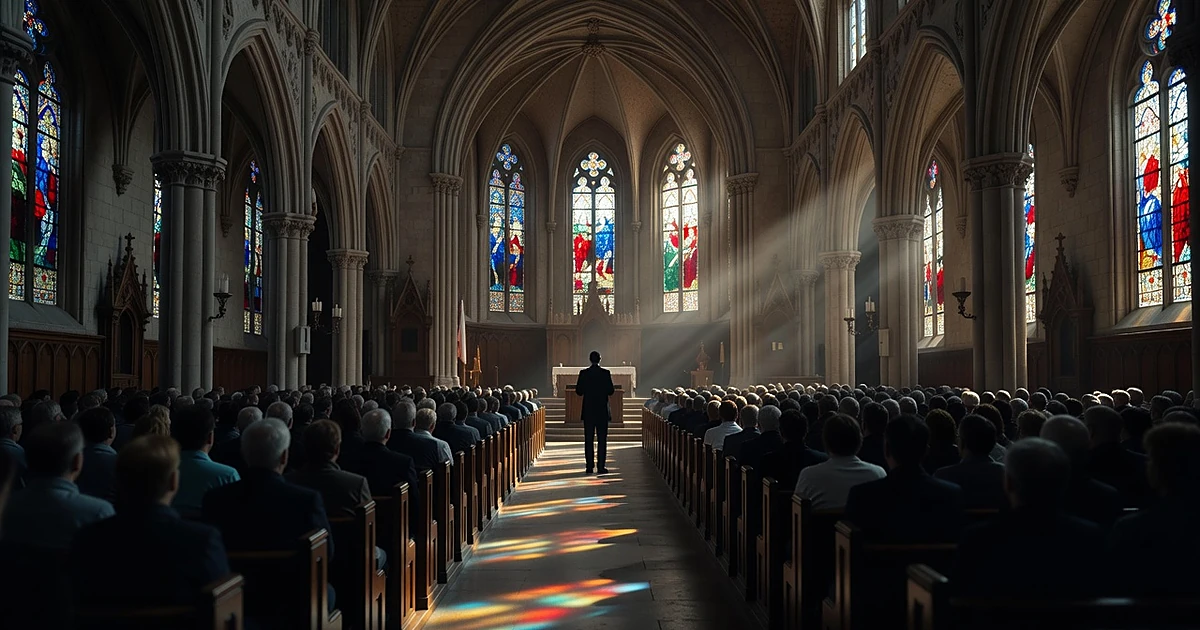
The chapel, with a capacity of just over 350 seats, will host two Masses each Sunday and on holy days of obligation. These services will be led by Father Brandon Jones, the newly appointed chaplain. However, many in the community worry that the space is insufficient for the large number of regular attendees.
Brian Williams, a longtime leader among Charlotte’s Latin Mass attendees, highlighted the disparity in numbers. He noted that nearly 700 people recently attended a TLM at St. Ann’s Parish, often considered the central hub for the community, while over 500 gathered at St. Thomas Aquinas Parish. The chapel’s limited seating means many will struggle to participate.
Additionally, the location in Mooresville poses challenges for accessibility. Many faithful will face long drives to reach the chapel, which Bishop Martin has designated as “not a parish, nor is it a parish-like community being formed for those who desire to celebrate the TLM.”
Impact of Papal Regulations on Local Worship
The shift stems from Pope Francis’ 2021 motu proprio, Traditionis Custodes, which introduced stricter rules on the TLM. This contrasts with the more permissive stance of Pope Benedict XVI’s 2007 document, Summorum Pontificum, which had encouraged wider use of the traditional liturgy. Bishop Martin’s decision reflects a broader trend of dioceses aligning with the current pontiff’s directives.
In his letter, Bishop Martin acknowledged the community’s devotion, stating he had “listened to your stories of faithfulness and the ways the TLM has enriched your spiritual journeys.” He urged attendees to embrace “faithfulness to the discipline of the Church” as a source of grace. He also encouraged them to continue attending ordinary form Masses at their original parishes.
Williams described the community’s reaction as varied, with feelings of being “sad, angry, reluctant, resigned, and everything in between.” He emphasized the deep ties to their parishes, saying, “Everything flows out of the Mass.”
Community Bonds and Vocations at Risk
Williams further lamented the potential impact on parish life, noting, “Forcing us away from our parishes weakens the community altogether and weakens the parishes we’ve left behind because we’re not part of it fully.” The TLM community in Charlotte is known for its diversity, attracting young families, singles, and various ethnic groups.
The Latin Mass has also been a significant source of vocations in the diocese. Williams pointed out that “this Mass, this parish has created vocations,” with nine young men from St. Ann’s alone entering seminarian formation over the past seven years. Additionally, at least half of the diocese’s seminarians hail from parishes with a history of offering the TLM.
The diocese has even established a minor seminary to support the growing number of boys interested in the priesthood. Williams described the community as having “really thrived organically,” with a unique “level of reverence and beauty” that draws people to the traditional liturgy.
Broader Context and Future Hopes for TLM
Similar restrictions are occurring elsewhere, such as in the Diocese of Brooklyn, New York, where Bishop Robert Brennan has canceled the TLM at St. Cecilia’s Church, the only parish in the borough offering it, effective October 12, 2025. This mirrors the enforcement of Traditionis Custodes seen in Charlotte. Neither diocese responded to requests for comment on these decisions.
Despite the challenges, Williams sees glimmers of hope for the TLM’s future, citing a recent post on X from September 29, 2025, showing a traditional Mass at St. Peter’s Basilica. He also mentioned an exemption granted to the San Angelo Diocese in Texas as a positive sign. He questioned the restrictions, asking, “Why is going to the Latin Mass a bad thing?”
Williams stressed the unity within the Catholic faith, asserting that most TLM attendees “absolutely believe in the validity of the Novus Ordo Mass.” He compared the TLM to other rites like the Byzantine or Ordinariate, arguing, “It’s all still Catholic.” For now, Charlotte’s Latin Mass community braces for a significant adjustment as they adapt to worship in a single, limited chapel.