Faith surge follows Charlie Kirk's assassination
Charlie Kirk, founder of the conservative student organization Turning Point USA, was shot and killed on Sept. 10, 2025, during a student dialogue event at Utah Valley University. The sudden and violent loss of the 31-year-old figure sent waves of grief through both political and religious communities across the country.
Widespread Increase in Faith Engagement
In the days that followed, a measurable uptick in religious activity began to emerge. According to Turning Point USA’s Faith division, church attendance nationwide rose by 15 percent. Simultaneously, Bible sales climbed notably as people sought comfort and understanding.
The organization posted on the social media platform X, formerly known as Twitter, attributing the trend directly to Kirk’s influence. In the message, the group referred to the growing interest in faith as part of the “Charlie Kirk Effect.”
“Church attendance is up 15%, Bible sales are surging,” the post read, “and faith leaders credit the ‘Charlie Kirk Effect’ for drawing a new wave of young people to Christianity.”
Faith Community Reacts to Tragedy
Pastor Jack Hibbs of Calvary Chapel Chino Hills in California, a longtime friend of Kirk, described the weeks following the tragedy as a moment of spiritual awakening. Speaking on the Fox and Friends First program, Hibbs said many Americans are beginning to ask deeper questions about life’s purpose in response to Kirk’s death.
“People are coming to us,” Hibbs said, “and they are saying, ‘I want to know the meaning of life, the purpose. Why am I here?”
The increase in church engagement has been especially notable among younger individuals, many of whom followed Kirk’s public faith-based activism throughout his career. His habit of referencing Bible verses during campus speeches made faith a central part of his public identity.
A Memorial Marked by Reflection and Prayer
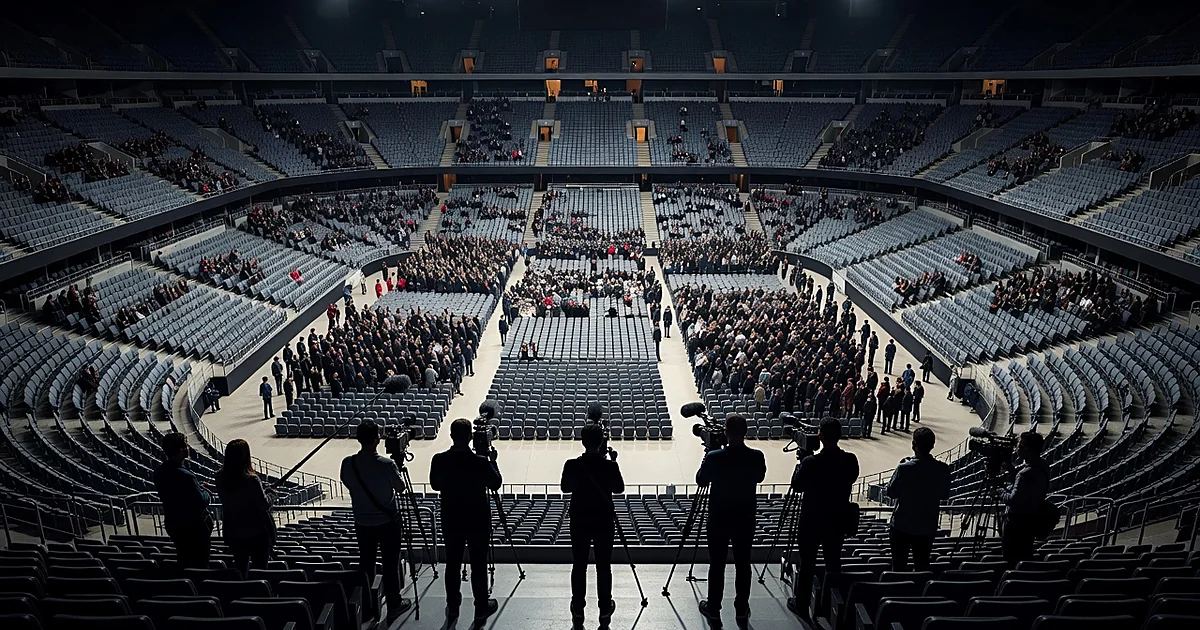
On Sept. 21, thousands gathered in Glendale, Arizona, for Kirk’s memorial service. Among the speakers was his widow, Erika Kirk, who spoke with emotion about both her personal grief and the national response to her husband’s death.
“God’s mercy and God’s love have been revealed to me these past ten days,” she said, before describing how the country reacted in ways she had not anticipated.
“After Charlie’s assassination, we didn’t see violence, we didn’t see rioting,” Erika Kirk said. “We didn’t see revolution. Instead, we saw what my husband always prayed he would see in this country: we saw revival.”
Spiritual Awakening Among Young Americans
She recounted stories of people rediscovering their faith in the middle of the national spotlight. According to Erika, “This past week, we saw people open a Bible for the first time in a decade, we saw people pray for the first time since they were children. We saw people go to a church service for the first time in their entire lives.”
Kirk’s commitment to his personal beliefs was often highlighted in his speeches and interviews. He consistently described his Christian faith as his core value, one that guided his public and private life.
In a previously recorded conversation now being shared widely, Kirk stated, “I want to be remembered for courage for my faith. That would be the most important thing. The most important thing is my faith in my life.”
A Shift From Unrest to Positive Change
Faith leaders and political commentators have been surprised by the direction the public reaction has taken. Rather than resulting in social turmoil or political strife, as often expected after such a polarizing figure’s death, the aftermath of Kirk’s assassination has taken a decidedly spiritual direction.
The ongoing response has been marked more by community gatherings, worship services, and prayer circles than by protests or public outrage. The tone of public conversation has focused on introspection and unity through belief rather than division.
For those close to Kirk and within the broader Turning Point USA network, the movement toward renewed spiritual interest echoes his life’s mission. His supporters believe he would have seen the rise in church attendance not as a tribute to him, but as an awakening of the principles he held most dear.