Department of Education issues guidance requiring public schools to allow prayer
The U.S. Department of Education issued formal guidance on Feb. 5, reminding public schools across the country of something that should never have needed reminding: the Constitution protects prayer in schools.
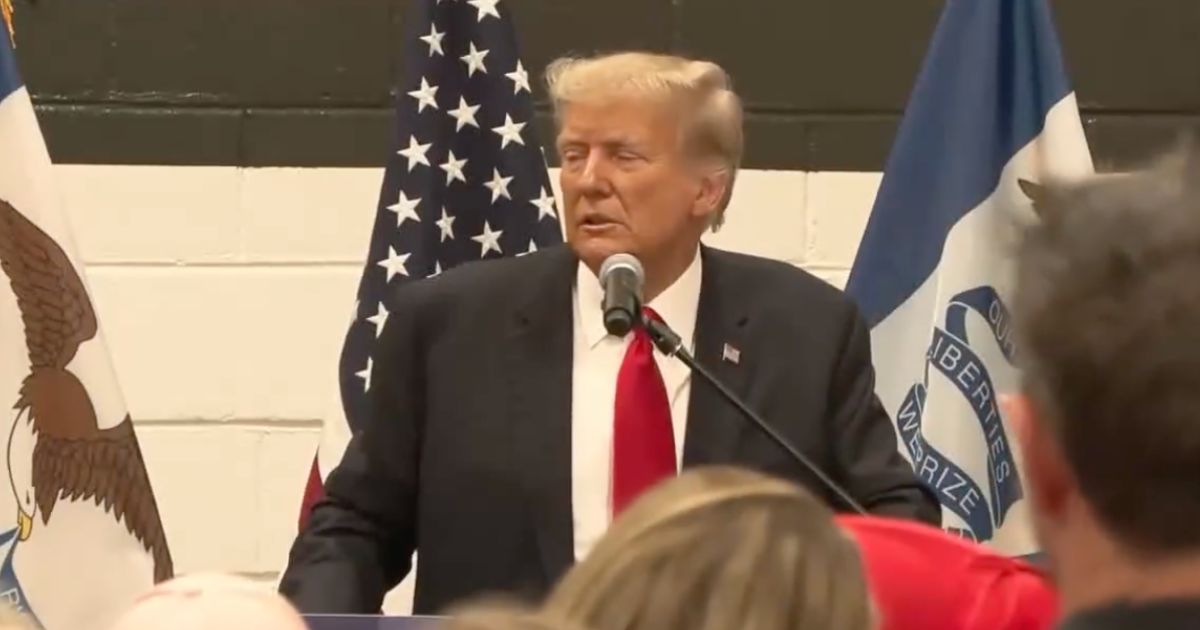
The guidance, authored by Office of the Secretary Chief Counsel Josh Kleinfeld, makes clear that public schools must neither impose nor forbid prayer — and that students and staff alike retain their First Amendment rights on school grounds. President Trump announced the guidance at the 2026 National Prayer Breakfast, where he predicted legal challenges and offered a two-word response:
"We'll win it."
What the Guidance Actually Says
The document stakes out straightforward constitutional territory. Schools must adopt a "stance of neutrality" regarding faith — meaning they cannot compel religious observance, but they also cannot suppress it. The guidance lays this out with characteristic directness:
"Teachers and staff do not forfeit their First Amendment rights at the schoolhouse gate and need not pray behind closed doors."
School employees "must be permitted to pray while at work on the same terms as students." Students may pray privately, wear religious dress, and form religious student groups. Schools "may not sponsor or organize compulsory prayer" at school functions — a distinction that matters, because it demolishes the lazy caricature that this is about forcing kids to recite the Lord's Prayer over the loudspeaker. EWTN News reported.
It's not. It's about ending the quiet hostility that has crept through public education for decades — the nervous administrator who tells a student to put away her Bible at lunch, the teacher warned not to bow his head over his desk before the day begins.
Kleinfeld framed the purpose plainly. Schools should, in general:
"Allow the individuals who make up a public school community to act and speak in accordance with their faith."
The guidance also distances itself from the "legally unsound" principle of a "wall of separation" between church and state — a phrase that appears nowhere in the Constitution and has been stretched far beyond its original meaning to justify exactly the kind of institutional hostility toward religion that this guidance corrects.
The Real "Separation" Problem
For years, public schools have operated under a functional inversion of the First Amendment. The Establishment Clause — designed to prevent the government from creating a state church — was transformed into a roving mandate to scrub any trace of religious expression from public life. The result wasn't neutrality. It was a system that treated a student's quiet prayer before a test as a constitutional crisis while mandating ideological conformity on every fashionable social cause.
The guidance advances what it calls a position "deeply rooted in our nation's history, traditions, and constitutional law":
"A stance of neutrality among and accommodation toward all faiths, and hostility toward none."
That's the actual constitutional standard. Not a regime where faith is tolerated in theory but suffocated in practice. Not one where school districts treat religious students as potential Establishment Clause violations walking the hallways.
The personal religious conduct protected under the guidance is permitted "so long as it does not infringe upon the rights of other students" — a reasonable limit that mirrors how every other First Amendment right functions. You can speak freely; you cannot commandeer someone else's time to make them listen. This isn't complicated. It only became complicated when school administrators decided that "neutrality" meant treating faith as contraband.
A Broader Pattern
The guidance doesn't exist in isolation. It's one piece of a deliberate effort to restore religious liberty as a first-order priority rather than a constitutional afterthought.
Trump established the Religious Liberty Commission in May 2025, which has since held hearings on religious freedom in both education and the military — two institutions where faith has been under sustained bureaucratic pressure. In December 2025, he became the first president in U.S. history to officially recognize the feast of the Immaculate Conception, acknowledging it as:
"A holy day honoring the faith, humility, and love of Mary, mother of Jesus and one of the greatest figures in the Bible."
And at the National Prayer Breakfast, Trump announced "Rededicate 250," an event scheduled for May 17 on the National Mall. His invitation was broad and unambiguous:
"We're inviting Americans from all across the country to come together on our National Mall to pray, to give thanks."
The event is designed to "rededicate America as one nation under God" — language that would have been unremarkable to every generation of Americans until roughly the last two.
What Comes Next
Trump expects lawsuits. He should. The same legal infrastructure that spent decades turning "Congress shall make no law respecting an establishment of religion" into "no child shall see a teacher pray" will not surrender its interpretive monopoly quietly. Every guidance document that restores what the Constitution actually protects will be met with injunctions, amicus briefs, and op-eds about theocracy.
But the legal ground here is firm. The guidance reflects years of settled court precedent — the very precedent that critics will pretend doesn't exist when they challenge it. The Supreme Court has moved decisively in recent years toward a proper understanding of religious liberty as a right to be exercised, not a privilege to be managed by school administrators with law degrees from the ACLU.
The choice facing public schools is simple: follow the Constitution, or explain why you won't. For students and teachers of faith who have spent years being told to keep it to themselves, Feb. 5 offered something that shouldn't feel novel but does — permission to be who they are in the building where they spend most of their waking hours.