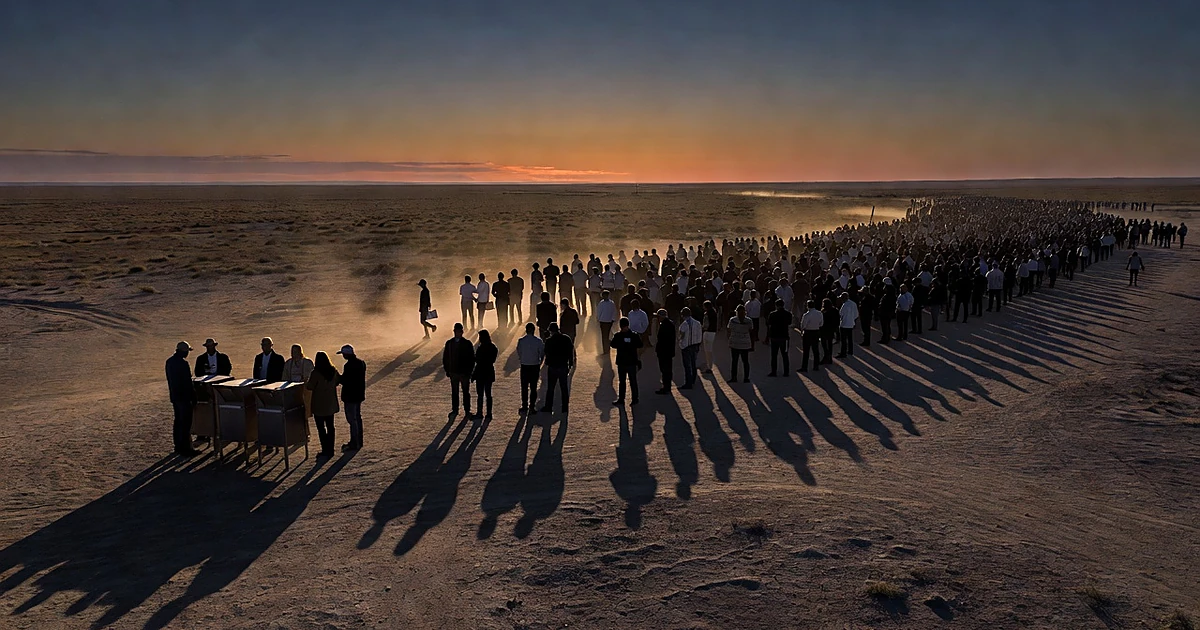
Rubio tells Munich Security Conference that border control is survival, not xenophobia
Secretary of State Marco Rubio stood before the 62nd Munich Security Conference on Saturday and delivered a message that most European leaders have spent a decade refusing to hear: the post-Cold War fantasy of a borderless world has failed, and the bill is coming due.
Rubio's keynote speech dismantled the notion that liberal democracy would inevitably spread across the globe, rendering national borders and cultural identity obsolete. He called it what it was — a dangerous delusion dressed up as idealism.
"This was a foolish idea that ignored both human nature, and it ignored the lessons of over 5,000 years of recorded human history. And it has cost us dearly."
The speech marked the clearest articulation yet of the Trump administration's vision for the Western alliance — one grounded not in guilt, managed decline, or open-ended humanitarian obligation, but in civilizational confidence and mutual strength.
Sovereignty Is Not a Slur
The sharpest moment of the address came when Rubio preempted the predictable counterattack. Every Western leader who has ever questioned mass migration policy knows the playbook: you will be called a xenophobe. Rubio closed that door before his critics could open it.
"We must also gain control of our national borders, controlling who and how many people enter our countries. This is not an expression of xenophobia. It is not hate. It is a fundamental act of national sovereignty."
He then escalated, describing the failure to control borders as something far worse than negligence:
"Not just an abdication of one of our most basic duties owed to our people. It is an urgent threat to the fabric of our societies and the survival of our civilization itself."
This is the argument that the Western political establishment has been allergic to for a generation. Not because it's wrong — the polling in nearly every European country tells you the public agrees — but because it punctures the moral vanity of leaders who treat open borders as proof of their own enlightenment. According to Fox News, Rubio wasn't asking permission to make the case. He was making it on the biggest stage in transatlantic diplomacy.
An Alliance Built on Strength, Not Atonement
Rubio's remarks extended well beyond migration. He outlined what the United States actually wants from its relationship with Europe — and, just as importantly, what it doesn't want.
"We want allies who can defend themselves so that no adversary will ever be tempted to test our collective strength. This is why we do not want our allies to be shackled by guilt and shame. We want allies who are proud of their culture and of their heritage, who understand that we are heirs to the same great and noble civilization, and who, together with us, are willing and able to defend it."
That line — allies "shackled by guilt and shame" — will land differently in Berlin than it does in Washington. Much of the European political class has built its post-war identity around self-flagellation, treating Western history as a ledger of sins to be endlessly repaid. Rubio is telling them that the framework is not noble. It is crippling. And it makes for terrible allies.
He drew the distinction plainly between two competing visions for the transatlantic relationship:
"We in America have no interest in being polite and orderly caretakers of the West's managed decline. We do not seek to separate but to revitalize an old friendship and renew the greatest civilization in human history."
The keyword is "managed." For decades, the foreign policy consensus on both sides of the Atlantic operated as if decline were inevitable and the only question was how gracefully to preside over it. Rubio rejected the premise entirely.
What the Alliance Is For
If the speech had stopped at diagnosis, it would have been a strong rhetorical performance and nothing more. But Rubio also laid out a framework for what comes next — an alliance defined by purpose rather than inertia.
"Acting together in this way, we will not just help recover a sane foreign policy. It will restore to us a clear sense of ourselves. It will restore a place in the world. And, in so doing, it will rebuke and deter the forces of civilizational erasure that today menace both America and Europe alike."
He was equally direct about what the alliance should not become:
"Ready to defend our people, to safeguard our interests and to preserve the freedom of action that allows us to shape our own destiny, not one that exists to operate a global welfare state and atone for the purported sins of past generations."
That framing — "global welfare state" — captures the frustration that has been building in conservative circles for years. The Western alliance was forged to deter Soviet aggression. Somewhere along the way, it became a vehicle for redistributive internationalism, where rich nations competed to demonstrate moral superiority through ever-expanding asylum commitments and foreign aid budgets, while their own citizens watched wages stagnate, communities transform, and public services buckle.
The Speech Europe Needed to Hear
Rubio's address landed amid mounting political tensions across Europe and the United States over migration, asylum policy, and border security. Virtually every major European election in the past several years has turned, at least in part, on the question of who gets to enter and who gets to decide. Voters have answered clearly. Their governments have been slower to listen.
What Rubio offered in Munich was not just an American policy position. It was an invitation — and a challenge. The United States under President Trump is prepared to lead a Western alliance defined by civilizational confidence, mutual defense capability, and sovereign control over national borders. The question is whether Europe's leaders are willing to follow, or whether they'll keep mistaking self-erasure for virtue.
"What we have inherited together is something that is unique and distinctive and irreplaceable."
The audience in Munich heard that line. Whether they act on it is another matter entirely.