Trump secures commitments from tech giants to fund their own AI power infrastructure
President Trump used his State of the Union address Tuesday night to announce a series of deals with major tech companies requiring them to shoulder the costs of powering the massive data centers that fuel artificial intelligence. The message was simple: if you want to build the future, bring your own electricity.
The agreements, described in reports ahead of the speech as "rate payer protection pledges," amount to a straightforward compact between the administration and the tech industry. Companies building AI data centers will fund their own power needs rather than passing those costs on to American households.
Trump framed the issue in characteristically direct terms:
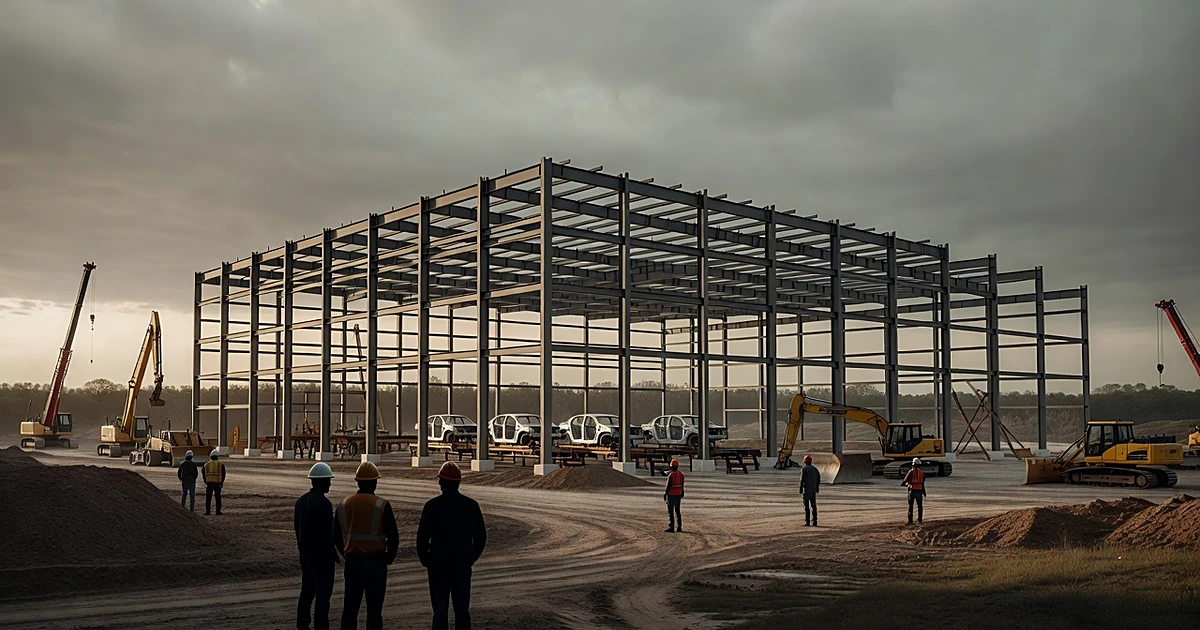
"We have an old grid. It could never handle the kind of numbers, the amount of electricity that's needed. So I'm telling [companies], they can build their own plant and produce their own electricity."
The deal on the table
According to Breitbart, the companies involved include Microsoft, Google, Anthropic, and XAI. Google and Anthropic announced their cost-conscious pledges ahead of the address, while Microsoft praised the agreements Tuesday night. Energy Secretary Chris Wright confirmed that "brand-name" companies have agreed to the program.
A White House official said the companies have committed to "pay their own way" to keep electricity costs low for ordinary Americans. Wright, who has been leading conversations with data center developers, described the administration's posture in terms that should resonate with anyone who's watched their utility bill climb in recent years:
"We've had a lot of dialogues with data center developers to say, 'You've got to have the American people on your side.'"
Wright added that while the president is keen on the United States leading in AI, "it's got to be a win for America — not just the Americans that use that AI."
That distinction matters. AI is not a consumer product in the way a smartphone is. Most Americans will experience its effects indirectly, through productivity gains, job displacement, or, if nobody intervenes, a spike in their energy costs. The question of who pays for the infrastructure behind the most capital-intensive technological buildout in a generation is not abstract. It hits the kitchen table.
Why this matters for working families
The energy demands of AI data centers are staggering. Every new facility is essentially a small city's worth of electricity consumption dropped onto a grid that was never designed for it. Without guardrails, the cost of upgrading and expanding that grid falls on ratepayers: families, small businesses, and retirees on fixed incomes.
This is the kind of problem that Washington usually handles by either ignoring it until the bills arrive or by subsidizing the companies causing it. The Biden administration's approach to the energy transition offers a useful comparison. Billions in taxpayer-funded subsidies flowed to corporations in the name of clean energy, with little accountability for whether those investments actually reduced costs for consumers. The pattern was always the same: socialize the costs, privatize the profits, and call it progress.
Trump's approach inverts that formula. The companies generating the demand are the ones writing the checks. No subsidies. No rate hikes are being laundered through public utilities. Build your own plant. Produce your own electricity.
Silicon Valley's response tells the story
What's notable is how quickly the tech industry signed on. These are not companies known for voluntarily accepting new obligations. Yet Microsoft, Google, Anthropic, and XAI all moved to publicly align themselves with the initiative.
James Burnham, who works in government affairs for XAI, struck an enthusiastic note:
"Proud to be part of this initiative. @xai has never caused our neighbors' electricity bills to rise. When our team builds supercomputers, that includes power. And when our supercomputers go into orbit, there will be even more earth power for the earthlings."
The rhetoric is a bit Silicon Valley, but the underlying principle is sound. Companies that can afford to build billion-dollar data centers can afford to power them. The fact that they're agreeing publicly suggests the administration's leverage here is real. These companies need permits, grid access, and political goodwill. The White House is making clear that goodwill has a price: don't make Americans subsidize your electricity.
The 2026 calculus
The White House has focused on affordability ahead of the pivotal 2026 midterm elections, and this initiative fits squarely within that framework. Energy costs are one of the few economic issues that cut across every demographic. Nobody likes opening a utility bill that's 30 percent higher than it was two years ago.
White House press secretary Karoline Leavitt previewed the tone of the address before it began:
"The President will proudly tout his Administration's many record-breaking accomplishments, and also lay out an ambitious agenda to continue bringing the American Dream back for working people."
The AI power deals are a clean example of that agenda in practice. They position the administration as pro-innovation without being captured by the industry driving it. You can be the most AI-friendly president in history and still tell tech CEOs they're paying for their own power plants. Those two things aren't in tension. They're complementary.
The broader principle
For years, conservatives have argued that the relationship between big business and government is too cozy, that corporations externalize costs onto taxpayers while lobbying for favorable treatment. The left makes a version of this argument, too, but their solution is always more regulation, more bureaucracy, more government control.
This is something different. It's not a regulatory mandate. It's a negotiated commitment backed by political leverage. The companies aren't being told how to generate their power. They're being told to generate it themselves. The method is up to them. The obligation is not.
That's the kind of market-oriented accountability that gets lost when Washington defaults to either subsidies or heavy-handed regulation. Let the companies innovate. Let them compete. Just don't send the bill to a retiree in Ohio.
The grid was built for a different era. The companies building the next one should pay for the upgrade.