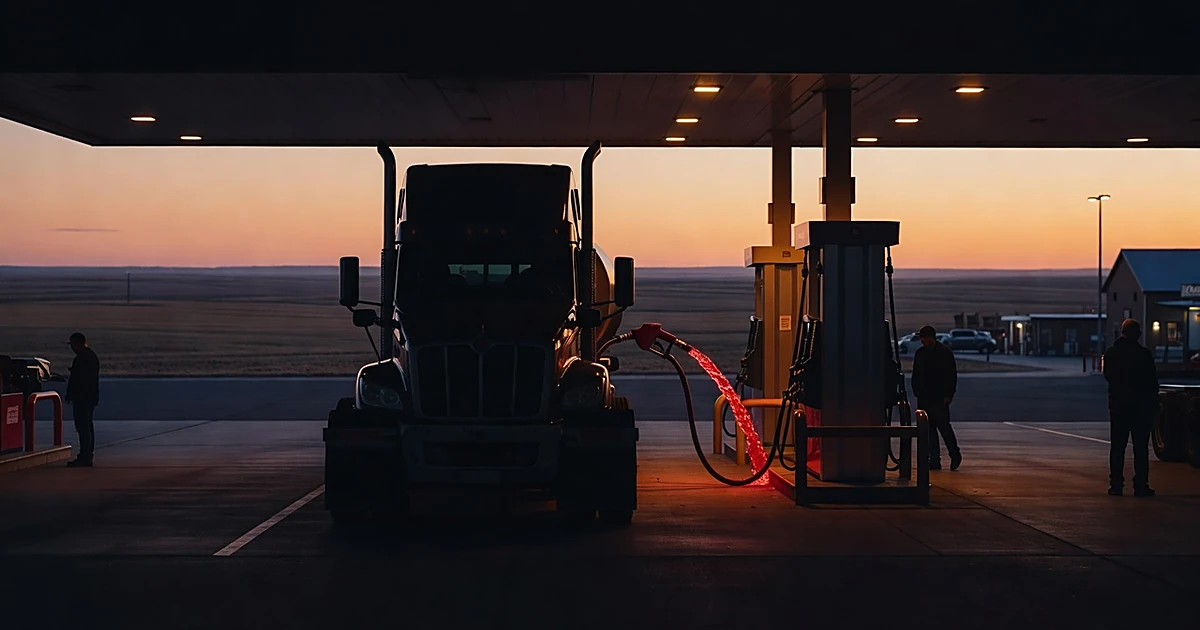
Gas prices surged 65 cents in two weeks as Operation Epic Fury reshapes the energy landscape
Two weeks into Operation Epic Fury, the joint U.S.-Israel military campaign against Iran, Americans are watching the national average price of gas climb from $2.98 to $3.63 per gallon. Oil has pushed above $100 per barrel. And the White House is making the case that temporary pain at the pump is the cost of neutralizing a terrorist regime.
It's a straightforward argument, and one that requires the public to think beyond the next fill-up. Whether voters will do that depends entirely on how quickly results materialize.
The White House case: short-term cost, long-term gain
The administration has not been caught flat-footed on energy disruption. White House spokeswoman Taylor Rogers framed the price movement as a known variable, not an accident:
"The Administration's focus is on achieving the clearly defined objectives outlined by President Trump for Operation Epic Fury. President Trump has been clear that these are short-term disruptions."
Rogers went further, laying out the administration's theory of the case on prices:
"Ultimately, once the military objectives are completed and the Iranian terrorist regime is neutralized, oil and gas prices will drop rapidly again, potentially even lower than before the strikes began. As a result, American families will benefit greatly in the long-term."
That's not hope dressed up as policy. The administration has moved on multiple fronts to contain the damage. Press secretary Karoline Leavitt detailed the steps during a briefing this week:
"Thus far, the Trump administration has offered political risk insurance to tankers operating in the Gulf, the Treasury temporarily waived certain oil-related sanctions, and the commander in chief has offered the U.S. Navy to escort tankers when necessary."
The administration has also promised to release oil from the nation's strategic reserves and has eased sanctions on Russian oil to keep supply flowing. These are not the actions of a government ignoring the price spike. They are the actions of a government that anticipated it. The Washington Examiner reported.
The political math
Gas prices are the most visible economic indicator in American life. They're posted on signs ten feet tall on every major road in the country. You don't need a Bureau of Labor Statistics report to know when they move. That visibility makes them politically radioactive, and both parties know it.
President Trump took to social media to argue that rising oil prices generate revenue: "When oil prices go up, we make a lot of money." Rep. Jim Jordan, a key White House ally on Capitol Hill, reinforced the message on CNN:
"President Trump is committed to achieving that goal, and if that means prices go up for a time, I think Americans understand, we can live with that."
GOP strategist Gregg Keller offered a useful frame for how the administration should think about the comparison game:
"Any chance that President Trump gets to remind folks that under him, gas prices have been in the neighborhood of $3 a gallon, while under President Biden, they were under $5 a gallon, is a great opportunity."
That's the right instinct. Even at $3.63, prices remain well below the Biden-era highs that helped define one of the most inflation-battered presidencies in modern memory. The baseline matters. Keller also noted the obvious: "Gas prices are always going to go up and down; that's the nature of dynamic pricing environments."
The skeptics have a point worth hearing
Not everyone on the right is fully on board with the messaging, and their concerns are worth taking seriously, not because the operation is wrong, but because the political communication around it needs to land correctly.
Cayce Myers, a professor at Virginia Tech's School of Communication, argued that the "we make money" framing misses how people experience prices:
"I think that that falls flat as a message to the American people, because ultimately they're experiencing this oil price in a very personalized way."
Myers pointed to the cascading effect gas prices have on the broader economy. It's not just about what you pay at the pump. It's about what you pay for groceries, shipping, and everything that moves on a truck. "Other prices may rise as a result of gas prices," he noted.
A former administration official, speaking to the Washington Examiner, raised a more pointed concern:
"Many Americans can stomach some price fluctuation, but asking them to endure pain for a war they didn't even know existed is a stretch. This isn't World War II, and going to the gas station isn't buying a war bond."
That's a real observation about public buy-in. The same official acknowledged the political tightrope, noting that the president's earlier success in lowering pump prices created expectations that now cut both ways. Americans "don't want to see prices rise again, even though prices remain lower than during much of the Biden administration."
What Biden's failure teaches about this moment
Former President Joe Biden spent years trying to convince Americans that the economy was "rebounding" from the pandemic while prices at the pump told a different story. His administration talked past people's lived experience, and voters punished him for it. The lesson is simple: you cannot tell people their wallet is wrong.
The Trump administration appears to understand this, which is why the response has been operational rather than purely rhetorical. Releasing reserves, waiving sanctions, insuring tankers, deploying Navy escorts: these are tangible actions designed to bring prices back down, not talking points designed to explain them away. That's the difference between a government managing a temporary disruption and one lecturing the public about why they should feel better than they do.
Trump has also restarted his affordability tour across the nation, a signal that the White House knows kitchen-table economics remain the political center of gravity regardless of what's happening in the Persian Gulf.
The real question isn't the price. It's the timeline.
Every wartime president faces the same calculation: the public will absorb short-term sacrifice if they believe in the mission and can see the end. The administration has stated clearly that the war ends when Iran presents an "unconditional surrender." That's a bold objective, and clarity of purpose counts for something in an era where Americans have grown exhausted by open-ended military commitments with no defined victory.
The measures to stabilize energy markets are in motion. The comparison to Biden-era prices still favors this administration by a wide margin. And the strategic rationale for blocking Iran from obtaining nuclear weapons is not a hard sell to a country that watched the ayatollahs fund terror across the Middle East for decades.
But the clock is ticking. A 65-cent jump in two weeks is manageable. A 65-cent jump that lasts six months is a midterm problem. The administration's credibility on this issue will be measured not in press briefings but in the numbers on the signs Americans drive past every day.
Deliver the victory. Deliver the price relief. The rest takes care of itself.