Trump flatly denies Carlson's nuclear war claims on Iran, calls him a 'low IQ person'
President Trump phoned the New York Post on Tuesday to reject Tucker Carlson's escalating claims that the administration is steering the country toward nuclear war with Iran, dismissing the commentator in blunt, personal terms and insisting the speculation has no basis in reality.
"Tucker's a low IQ person that has absolutely no idea what's going on," Trump told the Post in a phone call. "He calls me all the time; I don't respond to his calls. I don't deal with him. I like dealing with smart people, not fools."
The exchange marks the sharpest public break yet between the president and a media figure who once commanded enormous influence within the MAGA coalition, and it raises a question worth watching: whether Carlson's turn against Trump on Iran reflects genuine principle or an increasingly erratic pattern of provocation.
What Carlson actually claimed
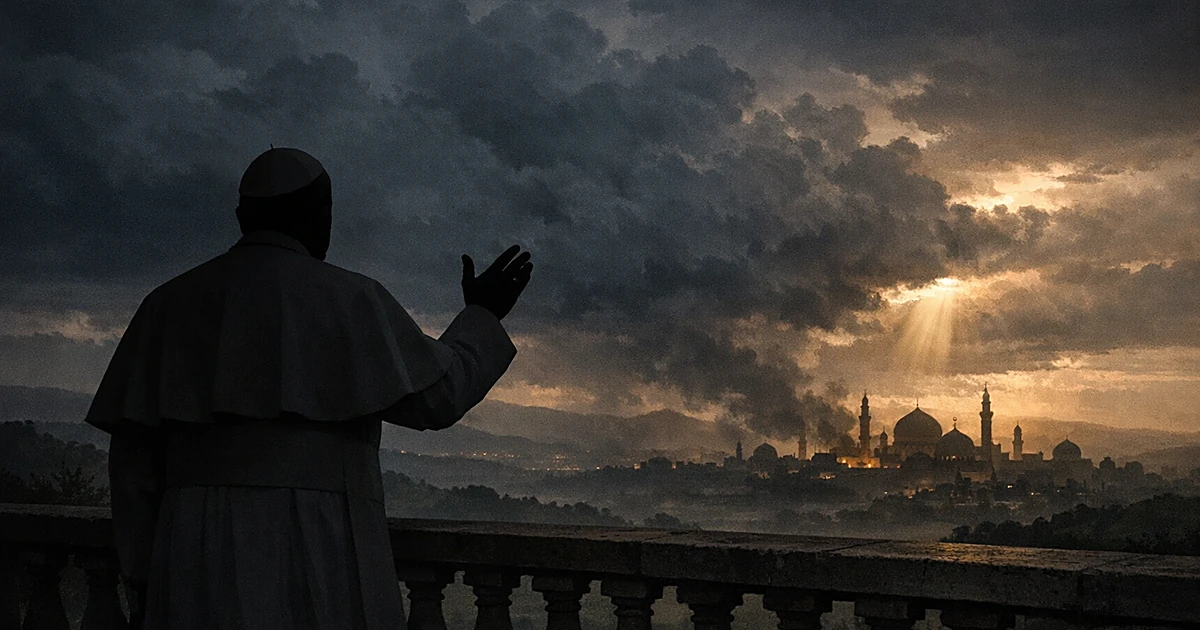
The dispute traces back to Trump's Sunday morning post on Truth Social, in which the president warned Iran in characteristically colorful language to reopen the Strait of Hormuz. "Open the f, ' Strait, you crazy b******s, or you'll be living in h***, JUST WATCH! Praise be to Allah," Trump wrote.
By Monday night, Carlson had posted on X that Trump's Easter morning message amounted to "the first step toward nuclear war." He followed up on his podcast with a broadside that went far beyond foreign-policy disagreement.
Carlson called the president's language "vile on every level," asking: "How dare you speak that way on Easter morning to the country?" He then escalated further, likening the U.S. president to the antichrist and suggesting Trump sees himself as fulfilling some apocalyptic role beyond the presidency.
"Is it possible that the president sees this in bigger terms? Sees this as the fulfillment of something? An elevation of some higher office beyond president of the United States?"
Carlson went on to claim that Trump did not place his hand on the Bible when swearing into office in January 2025 because he "affirmatively rejects what's inside that book." He urged White House and military staffers to refuse any order to launch a nuclear strike on Iran, telling them to resign rather than comply.
"Those people who are in direct contact with the President need to say, 'no, I'll resign. I'll do whatever I can do legally to stop this, because this is insane, and if you give the order, I'm not carrying it out. Figure out the codes on the football yourself.'"
That is not foreign-policy dissent. That is a public call for insubordination against the commander in chief, wrapped in theological speculation that has no anchor in verifiable fact. It is not the first time Carlson's public claims have run well ahead of the evidence.
The White House shuts it down
The administration did not wait long to respond. The White House's @RapidResponse47 account on X posted a direct rebuttal after former Vice President Kamala Harris's @HQNewsNow X account amplified the narrative, posting a clip of Vice President JD Vance speaking in Hungary on Tuesday and claiming that Vance had implied "Trump might use nuclear weapons."
The White House account was blunt: "Literally nothing @VP said here 'implies' this, you absolute buffoons."
What Vance actually said in Hungary was far more measured than the nuclear-war framing suggested. He stated that "we've got tools in our toolkit that we so far haven't decided to use that the president of the United States can decide to use them, and he will decide to use them if the Iranians don't change their course of conduct." That language describes conventional deterrence and escalation options, the kind of statement any vice president might make when a hostile regime is testing American resolve.
The leap from "tools in our toolkit" to "nuclear war" was not made by Vance. It was made by Carlson, then amplified by a political operation still tied to Kamala Harris.
Trump's Iran posture in context
Trump has insisted he will follow through on threats to strike Iran's energy and other infrastructure if Tehran refuses to reopen the Strait of Hormuz. That is a serious position, but it is a conventional military threat directed at economic chokepoints, not a nuclear first-strike doctrine.
In additional Truth Social posts, Trump wrote: "A whole civilization will die tonight, never to be brought back again. I don't want that to happen, but it probably will." He followed up by referencing regime change in Iran, writing: "However, now that we have Complete and Total Regime Change, where different, smarter, and less radicalized minds prevail, maybe something revolutionarily wonderful can happen, WHO KNOWS?"
And in another post: "We will find out tonight, one of the most important moments in the long and complex history of the World. 47 years of extortion, corruption, and death, will finally end. God Bless the Great People of Iran!"
The language is dramatic. Trump's social media style has always been maximalist. But the posts themselves reference regime change and infrastructure threats, not nuclear weapons. Carlson filled in that gap with speculation, then treated his own speculation as established fact.
Kharg Island, which handles roughly 90% of Iran's crude oil exports, is one potential target that fits the administration's stated posture of pressuring Iran's energy sector. The discussion around military options has centered on conventional strikes and economic leverage, not the doomsday scenario Carlson constructed.
A broader pattern on the right
Carlson's break with Trump over Iran is not new. As Newsmax has reported, Carlson previously criticized Trump for backing Israel's strikes on Iran, writing that "Washington knew these attacks would happen. They aided Israel in carrying them out." He urged the U.S. to "drop Israel" and avoid direct military involvement, arguing that war with Iran would violate Trump's anti-war, America First message.
That earlier dispute escalated into a broader split, with Carlson feuding publicly with figures like Mark Levin and asking on X, "Who are the warmongers?", before naming conservatives he accused of pushing Trump toward conflict. The fracture within the MAGA coalition over Iran policy has been visible for months, with figures like Marjorie Taylor Greene and Thomas Massie also breaking with the president on the question.
But there is a difference between disagreeing with a president's foreign policy and accusing him of plotting nuclear armageddon, rejecting God, and embodying the antichrist. Carlson crossed that line on his podcast, and the White House clearly decided it was time to say so publicly.
The political stakes are real. Polling cited by Breitbart has shown Carlson remains one of the most popular media figures among Republican voters, alongside Joe Rogan and Charlie Kirk. A sustained public feud between the president and a commentator with that kind of reach inside the GOP base is not something either side can afford to treat lightly.
Trump, for his part, has shown repeatedly that he does not hesitate to cut ties with allies who cross him. His recent decision to fire Attorney General Pam Bondi is only the latest example of a president who values loyalty and does not tolerate public defiance, whether from cabinet members or media figures.
Who benefits from the panic?
It is worth noting who rushed to amplify Carlson's claims. The @HQNewsNow account, which the Post identified as tied to former Vice President Kamala Harris, posted a clip of Vance and attached the nuclear-weapons framing that neither Vance nor Trump had used. The White House flagged the distortion immediately.
When a former Democratic vice president's political operation and a once-allied conservative commentator are pushing the same narrative, one the president himself calls false, it is fair to ask whether the goal is informed debate or manufactured panic.
Carlson has every right to oppose military action in Iran. Millions of Americans share that instinct, and the "America First" case against foreign entanglements is a legitimate position within the conservative movement. Disagreements among allies are nothing new in Republican politics.
But accusing a sitting president of pursuing nuclear armageddon, without evidence, on the basis of social media posts and theological conjecture, is not dissent. It is recklessness. And calling on military officers to disobey the commander in chief is a step that no serious commentator should take lightly, regardless of the policy disagreement at hand.
Trump denied the claims. The White House denied the claims. The vice president's actual words do not support the claims. At some point, the burden of proof shifts to the person making the accusation.
If Carlson has evidence that the United States is preparing a nuclear strike on Iran, he should produce it. If he doesn't, the rest of us are entitled to judge the claim accordingly.