Connecticut man, 90, says Jesus told him to go back after cardiac arrest at Easter service
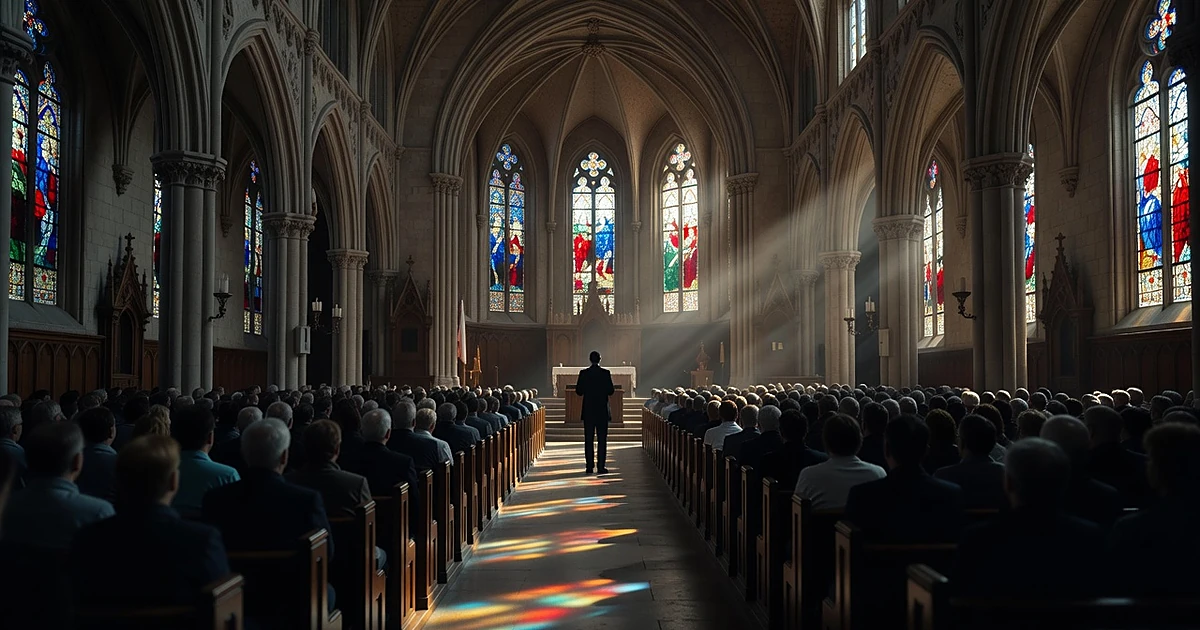
Walter Gay was turning blue and had no pulse in the foyer of First Congregational Church in Branford, Connecticut, on Easter Sunday. Thirty seconds later, four medical professionals who happened to be sitting in the pews were already performing CPR. Within a minute, a defibrillator the church had acquired just three months earlier delivered a shock. And when Gay finally opened his eyes, the 90-year-old told his family he had been somewhere else entirely.
Gay told reporters he experienced a vision during the minutes his heart was stopped, one that, for him, explained everything.
"The best way to remember is I go up into Heaven and Jesus looks at me and says, 'Hey, Walter, it is not your time, back to Earth,' and that's when I ended up waking up."
Whether you call it a miracle, a near-death experience, or the fortunate convergence of trained hands and new equipment, Gay's survival defied the expectations of every person in the room, including his own daughter, a medical doctor.
Collapse in the foyer
Pastor Joseph Perdue said he was outside the church around 11:15 a.m., saying goodbye to congregants after the Easter service, when Gay collapsed in the main foyer. The pastor described Gay's condition in blunt terms.
"The condition he was in when we started CPR, he wasn't breathing, he was turning blue, there was no pulse."
A nurse, two nurse midwives, and a physician assistant were all present in the congregation that morning. They reached Gay almost immediately. Perdue said medical personnel started CPR within roughly thirty seconds of the collapse and had an automated external defibrillator hooked up within a minute. The AED read Gay's heart rhythm and immediately instructed them to deliver a shock.
Church members called 911. First responders took about ten minutes to arrive. In the gap between the collapse and the ambulance, it was the people in the pews, not paramedics, who kept Gay alive.
Laurie MacLeod, a certified nurse midwife at Yale New Haven Hospital who was walking out of the church when Gay went down, told CT Insider she believes the AED "made all the difference." The church had received the device only in January, a detail that, in hindsight, looks like more than good timing.
A daughter's shock
Carolyn Claussen, Gay's daughter and a medical doctor in New Hampshire, received a call from the emergency room about her father's cardiac arrest. She did not expect him to survive. Gay has underlying congestive heart failure, and the severity of the episode left little room for optimism.
Stories of faith tested by mortality are familiar to believers. But what Claussen found when she arrived at the hospital was not what she had braced herself for.
"No offense, Dad, I really thought 100% I was coming to say goodbye to you. I was not expecting to walk into the emergency room and see you ask me what I was doing there, so that was a nice surprise."
Claussen said Gay had lost his short-term memory in the aftermath. For about the first day, she had to repeat the story of what happened to him. He and his wife, Betsy, are described as very active and independent, a profile that may have worked in his favor during recovery, though Claussen noted the congestive heart failure that shadows his health.
Doctors call recovery 'incredible'
Dr. Tamara Samardzic, co-director of the Stepdown Unit at Yale New Haven Hospital, told WTNH that Gay's recovery has been remarkable by any clinical standard. She said his mental status returned to baseline, a result she called "incredible."
"His mental status is at baseline, which is incredible. I know the family is super happy, and everyone is amazed that this is how it turned out."
Samardzic added a line that carries weight coming from someone who works with critical cardiac patients daily: "This is certainly not what we see, especially on this unit."
The clinical facts are plain enough. A 90-year-old man with congestive heart failure suffered a massive cardiac episode, lost his pulse, stopped breathing, turned blue, and walked away cognitively intact. The medical staff on hand acted fast. The AED worked. The timeline held.
But for the people who were there, the facts pointed somewhere beyond the clinical. Accounts of encounters with Jesus during moments of crisis are not new in Christian testimony. Gay's account fits squarely in that tradition, and it happened on the one day of the church calendar devoted to resurrection.
'We cannot escape the metaphor'
Pastor Perdue did not shy away from the symbolism. He told CT Insider flatly: "None of us expected him to make it."
Then he connected the event to the sermon he had just preached.
"We cannot escape the metaphor. The whole point of the Easter homily was looking for evidence of the small resurrections all around us, the way that God is helping our community in the ways that we can participate in what God is doing in order to make the lives of our neighbors better."
That a pastor would frame a parishioner's revival in spiritual terms is hardly surprising. What makes Gay's case harder to dismiss is the convergence: the four medical professionals in the congregation, the AED installed just months earlier, the speed of the response, and the outcome that left even the hospital's own cardiac staff reaching for words like "incredible."
There are people who will hear Gay's account and see confirmation of the faith they already hold. Others will credit the defibrillator and the trained hands that used it. For many believers, those explanations are not in tension, the hands and the machine were there for a reason.
In a culture that often treats personal testimony about God as quaint or embarrassing, Gay's story is a reminder that millions of Americans still organize their lives around the possibility that the divine intervenes in the ordinary. Easter, after all, is built on exactly that claim.
Gay's daughter, a physician, arrived expecting to say goodbye. Instead, her father asked what she was doing there. The church that had prayed for a miracle that morning watched one unfold in the foyer before the parking lot cleared.
Some questions remain. The exact medical diagnosis beyond "cardiac arrest" has not been publicly detailed. How long Gay was hospitalized, and what treatment he received after first responders arrived, are not clear from available accounts. What is clear is that a man who had no pulse and no breath is alive, alert, and telling anyone who will listen that Jesus sent him back.
In Branford, Connecticut, on Easter Sunday, a 90-year-old man's heart stopped, and then it didn't. You can call that medicine, or you can call that Providence. Walter Gay knows what he calls it.