Protesters track FBI Director Kash Patel to Portland hotel where he attended a friend's funeral
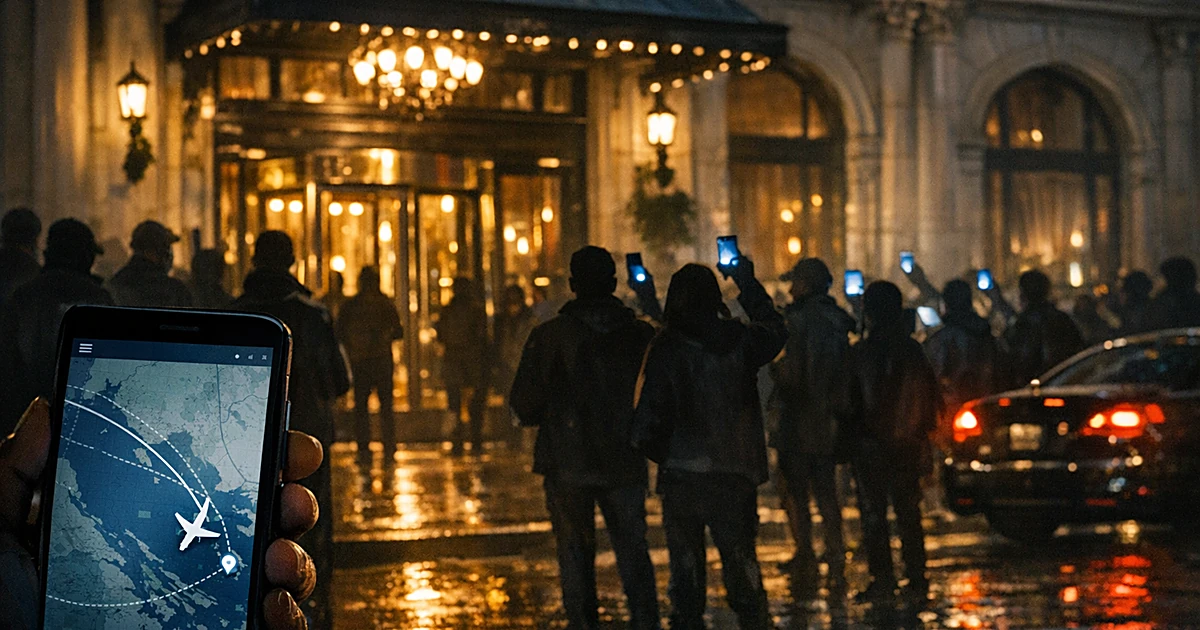
A crowd of protesters descended on the Sentinel Hotel in downtown Portland, Oregon, on Saturday night after using publicly available flight data to track a Department of Justice aircraft they believed carried FBI Director Kash Patel to the city. Patel was not in town on official business. He was there to bury a friend.
Sources confirmed to Fox News Digital that Patel and his girlfriend, Alexis Wilkins, traveled to Portland over the weekend to attend a funeral for a close friend. Patel helped carry the casket during the service, which was scheduled for Saturday and took place in Portland, per an obituary shared with Fox News.
That private act of mourning did not stop demonstrators from hunting down the FBI director's likely hotel and staging a loud protest outside it. Video circulating on social media showed the crowd shouting as they gathered outside the Sentinel. It remains unclear whether Patel was actually inside the building at the time, or whether he stayed at that hotel at all.
How protesters narrowed down Patel's location
The demonstrators did not stumble onto the Sentinel Hotel by accident. FOX 12 Oregon reported that the group used publicly available DOJ flight-tracking data and observed security measures near the hotel to infer Patel's likely location. Breitbart reported that flight records showed a DOJ-operated Gulfstream G550 traveled from Camp Springs, Maryland, to Portland between May 8 and May 10.
One protester acknowledged the uncertainty to FOX 12:
"It wasn't 100% confirmed but very likely he was at the Sentinel."
"Very likely" was apparently enough for the crowd to mobilize. The willingness to swarm a hotel on a guess, while a man attended a funeral, tells you something about the political temperature in Portland and the hostility directed at anyone associated with the current administration's law-enforcement agenda.
What the protesters claimed to oppose
FOX 12 Oregon reported that the group arrived to protest what they described as the "weaponization" of the FBI under President Donald Trump's administration, as well as Patel's handling of documents related to convicted sex offender Jeffrey Epstein.
One protester told FOX 12, as the New York Post reported:
"We were there to protest the weaponization of Trump's and Patel's FBI to suppress our freedom of speech and freedom of press."
The irony is thick. A crowd tracks a federal official's private travel, corners him at a hotel during a personal trip to mourn a dead friend, and then claims to be standing up for freedom. That is not protest. That is intimidation dressed in the language of civil liberties.
Patel has drawn sustained opposition from the left since his confirmation as FBI director. Much of the criticism centers on his willingness to overhaul the FBI and hold the bureau accountable for conduct during prior administrations, the very kind of reform many Americans demanded after years of institutional distrust.
Patel's record versus the protesters' framing
The demonstrators framed their grievance around "weaponization," but the facts of Patel's tenure cut the other way. Before he became a political target, Patel was himself a target of the bureau he now leads. During the Biden era, the FBI secretly subpoenaed phone records belonging to Patel as part of a Trump-related investigation, a fact that raises serious questions about which direction the weaponization actually ran.
Since taking over the bureau, Patel has moved to refocus the FBI on core law-enforcement work. In a statement referenced by Breitbart, Patel highlighted the results of Operation Iron Pursuit, a coordinated crackdown on child exploitation:
"This week, we announced the outstanding results of Operation Iron Pursuit, your coordinated, month-long effort to identify victims of child exploitation."
That is the work Portland's protesters chose to interrupt, or at least the man behind it. While Patel directed resources toward rescuing exploited children, his critics tracked his plane and surrounded his hotel.
The contrast speaks for itself.
Portland's familiar pattern
Portland has a long track record of aggressive street protests that blur the line between demonstration and harassment. Saturday's incident fits the pattern. The crowd did not gather at a government building during business hours to petition their elected officials. They did not organize a march through the city center. They tracked a private citizen's travel, identified his probable lodging, and showed up at night to confront him.
Fox News Digital reached out to the Department of Justice, the FBI, the Sentinel Hotel, and the Portland Police Bureau for comment. No responses were reported. It is also unclear whether any law enforcement was present at the scene or whether any arrests occurred.
The absence of information about police response raises its own questions. Portland's political leadership has spent years sending mixed signals about aggressive protest tactics. Whether the Portland Police Bureau took any steps to secure the area around the hotel, or was even asked to, remains unknown.
Patel's broader effort to reform the FBI has included firing agents tied to politically charged investigations from prior administrations. Those moves have drawn fierce criticism from Democrats and media figures who spent years defending the very institutional practices Patel has worked to dismantle. The Portland protest is the street-level version of that same opposition.
The security question no one is asking
Beyond the politics, Saturday's episode raises a straightforward security concern. If private citizens can use publicly available flight data to track the FBI director's movements, identify his hotel, and organize a crowd outside it within hours, that is a vulnerability, not a victory for transparency.
The FBI director is not a private citizen in the ordinary sense. He oversees the nation's premier law-enforcement agency. His personal security is a matter of national concern. The fact that a group of Portland activists could pinpoint his location during a private trip, and that no visible security response materialized, at least from what has been reported, should alarm anyone who takes the safety of senior government officials seriously.
This is not a question of whether Patel can handle a crowd. It is a question of what happens when the next person who tracks a federal official's plane has intentions worse than chanting.
The broader political environment has only grown more volatile. Figures across the Trump orbit, from legal advisors to cabinet officials, face relentless personal pressure from opponents who treat proximity to the administration as grounds for public confrontation.
What remains unanswered
Several basic facts about Saturday night remain unclear. Fox News Digital reported that it is not known at which hotel Patel actually stayed. The size of the crowd has not been specified. Whether Patel was inside the Sentinel Hotel during the protest is unconfirmed. And whether any law-enforcement agency responded to the scene, or was even notified, has not been disclosed.
Those gaps matter. If the FBI director was present and no police response occurred, Portland's leadership has some explaining to do. If he was elsewhere and the crowd surrounded an empty hotel, the episode becomes a case study in mob behavior driven by rumor and rage.
Either way, the protesters' conduct was not an exercise in democratic accountability. A man went to Portland to carry his friend's casket. A mob tracked his plane and showed up at his hotel. That is not speaking truth to power. That is harassment, and calling it protest does not change what it is.