Federal jury convicts three Spokane ICE protesters of conspiracy to injure federal agents
A federal jury in Washington state convicted three protesters of conspiracy to impede or injure federal agents after a June 2025 confrontation at a Spokane ICE facility, a case that now carries a potential six-year prison sentence and raises hard questions about a local government that dropped its own charges against dozens of others involved in the same incident.
Justice Forral, Jac Archer, and Bajun Mavalwallla II were found guilty Thursday, as reported by Just the News and The Center Square. The Trump administration had indicted all three, along with six other protesters, roughly one month after the June 2025 protest. The six others have already pleaded guilty under deals that could reduce their felony charges to lesser misdemeanors if they comply with court-ordered conditions.
The three who went to trial and lost now face the full weight of federal sentencing. Their attorneys plan to file motions in July asking the federal judge to throw out the verdicts entirely. If those motions fail, sentencing will follow at a future date.
What happened at the Spokane ICE facility
The confrontation grew out of a Facebook call to action by Ben Stuckart, a former Spokane City Council president. Stuckart posted on the platform urging people to sit in front of a transfer van that was heading to Tacoma with an immigrant in custody. Hundreds responded and gathered around the ICE facility.
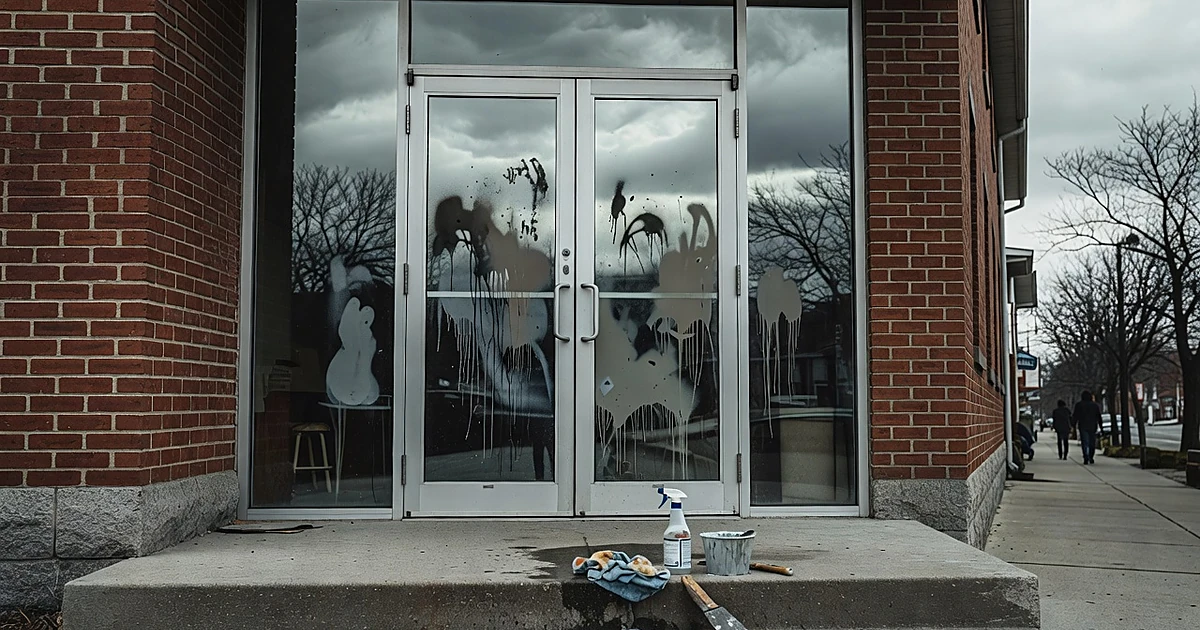
Prosecutors said the protesters deflated the van's tires and physically prevented federal agents from leaving the scene. The protest itself was triggered by a judge's ruling on January 29 that the immigrant in question had been illegally detained. The immigrant was released following that ruling.
So the federal agents were attempting to transport someone who had already been ordered released, a fact the defense will almost certainly emphasize in post-trial motions. But the jury evidently concluded that the manner of the protest crossed a legal line, regardless of the underlying dispute over the immigrant's detention.
Stuckart, who helped spark the entire episode, was among the nine indicted. He accepted a plea deal rather than face trial.
The city that walked away
While the Trump administration pursued federal charges, the city of Spokane took a sharply different path. Dozens of other protesters faced misdemeanor charges at the local level. The city dismissed every one of them.
City Prosecutor Justin Bingham explained last August that his office had hundreds of hours of body-camera footage to review and chose to drop the misdemeanors rather than risk a judge tossing them for insufficient evidence. He told The Center Square that his office was understaffed and under-resourced, and argued he could refile charges within the two-year statute of limitations, if the city gave him more funding.
That framing is worth pausing on. A city prosecutor watched hundreds of people swarm a federal facility, saw agents physically prevented from doing their jobs, and decided the right move was to drop charges and ask for a bigger budget. The federal government stepped in where local leadership stepped aside.
The pattern is familiar. When local officials decline to enforce the law, whether out of sympathy, resource constraints, or political calculation, the federal system becomes the backstop. That dynamic has played out repeatedly in recent years, from federal charges against prominent public figures to enforcement actions that local jurisdictions refused to pursue.
Forral faces a second trial
Of the three convicted defendants, Justice Forral faces the most complicated legal road ahead. Beyond the federal conspiracy conviction, Forral is also charged with eight felony counts of unlawful imprisonment in Spokane County Superior Court. That county trial has been delayed multiple times, most recently in April, because of the federal case.
A status hearing is scheduled for July 20 in county court, with the trial itself set for August 10, 2026. Spokane County Prosecutor Preston McCollum did not respond to voicemails from The Center Square on Thursday about Forral's upcoming trial or the city's progress on its own cases.
The silence from local prosecutors stands in contrast to the federal government's willingness to act. The Trump administration moved within a month of the June 2025 protest to secure indictments. The city took months just to review footage, and then dropped everything.
Accountability and its alternatives
The verdict lands at a moment when questions about selective enforcement and political accountability are front and center in American public life. The willingness of some jurisdictions to look the other way when lawbreaking aligns with fashionable causes has become a recurring flashpoint. Whether the issue is the Justice Department's treatment of political and religious groups or local prosecutors declining to charge rioters, the public sees a two-tier system taking shape.
In Spokane, the two tiers were on full display. Federal prosecutors secured nine indictments, six plea deals, and three jury convictions. The city dismissed every misdemeanor it filed.
The defendants' attorneys will get their chance in July to argue the verdicts should be thrown out. The federal judge will weigh those motions. If the convictions stand, Forral, Archer, and Mavalwallla face up to six years in federal prison.
Meanwhile, the broader question of clemency and proportionality in the justice system continues to generate debate. Recent public arguments over pardons and clemency have only sharpened the divide between those who believe the law should apply equally and those who treat enforcement as a matter of political convenience.
What remains unanswered
Several questions hang over the case. The specific court-ordered conditions that the six plea-deal defendants must meet to reduce their charges have not been publicly detailed. Whether any of those six have already been sentenced or had charges formally reduced remains unclear.
The city of Spokane has not indicated whether it intends to refile the dismissed misdemeanor charges before the two-year statute of limitations expires. Bingham's stated position, that refiling was possible with more funding, leaves the door open but offers no commitment.
And the federal judge's treatment of the defense motions in July could reshape the entire case. If the court grants dismissal, the convictions vanish. If it denies the motions, sentencing moves forward, and three people who showed up to protest an immigration enforcement action will face years in federal prison.
The case also raises questions about the role of public figures who use social media to mobilize crowds. Stuckart, a former elected official, posted the call to action that drew hundreds of people to the ICE facility. He took a plea deal. The people who answered his call and stayed to the end are the ones who went to trial, and lost.
That dynamic, leaders who light the match and then negotiate their way out while followers bear the consequences, is not unique to this case. It has echoes across the political spectrum, from protest movements to high-profile federal proceedings where the distance between instigation and accountability grows wider with every plea deal.
The federal backstop
Nine people were indicted. Six took deals. Three went to trial and were convicted. Dozens of others walked free because the city couldn't, or wouldn't, prosecute.
The Spokane ICE case is a clean illustration of what happens when local government abdicates its responsibility to enforce the law. The federal system filled the gap. Whether you view the protesters as activists exercising their rights or as lawbreakers who physically obstructed federal agents, the jury's answer was unambiguous.
When cities won't do their jobs, someone else will. The question is whether local leaders will learn anything from the fact that it came to this, or whether they'll keep asking for a bigger budget while the feds do the work.