Mamdani's pied-à-terre tax list exposes names and addresses of his own celebrity supporters
New York City Mayor Zohran Mamdani's office published a searchable database of nearly a million property owners who could face his new pied-à-terre tax, and the list includes some of his most prominent backers.
The database, which contains over 960,000 names and home addresses, landed this week with the force of a policy blunder wrapped in a privacy fiasco. Actress Cynthia Nixon, Vogue editor Anna Wintour, director Darren Aronofsky, wellness author Deepak Chopra, journalist Gay Talese, and billionaire philanthropist Leonard Stern all appeared on the list, each one a Mamdani supporter now publicly tagged as a potential target of the mayor's flagship tax initiative. So did Taylor Swift, real estate developers Morris Moinian and Bruce Ratner, and the late 60 Minutes correspondent Morley Safer.
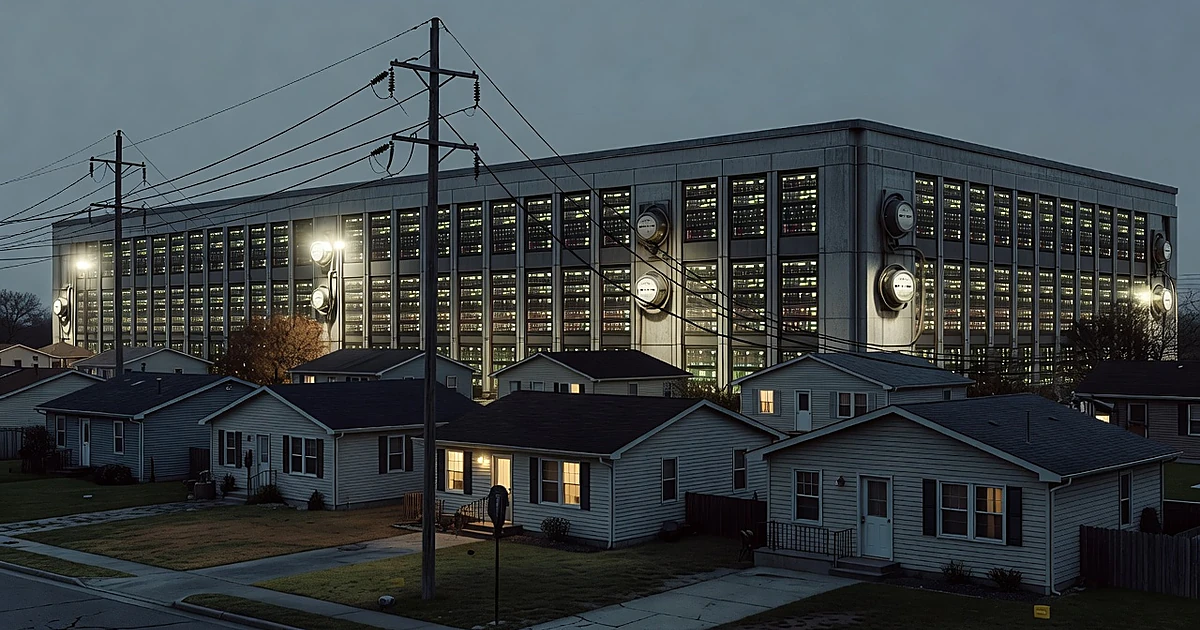
The list was supposed to identify only secondary properties, luxury pieds-à-terre held by the wealthy as second homes. Instead, it swept up primary residences, middle-class homeowners, and at least one shopping mall. The result is a sprawling, error-riddled document that has drawn bipartisan criticism and raised pointed questions about whether Mamdani's administration can competently execute the policy it spent months selling to voters.
960,000 names for a tax meant to hit 13,000 homes
The gap between promise and execution is staggering. When the pied-à-terre tax was first pitched, it was sold as a narrowly targeted levy on roughly 13,000 high-end second homes in New York City. The state budget deal signed by Governor Kathy Hochul set the threshold at properties valued above $5 million, with initial projections estimating $500 million in annual revenue.
But the database the mayor's office actually published contains over 960,000 property records. That is roughly seventy times the number of homes the tax was designed to reach. Newsmax reported that the city comptroller has already revised revenue projections downward, to between $340 million and $380 million annually, a $120-to-$160 million shortfall from Hochul's original estimate before a single dispute has been filed.
Errors litter the list. Properties in the Bronx and Staten Island worth between $500,000 and $800,000 appear alongside Manhattan penthouses. A Queens shopping mall made the cut. And elected officials who live full-time in the homes flagged by the database found themselves listed as absentee luxury owners.
Even Mamdani's Democratic allies say the list is wrong
Councilmember Gale Brewer, a Democrat representing Manhattan's District 6, was among those caught in the dragnet. Brewer has lived in her listed property since 1994, not as a second home, but as her only home.
"I've been living in [my place] 365 days a year since 1994. So, this whole list must be messed up."
Brewer's complaint is not ideological. It is factual. If a sitting city council member's primary residence can be misidentified as a taxable pied-à-terre, the database's methodology is fundamentally unreliable. And Brewer is far from the only person flagged incorrectly.
Republican Council Minority Leader David Carr went further. Carr, whose own primary residence appeared on the list, called Mamdani "realtor of the year" for the state of Texas, a jab at the likelihood that wealthy residents will simply leave New York rather than submit to a tax regime that cannot even identify the right properties.
In a separate statement, Carr told the New York Post the move was reckless:
"It's a reckless and foolish move, especially considering there are potentially thousands of properties on this list that do not qualify as second homes or whose owners will successfully dispute their inclusion."
That criticism did not come from a conservative think tank. It came from an elected official looking at his own incorrectly listed address. The concern is bipartisan, and it is grounded in the database itself.
Mamdani's administration has already drawn scrutiny on multiple fronts. The mayor, who rose to power with strong support from Democratic Socialist, aligned candidates who swept New York's primaries, has faced a string of controversies that have tested even his most loyal allies.
Mamdani promised to tax the rich, his own base says he fell short
The pied-à-terre tax was supposed to be the centerpiece of Mamdani's economic agenda. He campaigned on taxing the wealthy, and he framed the budget deal as a promise kept. "When I ran for mayor, I said I was going to tax the rich," Mamdani said after the deal was announced. "Well today, we're taxing the rich."
His own political base disagrees. NYC Democratic Socialists of America co-chair Gustavo Gordillo said the pied-à-terre tax fills only 10 percent of the city's budget deficit. The deal stopped short of the broad income tax increase on the state's wealthiest residents that Mamdani had made his central priority.
So the tax Mamdani is claiming as a victory is too small for his left flank and too sloppy for everyone else. The database that was supposed to demonstrate the policy's reach instead demonstrated its incompetence.
Meanwhile, the exodus of millionaires from New York continues to drain billions in tax revenue, a trend that Mamdani's aggressive posture toward wealth is unlikely to reverse.
Ken Griffin's $238 million apartment became a campaign prop
The database controversy is not the first time Mamdani has used a wealthy New Yorker's property as a political tool. Earlier, the mayor released a video promoting the pied-à-terre tax that singled out Citadel CEO Ken Griffin's $238 million apartment as an example of undertaxed luxury.
Citadel pushed back hard. COO Gerald Beeson sent an internal email and issued a public statement calling the move shameful:
"It is shameful that he used Ken's name as the example of those who supposedly aren't carrying their fair share... The Mayor has once again manifested the ignorance and disdain of the elite political class towards those who have been consistently committed to building one of the greatest cities in the world."
The stakes were not abstract. Citadel had announced plans for a $6 billion office building on Park Avenue, projected to generate $4.5 billion for the local economy, 6,200 construction jobs, and 15,200 permanent positions. National Review reported that Beeson issued a veiled threat that the firm was considering pulling out of the development entirely.
Antagonizing a company that was about to pour billions into the city's economy to score a populist point in a promotional video is not shrewd politics. It is the kind of decision that makes investors recalculate whether New York is worth the trouble.
Privacy concerns and the question of who gets targeted
Beyond the errors and the political fallout, the database raises a straightforward privacy concern. Publishing the names and home addresses of nearly a million people, including celebrities, public figures, and ordinary homeowners, in a searchable format is not a neutral administrative act. It is a targeting mechanism.
Steven Fulop, president and CEO of the Partnership for New York City, said the list singles out people who have done nothing wrong "at a moment when the far-left already treats success itself as something to be punished."
Spencer Pratt, described as a former Los Angeles mayoral candidate, put the concern in blunter terms:
"This is what commies do. They mark their enemies, call them 'fascists', and that's the bat signal: they know their deranged commie street animals will Luigi them. They never have to explicitly call for violence...violence is just the inherent reflex of the commie. Message receive."
Pratt's language is heated, but the underlying point connects to a pattern that critics have flagged repeatedly. When a government publishes a list of wealthy residents by name and address, framed as people who owe the public more money, the list functions as an invitation, whether the administration intends it that way or not.
Mamdani's tenure has already produced flashpoints that test the boundary between policy and provocation. 9/11 families petitioned to keep him from the 25th anniversary ceremony at Ground Zero, and his administration has drawn federal pushback on diplomatic matters as well.
A category that tripled before the first bill was mailed
The Washington Examiner noted that the pied-à-terre tax was initially estimated to affect roughly 10,000 properties when it was proposed in May. By July, the roll exceeded 31,000, tripling in under three months. The published database, meanwhile, touched nearly a million records.
Emzari Gelashvili, a former Georgian counterintelligence officer writing in the Examiner, drew a pointed historical parallel: "The category always grows. It has never once shrunk." He added: "No one had to intend any of it. The category was written loosely, and on contact with reality, it tripled."
That observation cuts to the core problem. The pied-à-terre tax was presented as a precision instrument aimed at the ultra-wealthy. In practice, it produced a blunt, sprawling list that swept up the Bronx, Staten Island, a shopping mall, sitting council members, and the mayor's own supporters. The policy's defenders cannot simultaneously argue that it targets only the rich and explain why 960,000 names appear on the list.
Mamdani's administration has faced federal intervention on other fronts, and the pied-à-terre debacle adds another line to a growing record of overreach.
A parody account sums up the mood
Even the internet piled on. A parody account impersonating Secretary of State Marco Rubio weighed in, telling those on the list to pay up and suffer the consequences of their actions. The post was satire, but it captured a real dynamic: the people Mamdani is taxing are, in many cases, the same people who helped put him in office.
Cynthia Nixon fundraised for Mamdani. Anna Wintour backed him. And now both of them sit on a public, searchable government database alongside hundreds of thousands of New Yorkers who may owe nothing at all.
When a mayor cannot build a tax list that distinguishes between a billionaire's second penthouse and a council member's only home, the problem is not the tax rate. It is the competence of the people running the city.