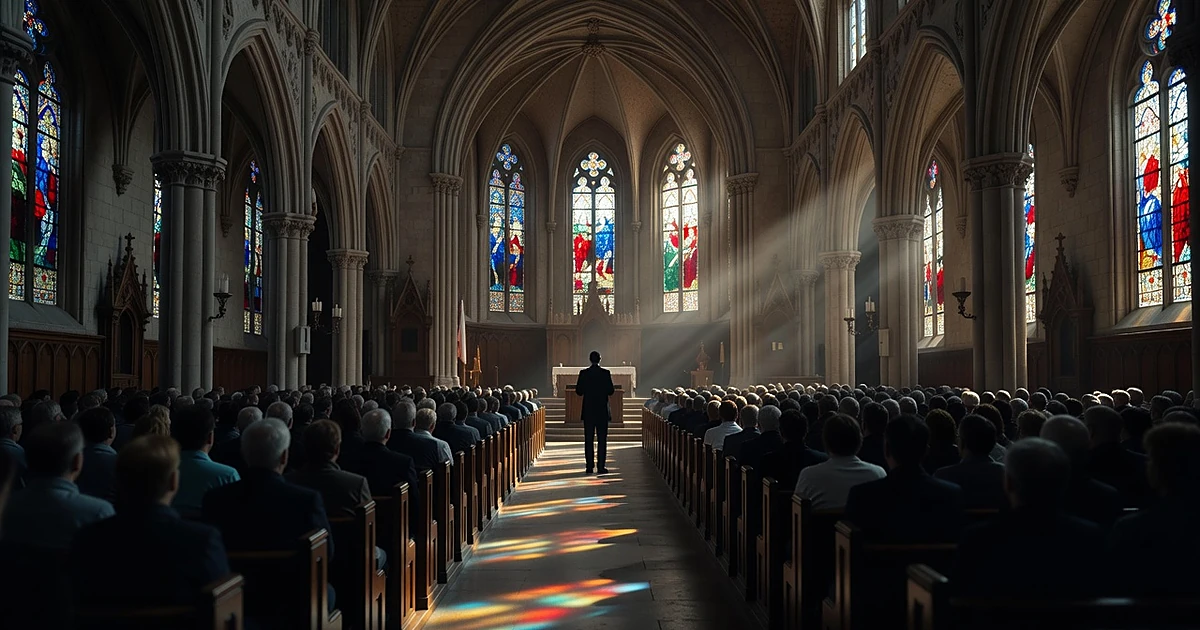
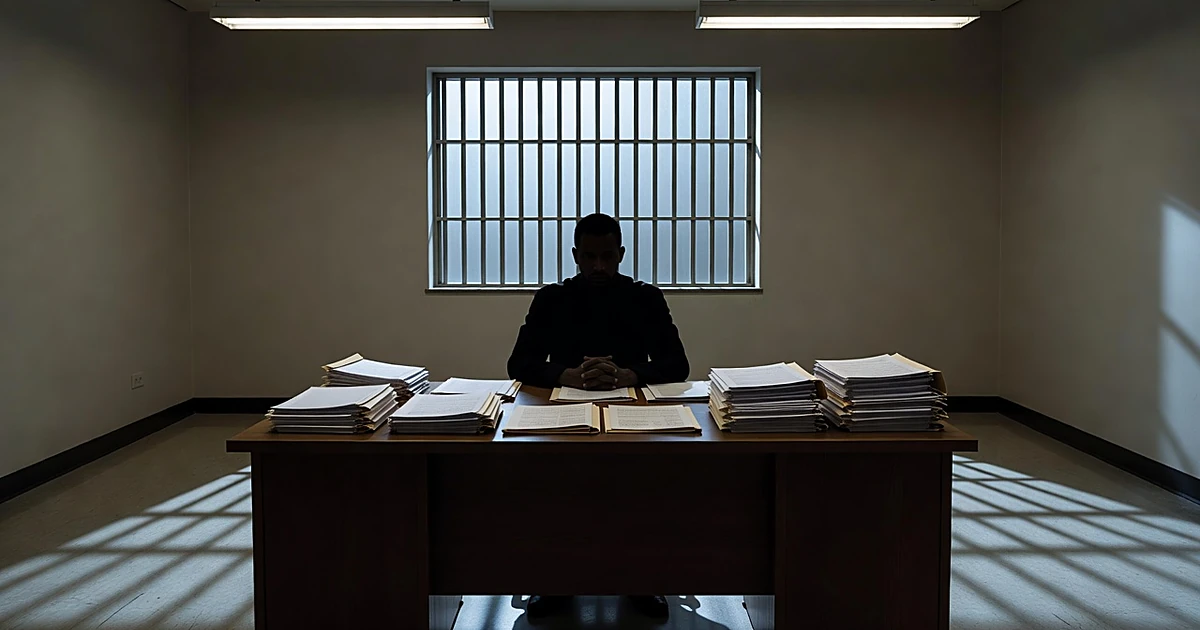
Seven Christians vanish after Shanghai police raid on Wenzhou house church
Shanghai police raided a house church tied to the city known as "China's Jerusalem" and arrested its founding pastor along with six colleagues, all seven have since disappeared into state custody without a trace.
Officers moved in at roughly 7:30 a.m. on August 5, seizing Pastor David Tang and six others in a case that spans more than one province, ChinaAid reported. Tang leads Purpose Driven Church, also called Biaogan Church, in Wenzhou, a port city in Zhejiang province where Christians make up an estimated tenth of the population. The church has never registered with the government or joined the Three-Self Patriotic Movement, the state-run body that supervises China's officially sanctioned Protestant congregations.
No one has heard from the seven since the arrests. Chinese authorities have disclosed nothing about their location, their legal status, or whether any charges have been filed. Officials tightened controls on information about the episode and blocked posts about it online. The public learned of the raid only two days later, when an account called "Day of Prayer and Fasting for Persecuted Churches in China" posted about it on X.
Christian Solidarity Worldwide, the U.K.-based advocacy group, identified those held as Tang, a financial administrator at his congregation, and five ministry workers from Shanghai. CSW President Mervyn Thomas called the case an incommunicado detention. He pressed Beijing to disclose the group's location, grant access to lawyers and relatives, and free them unless authorities can produce solid evidence of a crime. Thomas characterized enforced disappearance and arbitrary detention as breaches of international human rights norms.
Beijing prefers fraud charges over religious ones, advocate says
Bob Fu, who leads ChinaAid, a Texas-based nonprofit that tracks persecution of Christians in China, said the arrests fit a broader campaign by the Chinese Communist Party to crush independent Christian congregations. Fu described the regime's toolkit in a single phrase:
"Intimidation, enforced disappearances and the misuse of criminal law."
Fu said officials now steer away from overtly political or religious charges, turning instead to criminal or financial ones, fraud, illegal business dealings, and what Chinese law calls "illegal use of information networks." The strategy, as Fu described it, aims to tarnish Christians' standing at home while avoiding the diplomatic fallout that overt religious persecution would bring.
That pattern has played out before. Other pastors of underground churches have disappeared into Chinese state custody for months or years, their cases surfacing only when international pressure forced a response.
Purpose Driven Church itself has already been a target. Beijing forced its closure, and the congregation now gathers discreetly. Tang's arrest suggests that even quiet, unofficial worship is not small enough to escape the party's attention.
Wenzhou's long history of faith, and the state's campaign to uproot it
Wenzhou earned the nickname "China's Jerusalem" for a reason. Missionaries brought Protestant Christianity to the coastal city in the 1800s, and the faith took deep root. Today roughly one in ten residents is Christian, a concentration that makes the city a persistent irritant to a regime that treats organized belief outside party control as a threat.
Open Doors, a ministry that monitors Christian persecution worldwide, says the faith is treated as a threat by the CCP, leaving believers under close watch and tight controls. The evidence from Wenzhou alone bears that out in detail.
In the mid-2010s, authorities launched a campaign across Zhejiang province to strip crosses from religious buildings. Estimates of the toll range from above 1,000 to upwards of 1,500 sites, including the well-known Sanjiang Church in Wenzhou.
The pressure never let up. Civil servants and minors are barred from entering churches. University students are barred from religious activity on and off campus. Sunday schools and youth camps have been shut down. Church members face surveillance cameras, and state monitors sit in on sermons. Believers among civil servants risk discipline, demotion, or dismissal. Anyone younger than 18 is barred from attending church.
That is not a crackdown with a beginning and an end. It is a permanent apparatus of control, and it has only grown more aggressive.
Yayang Church demolished after mayor broke in and raised the flag
The most dramatic recent episode in Wenzhou unfolded at Yayang Church. In June 2025, Wenzhou Mayor Li Ben broke into the church and raised the Chinese flag on its flagpole. Church leaders and members endured months of summons and threats afterward.
On the night of December 14, 15, 2025, more than 1,000 police officers raided the Yayang Church congregation. Hundreds were questioned. Upwards of 20 were arrested after objecting to the flag's placement inside the building. Raids on house church services and the detention of pastors and even children have become a grim recurring feature of the CCP's approach to unapproved worship.
Demolition of Yayang Church began in January and was finished by May. A church that had stood in a community for years was reduced to rubble because its members refused to accept a political symbol planted by force.
Other Wenzhou clergy already targeted
Tang is not the first pastor or cleric in the Wenzhou area to be seized. Pastor Huang Yizi of Pingyang County has been taken into custody. Bishop Peter Shao Zhumin, who leads the local Catholic diocese, has lived under restrictions for years. Father Ma Xianshi, a state-recognized priest, was imprisoned on a business-related charge and released only in July.
The charges vary, fraud, business violations, vague "network" offenses, but the targets share a common trait: they lead congregations that exist outside the party's direct supervision. The regime's willingness to jail both Protestant and Catholic clergy, registered and unregistered alike, reveals how broadly it defines the threat.
When a religious figure dies in custody in another country after arrest on trumped-up charges, the world rightly calls it persecution. The same standard applies when seven Christians vanish into a Chinese detention system designed to operate beyond the reach of lawyers, families, or any outside scrutiny.
As of the most recent reporting, no official statement from Beijing or Shanghai police has addressed the arrests. No charges have been publicly disclosed. No lawyer or family member has been granted access to the seven. The Chinese government's silence is not a gap in the record, it is the policy.
A regime that fears hymns more than it admits
International attention has freed detained pastors before, but only when foreign governments applied direct, sustained pressure. Without it, the CCP's default is to let the detained disappear from memory along with the news posts it scrubbed.
Seven people gathered to worship in a country that calls itself a republic. For that, they vanished. A government that deploys a thousand officers to silence a single congregation is not projecting strength, it is confessing what it fears most.