King Charles drops 'Defender of the Faith' from royal report, drawing accusations he abandoned Christian oath
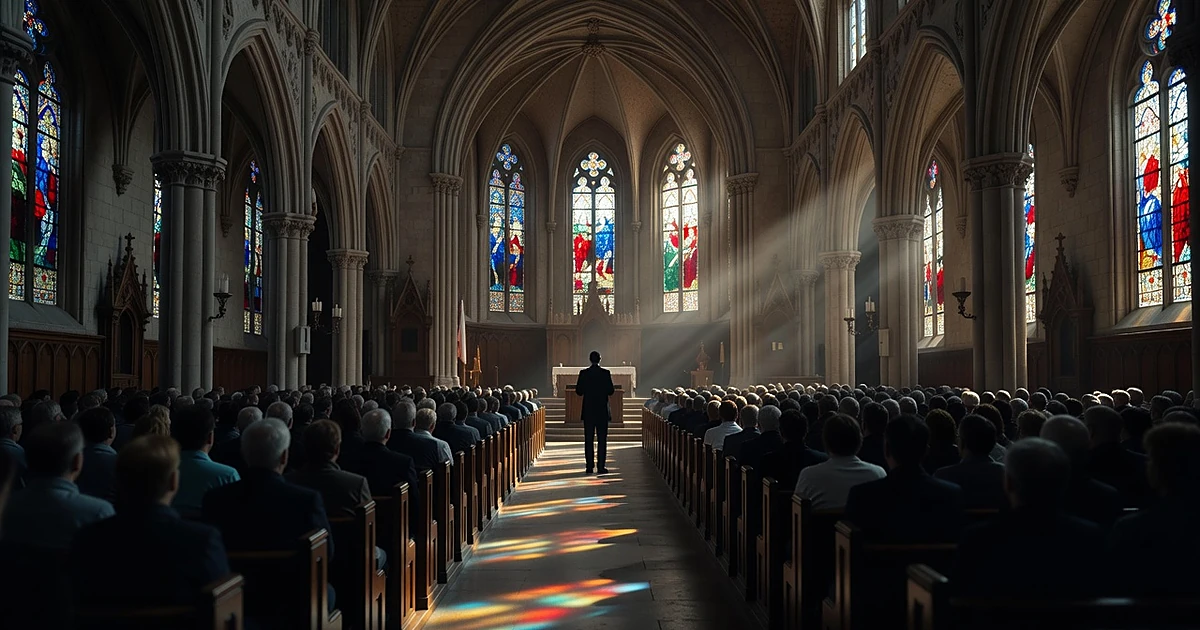
Queen Elizabeth's former chaplain accused King Charles III of "deserting Christians" after the monarch's official annual report quietly replaced the centuries-old title "Defender of the Faith" with vague, multi-faith language.
The Sovereign Grant Annual Report, published in June, stripped the traditional designation and substituted new wording: "His Majesty is Supreme Governor of the Church of England and protects the space for Faith within the multi-faith nation." The change drew sharp criticism from Gavin Ashenden, who once served as a chaplain to the late Queen Elizabeth II, and from royal commentators who warned the rewording signals a deliberate weakening of the Crown's historic bond with Christianity.
No official explanation from the Palace accompanied the language swap. No statement from the Church of England addressed it. The title simply disappeared from the document, and the people who noticed are not satisfied with the replacement.
Fitzwilliams called the new language 'weak and woke'
Royal expert Richard Fitzwilliams told Fox News Digital the revised wording "caused considerable controversy." He did not hold back about the draftsmanship behind it.
"It would have been better to leave 'Defender of the Faith' in the text after 'Supreme Governor of the Church of England' and then add a phrase that recognised Britain as multi-faith which should be included. Whoever wrote 'protects the space for Faith within the multi-faith nation' is no credit to the English language as this phrase is both weak and woke."
Fitzwilliams argued the institutional stakes run deeper than a few words on a government report. Britain, he pointed out, is "the only monarchy in Europe to have a Coronation", a ceremony rooted in the Church of England. Weakening the Crown's formal Christian identity, he warned, undermines the very institution that gives the monarchy its constitutional foundation.
He recalled how the late Queen handled the same tension between Christianity and Britain's growing religious diversity without abandoning the title. Fitzwilliams noted that Queen Elizabeth "memorably compared the Church of England to an umbrella under which other faiths could flourish."
"She was a believer. The Church of England is clearly extremely weak. It is emphatically not in the royal family's interest, especially as we are the only monarchy in Europe to have a Coronation, to weaken it further."
That contrast matters. Elizabeth found a way to acknowledge a multi-faith nation while keeping the Crown's Christian identity intact. Charles chose to edit the title out entirely. The difference is not subtle.
Charles's interest in other religions stretches back decades
The change did not come out of nowhere. Christopher Andersen, author of the biography "Kate!: The Courage, Grace, and Power of the Woman Who Will Be Queen," told Fox News Digital that Charles's ecumenical leanings date to his university years.
"As far back as his student days at Cambridge, Charles in the 1970s was showing a strong interest in what eastern religions had to offer, particularly Islam, Buddhism, and Hinduism."
In 2001, the then-Prince of Wales broke fast with Muslims in East London during Ramadan. His coronation at Westminster Abbey on May 6, 2023, incorporated multi-faith elements. None of this was hidden. But there is a wide gap between personal curiosity about other traditions and formally stripping a centuries-old Christian title from an official government document.
Andersen framed the move as part of Charles's broader governing philosophy. The king, he said, sees his reign as a "big-tent" project that cannot leave non-Christians on the outside.
"Charles is just a different sort of animal. The current king has long believed that no one religion has all the answers. He also knows that if he is going to have a big-tent reign, then he can't leave non-Christians standing out in the cold, he's going to have to let Muslims and Hindus and Jews and Buddhists inside."
The ambition is clear enough. But the method, quietly editing a title out of a financial report with no public explanation, looks less like bold leadership and more like bureaucratic evasion. If Charles believes the title should change, he could say so openly and make the case. Instead, the language vanished without a word from the Palace. That pattern, as covered in our earlier reporting on the backlash, raises fair questions about whether the Crown is reshaping its identity by stealth rather than by argument.
Experts warn William may finish what Charles started
If the current king's moves concern traditionalists, the next generation may alarm them more. Andersen pointed to a moment from 1995 that he called "particularly telling." When Prince William enrolled at Eton College with cameras rolling, the future head of the Church of England reached the line on the form marked "Religion", and turned to his father, uncertain what to write.
"When it came time to fill out the space marked 'Religion,' the future Head of the Church of England looked up at his father quizzically and asked what he should put down."
Andersen drew a blunt conclusion from the anecdote.
"If that is any indication, it is obvious that once they are king and queen, William and Kate will in all likelihood move to phase out the Defender of the Faith role altogether."
Royal broadcaster Ian Pelham Turner offered a slightly more mixed picture. He described Charles as a "deep thinker when it comes to religion" but said William's relationship with the church is far more distant. Turner told Fox News Digital that "William is not interested in the church whilst Catherine has been a staunch Christian, especially renewing her beliefs more recently during her cancer diagnosis."
That split within the future royal household, a prince indifferent to the church and a princess who leaned into her faith during a health crisis, could shape the institution's direction for decades. When leaders in positions of enormous responsibility step away from the roles that define their office, the consequences ripple outward. The pattern is not unique to the monarchy; similar questions arise whenever prominent leaders voluntarily leave behind duties their predecessors treated as non-negotiable.
Elizabeth held the line, Charles moved it
The contrast between Elizabeth II and her son on this point is stark. By every account in the record, Elizabeth maintained her Christian identity without apology while welcoming other faiths under the same national roof. Andersen noted she was "very respectful" of other religions' customs but "never wavered when it came to her Christian beliefs." Fitzwilliams described her umbrella metaphor as a model that worked, one that honored both the Crown's Christian roots and Britain's diversity.
Charles chose a different path. Rather than hold the title and expand its shelter, he edited the title itself. The new language, "protects the space for Faith", is so abstract it could mean almost anything. It commits the Crown to nothing specific. It names no tradition. It claims no ground.
Ashenden, the former royal chaplain, framed the change in the sharpest terms available: the king, he said, is "deserting Christians" and has abandoned the oath he swore. No verbatim statement from Ashenden appeared in the reporting, and the format of his criticism, whether a written statement, interview, or social post, remains unclear. But the charge itself is direct, and it comes from someone who served the previous monarch in a spiritual capacity.
Several questions remain unanswered. Who within the royal household drafted the new language? Is the title gone from all official documentation, or only from this one report? Has the Archbishop of Canterbury weighed in? The Palace's silence on all of these points does nothing to reassure the faithful that this was a considered, transparent decision rather than a quiet institutional retreat. It follows a broader pattern visible across Western institutions, senior figures stepping away from established roles without fully accounting for what gets lost in the process.
When the head of the Church of England decides the phrase "Defender of the Faith" is no longer worth printing, the faithful are entitled to ask what, exactly, he thinks he is defending, and whether anyone in the Palace plans to answer them.