Kirk family builds wrongful death case against Utah Valley University, but state immunity law stands in the way
Charlie Kirk's family has filed a notice of intent to sue Utah Valley University over alleged security failures that led to his assassination, but legal experts warn Utah's sweeping government immunity statute could block the case before it ever reaches a jury.
Attorneys for the Kirk family submitted the filing on September 9, one day before the anniversary of Kirk's death, naming UVU, campus police chief Jeffrey Long, and former university president Astrid Tuminez. The notice, a required legal step before any formal lawsuit against a government entity in Utah, alleges the university declined requests for additional officers, ignored warnings from Kirk's own security team about rooftop access near his speaking location, and failed to put an adequate security plan in place for the event.
Kirk, 31, was shot and killed on September 10, 2025, while addressing students at an outdoor event at UVU's Losee Center in Orem, Utah. Prosecutors say Tyler Robinson fired the fatal shot. Robinson has been charged with aggravated murder, and a Utah judge has kept the death penalty on the table in his criminal case.
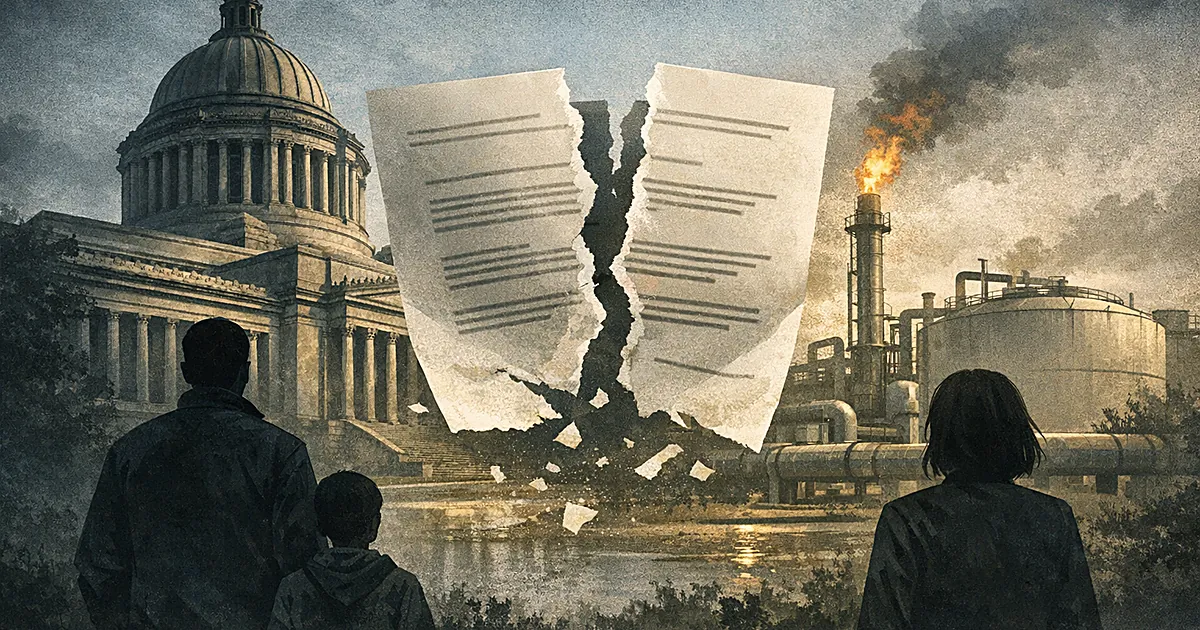
The family's civil case, however, faces a legal obstacle that has nothing to do with the strength of the evidence. Utah's Government Immunity Act, codified under Utah Code Title 63G, Chapter 7, Section 201, grants government entities and their employees broad protection from lawsuits arising out of battery, assault, false imprisonment, malicious prosecution, and civil rights violations. Because Kirk was killed by gunfire, the claim falls squarely within the statute's battery exception, regardless of how recklessly the university may have acted.
A law professor calls the statute "unusual", and nearly airtight
Teneille Brown, a law professor at the University of Utah, told Fox News Digital the Kirk family faces a steep climb despite what she described as compelling facts.
"Unfortunately, Charlie [Kirk's family] is going to have a very difficult time prevailing in a wrongful death case in Utah. And that's because Utah's government immunity statute is phrased in such a way that says even if the state and UVU were reckless, they retain immunity in cases that arise out of a battery, and that would include gunshot wounds."
Brown emphasized that most states do not grant their government entities that kind of blanket protection. She pointed to prior cases in which families of victims proved carelessness or even recklessness by state actors and still lost.
One example she cited: the case of Mika Scott, a 19-year-old UVU student who was raped in 2010 by Shawn Leonard, a prisoner with a violent criminal record who had escaped from a work-release program. Scott sued Utah County and the Utah County Sheriff's Office, arguing officials failed to screen inmates for violence and failed to police the boundaries of the work-release site. Brown said Scott could have shown recklessness, but the immunity statute shut the case down because the claim arose out of a battery.
Brown also pointed to a 2005 Utah Supreme Court decision, Wagner v. Utah, in which the justices held that civil battery does not require an intent to cause physical or psychological injury. In that ruling, the court signaled that retaining such broad immunity might not be wise and suggested the legislature revise the statute.
Two decades later, the legislature has done nothing. The statute remains unchanged.
"I got you covered", the message Kirk's attorneys call their strongest card
Neama Rahmani, president of West Coast Trial Lawyers, told Fox News Digital the Kirk family's best argument centers on a specific exchange between Kirk's security team and UVU Police Chief Jeffrey Long. Kirk's team flagged concerns about rooftop access to the Sorenson Center, a building located directly west of the Losee Center where Kirk was scheduled to speak. Long's response, as characterized by Rahmani: "I got you covered."
That message, Rahmani argued, could establish that the university voluntarily assumed a duty to protect Kirk, a stronger legal footing than arguing the government owed a general duty to prevent violence. As Breitbart reported, the Kirk family's notice of claim describes how TPUSA staff warned Long via text about student rooftop access, and the threat went unaddressed despite his assurance.
Rahmani acknowledged the difficulty of holding government entities responsible for another person's criminal act:
"I've handled lack of security cases, including lack of security cases against the government. They are tough because you are trying to hold the police or city, county or state responsible for someone else's criminal actions."
But he added that cases in which the government affirmatively takes on a duty tend to fare better than those relying on a general obligation to protect the public.
The family's filing paints a picture of cascading failures. Only six campus police officers were assigned to the event despite a crowd of roughly 3,000 people. There were no drone patrols monitoring rooftops, no coordination with local law enforcement, no bag checks or metal detectors, and no first responders immediately available. AP News reported that the notice specifically cited the attempted assassination of President Trump by a rooftop shooter the previous year as a reason UVU should have been especially alert to the threat.
Kirk family attorney D. Loren Washburn stated in the filing that the university "took none of these safety measures, steps only they had the authority to take, resulting in a situation that rendered Mr. Kirk helpless before his assassin."
Security footage allegedly shows Robinson accessing the rooftop unchallenged
National Review reported that security footage allegedly captured the 23-year-old Robinson using a staircase to reach a roof overlooking Kirk's speaking area just after noon on the day of the shooting. That detail underscores one of the central allegations in the family's notice: the university knew about the rooftop vulnerability, was warned about it, and did not secure it.
Robinson left behind a handwritten note stating, "I had the opportunity to take out Charlie Kirk, and I took it." Sen. Mike Lee has called the confession evidence against Robinson "damning."
Kirk co-founded Turning Point USA in 2012 and built it into one of the most prominent conservative youth organizations in the country, with a presence on high school and college campuses nationwide. He left behind his wife, Erika, and two small children.
No political check on campus officials who failed
Brown raised a point that cuts to the philosophical heart of sovereign immunity. The traditional justification for shielding government actors from lawsuits is that voters can hold elected officials accountable at the ballot box. But UVU's president and campus police chief are not elected. No one votes them in or out.
"The president of UVU, the campus police, those people are not elected. And, so, if you were to say sovereign immunity is all about letting people decide whether they're state actors or careless at the ballot box, then you vote them out of office. That doesn't work. That argument doesn't work for the UVU president because nobody can vote them out of office. Nobody is having any political check on the campus police."
Tuminez stepped down from the UVU presidency in May 2026 after eight years, but on her own timeline, not because voters demanded it. The university's only public response came through a spokesperson who told Fox News Digital: "We are aware of the notice of claim. UVU addresses legal matters consistent with our established processes. Our focus remains on supporting our campus community."
That boilerplate statement offered no acknowledgment of the specific security failures alleged in the filing and no explanation of what, if anything, the university has changed. Meanwhile, Utah taxpayers face a growing tab for Robinson's defense as the criminal case moves forward.
Fox News Digital reached out to the Kirk family's lawyers for comment but did not report receiving a response.
Utah lawmakers have ignored the court's warning for twenty years
The Kirk family's case puts a spotlight on a statute that Utah's own Supreme Court questioned two decades ago. In Wagner v. Utah, the justices said it "may not be prudent" for the state to keep shielding itself from battery-related claims and urged the legislature to act. The legislature ignored the signal. The law remains exactly as it was.
That means a university can allegedly decline extra officers, brush off rooftop warnings, skip metal detectors, and send a text saying "I got you covered", and still claim immunity because the harm was ultimately inflicted by a third party's violent act. The statute does not ask whether the government was reckless. It asks only whether the claim "arises out of" a battery.
In a different state, the Kirk family's evidence might speak for itself. In Utah, the law may not let it speak at all. Universities elsewhere have paid millions over far lesser failures connected to Kirk's name. Whether Utah's legislature will finally revisit a statute that even its own highest court called into question, or whether it will let another family absorb the consequences of institutional negligence shielded by law, is a question only the statehouse can answer.
A 31-year-old man was shot dead on a college campus after the people responsible for security were warned and did nothing. If the law says no one can be held accountable for that, the law needs to change.