Prince Harry's AI warning at Clinton Global Initiative derailed by technical failure
Prince Harry flew back to the United States to lecture a room full of Clinton allies about the dangers of artificial intelligence, only to have his own speech cut short by a technical malfunction that left him standing offstage for 40 minutes.
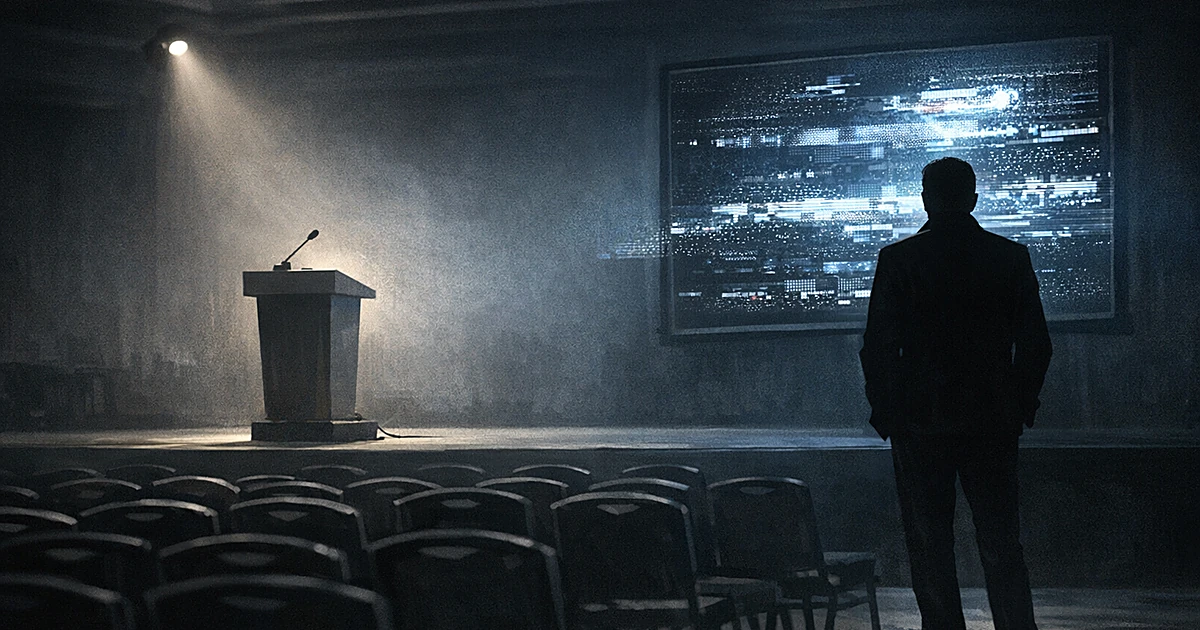
The Duke of Sussex, 42, took the stage Wednesday at the Clinton Global Initiative in New York City to warn that AI threatens children and families. About seven minutes into his remarks, an unspecified technical failure forced him to stop mid-sentence and walk off. He did not return for roughly 40 minutes, Breitbart reported the cause was a teleprompter failure, a detail that added an uncomfortable layer to a speech built around warnings about technology gone wrong.
When Harry finally walked back out, he opened with a quip rather than an apology. The youngest son of King Charles III and the late Princess Diana framed the glitch as proof of his own thesis.
"Hello again. So AI got into my speech, so I was asked to come out and finish it. Interesting to see what it was so concerned about in part two."
The joke landed lightly, but the image was hard to shake: a man who left the British monarchy, spent six years building a celebrity brand in America, and then moved back to the United Kingdom, now unable to get through a prepared address at a gathering hosted by Bill Clinton, Hillary Clinton, and Chelsea Clinton.
Harry frames himself as a parent, not a prince
The substance of Harry's speech centered on children's safety online. He told the audience he speaks on the issue not as a royal but as a father of two, Prince Archie, 7, and Princess Lilibet, 5.
As the New York Post reported, Harry told the crowd he had spoken with parents who lost children to what he called "recklessly built technology."
"I come to this as a father. One who has shared countless conversations with other parents as they mourned the loss of their children to recklessly built technology."
He went further after returning to the stage, arguing that AI represents a deeper intrusion than social media ever did. Social media captured attention, Harry said. AI wants something more personal.
"Social media learned how to capture our attention. AI is learning how to enter our relationships. It doesn't just want your attention; it wants your attachment. It wants to be the thing you confide in."
Harry also displayed images of children during his remarks and claimed the number of grieving parents he has encountered has grown sharply. He offered no specific study or data source to back the figures.
"And as a father, I will remind you of the faces that accompanied me the last time I stood before you. Hundreds have become thousands. Thousands of parents grieving their children. Millions of families are living with the consequences of a digital revolution that moved faster than our willingness to protect them."
A repeat visit to the Clinton stage raises familiar questions
Wednesday's appearance was not Harry's first at the Clinton Global Initiative. He spoke at the same forum in 2024, warning then about "dangerously powerful" social media companies. The return trip suggests the Clintons' annual gathering has become a reliable platform for the duke, a venue where he can position himself as a global advocate without the constraints of the monarchy or the scrutiny of the British press.
The Clinton Foundation itself has drawn its own share of criticism over the years. The organization once sparked backlash over an internship posting that called for "discretion," a word choice critics found revealing for an institution built around the Clinton name.
For Harry, the Clinton stage offers something specific: a friendly, left-leaning audience that treats his warnings about Big Tech with seriousness. He described tech giants as entities designed to "find you, hook you, exploit you, break and then blame you." Those are strong words, but they came from a man who could not finish reading his own teleprompter.
Six years in America, then a retreat to Britain
Harry and his wife, Meghan Markle, moved back to the United Kingdom in August for what was described as an "extended period." The couple now resides outside London. The return came after roughly six years in the United States following their departure from royal duties, a stretch that included high-profile deals with Netflix and a bestselling memoir but, by many accounts, diminishing public influence on both sides of the Atlantic.
That Harry chose to fly back to New York for a single speech at a Clinton-hosted event says something about where he sees his remaining audience. It is not in the British tabloids. It is not in the American entertainment market. It is in the orbit of Democratic Party institutions that still treat celebrity advocacy as currency.
The concerns Harry raised about AI and children are not frivolous. Parents across the political spectrum worry about what algorithms do to young minds. But the messenger matters, and a 42-year-old prince who left his own family, built a brand on grievance, and now shuttles between continents to deliver speeches he cannot finish without a working teleprompter is not the most convincing one.
If AI really is as dangerous as Harry says, the cause deserves someone who can make the case on his own two feet, not someone who needs 40 minutes backstage and a second entrance to get through it.