Trump announces South Korean investment push for Alaska gas pipeline amid tight Senate race
President Trump unveiled South Korean investment plans for an Alaska natural gas pipeline and export terminal, delivering a high-profile boost to Sen. Dan Sullivan in a hard-fought reelection fight.
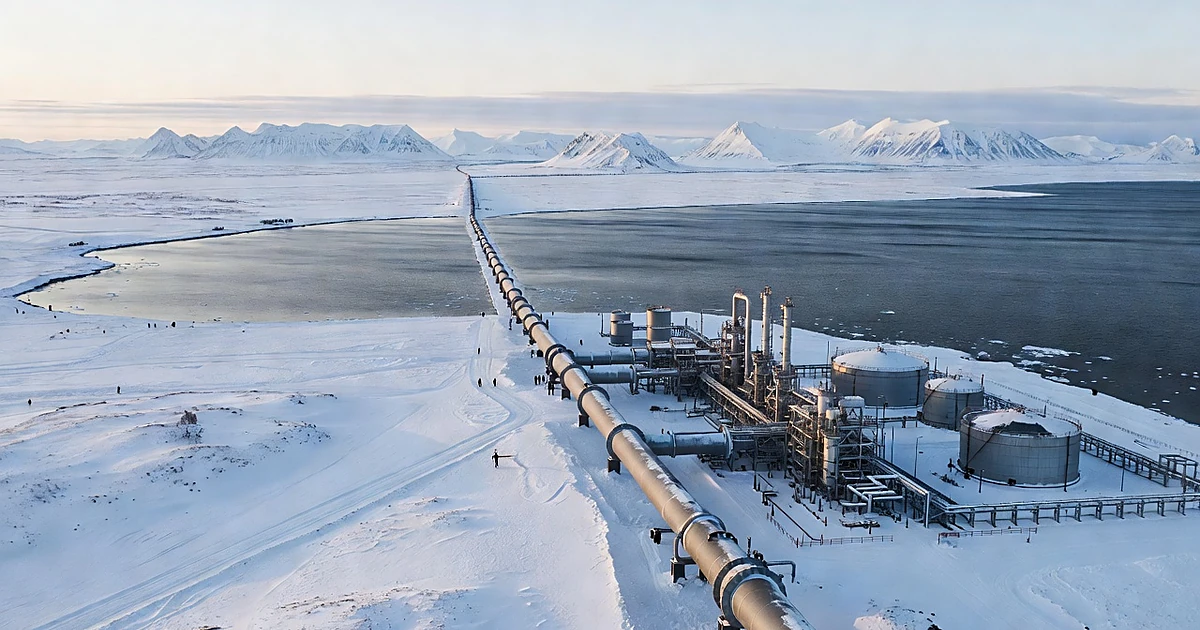
From the Oval Office on Wednesday, Trump outlined plans for South Korea to put money into exporting natural gas from Alaska. The project centers on an 807-mile pipeline linking the petroleum-rich North Slope to a liquefied natural gas terminal in southern Alaska. CBS News reported the move as the second such foreign-investment announcement in three days, following a Monday Oval Office event on a steel plant in Iowa.
Republican Sen. Dan Sullivan has long backed the Alaska effort and stood with the president as the plans were detailed. Trump credited the senator’s persistence and tied the project to trade agreements that require large South Korean commitments in the United States.
Commerce Secretary Howard Lutnick said the liquefied natural gas could also move to markets in Asia. The White House said the project will eventually lower energy costs for Alaska residents by delivering a more reliable supply.
Sullivan gets the public credit he sought for years
Trump made clear Sullivan had his attention. “He’s got my ear, and he’s had my ear for a long time on Alaska,” the president said. He added that “all these energy projects are all mine, and I got ’em done working with Dan Sullivan.”
"Mr. President, this one is huge for Alaska,"
Sullivan told Trump during the event. The two-term senator also said “the sky is the limit when we get this project done.” Officials described a three-year build for the pipeline, with LNG exports starting two years after that, if full financing comes through.
The timing lands squarely in a competitive reelection contest. Democratic former Rep. Mary Peltola is mounting a serious challenge to Sullivan in Alaska. Democrats need a net gain of four seats in the 100-member Senate to take control in the 2026 midterms, now less than five weeks away, and they are targeting Republican-held seats including Alaska.
Trump has promised to spend much of the next 30 days on the road campaigning, beginning in Texas, Alabama, Ohio, and Nebraska. The Alaska announcement followed a similar Monday event promoting a $15 billion steel plant planned for Iowa by a Minnesota company owned by an Indian industrial conglomerate, where Republican Rep. Ashley Hinson spoke amid her own close Senate race against Democratic state Rep. Josh Turek for the seat being vacated by retiring Sen. Joni Ernst.
Trade deals turn into concrete energy projects
Trump framed the Alaska push as part of a larger package. “Our trade agreement with South Korea, they have to invest hundreds of billions of dollars,” he said. A 2025 trade deal included South Korean pledges of $350 billion in U.S. investments in exchange for lower American tariffs on South Korean cars, auto parts, and other products.
Reuters reported that Trump announced South Korea will invest up to $200 billion in U.S. projects, including eight nuclear power plants, an Alaska LNG pipeline, and a large Texas power facility. Those projects form the first major pieces under the broader $350 billion strategic package. Seoul confirmed $22.3 billion for the Texas gas power project and $120 billion for eight nuclear reactors, yet its industry ministry stated no decision has been made on whether to invest in the Alaska LNG project or on the size of any such investment.
“Thanks to the agreements my administration has secured with the Republic of Korea, they will invest up to $200 billion,” Trump said from the Oval Office, according to that account. The hedging from Seoul leaves the Alaska portion less settled than the nuclear and Texas pieces even as the White House highlights the overall scale.
Just the News reported the U.S. and South Korea agreed to $200 billion in new investments after Trump met South Korean President Lee Jae Myung, with figures of $120 billion for eight nuclear reactors, about $50 billion for the Alaska LNG project, and $22 billion for a 6.4-gigawatt natural gas power project in Texas. Trump posted that the deals turn investment commitments into “huge construction projects, and tens of thousands of American jobs,” calling them “REAL INVESTMENT, REAL PROJECTS, REAL CAPACITY, and REAL JOBS in America.”
Job numbers and household savings enter the picture
The New York Post reported a $54 billion South Korean-backed investment figure for the Alaska LNG facility and 807-mile pipeline. That account projected 12,000 construction jobs and yearly energy-cost savings of $1,500 to $2,200 for Alaskan households. Trump joked that politicians had talked about the Alaska pipeline for five decades, “I’ve been hearing about it from the time I was a little boy”, and thanked Sullivan “for getting this deal done.”
The Washington Examiner reported South Korea is set to invest around $54 billion to support construction of a liquefied natural gas pipeline stretching the length of Alaska. The piece cast the commitment as a win for Trump’s push to capitalize on state natural resources and a lift for Sullivan, who has promoted Alaskan gas purchases in Asia while facing a close Senate race.
Further details on the Texas power plant and the eight large-scale nuclear plants remain limited in public accounts, and the exact pace of South Korean government approval for the Alaska spending is not settled. Financing must still come through fully before the multi-year construction and export timeline can lock in.
Midterm map puts energy wins on the ballot
Republicans are defending Senate seats against the historical pattern that the party holding the White House often struggles in midterms. Trump’s back-to-back Oval Office events on foreign investment in Iowa and Alaska put tangible projects in two of those contested states. While some Democrats have focused on political attacks, including a lame-duck push with impeachment articles timed to the same election cycle, the administration is rolling out infrastructure and energy commitments tied directly to trade leverage.
The same week’s emphasis on building American capacity sits alongside other enforcement and sovereignty priorities the president has advanced. Voters have also seen the Supreme Court clear the way for resumed third-country deportations, another concrete deliverable on border and immigration enforcement that contrasts with years of lax policy.
Trump continues to answer critics in blunt terms when the subject turns to past administrations. He recently called out an Obama-era claim about all-women governments as ridiculous, keeping the focus on results over rhetoric as he heads into the final stretch before Election Day.
Separate legal and personnel developments continue around the administration as well, including the resignation of Kurt Olsen from a DOJ team examining alleged plots, even as the White House keeps the public emphasis on jobs, energy, and investment.
For Alaska, the practical stakes are straightforward: a long-discussed pipeline, potential construction employment, lower household energy bills if the supply materializes, and export revenue once LNG ships begin moving. Sullivan has worked the issue relentlessly; Trump has now put presidential weight and foreign capital pledges behind it in full public view.
When trade pressure produces pipelines, power plants, and payrolls in states that actually vote, voters notice who delivered the steel and gas, and who only delivered excuses.