Democrats block Husted bill shielding homes from data center power hikes as media stays quiet
Senate Democrats blocked a House-passed bill to keep AI data centers from jacking up household electric bills, and Sen. Bernie Moreno says the press will not cover it.
Ohio Republican Sen. Bernie Moreno lit into Senate Democrats on Thursday for killing Sen. Jon Husted’s Ratepayer Protection Act, a measure meant to stop data centers from shifting massive power costs onto ordinary ratepayers. Speaking on a Breitbart News Fight Club Roundtable, Moreno said the bill could already be law if Democrats had not stood in the way.
The Senate vote was not a final up-or-down on the bill itself. Senators voted 57-43 on a procedural motion to end debate and take it up, three votes short of the 60 needed to break a filibuster. Only four Democrats joined Republicans: Sens. Maggie Hassan of New Hampshire, Amy Klobuchar of Minnesota, and Jon Ossoff and Raphael Warnock of Georgia.
Reuters reported Republicans hold a 53-47 Senate majority, yet still fell short because nearly the entire Democratic caucus refused to even open debate. The House had already passed its version 417-3 with overwhelming bipartisan support.
Husted’s bill forced data centers to cover their own power
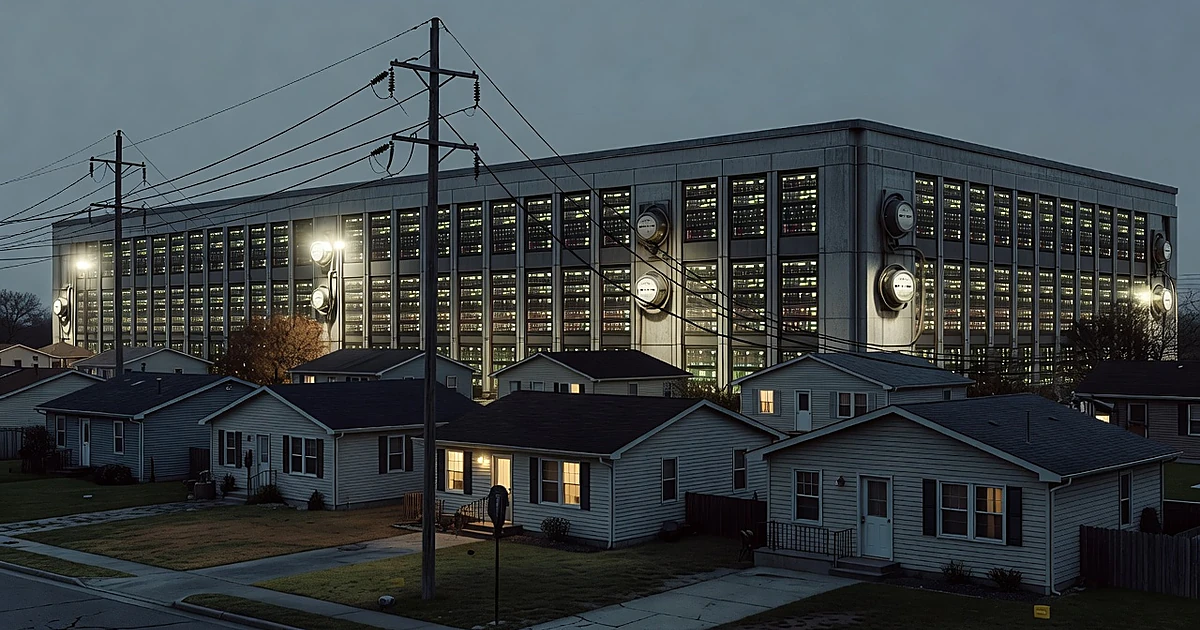
Husted wrote the Ratepayer Protection Act and pushed it through the House before it hit the Senate floor. Moreno told hosts Alex Marlow and Matthew Boyle the core idea was simple: if a company builds a power-hungry data center, it should create its own electricity instead of sticking local families with higher monthly bills.
Moreno explained the measure would essentially codify President Trump’s Ratepayer Protection Pledge. “It’s basically codifying [President Trump’s Ratepayer Protection Pledge], which says if you’re going to build a data center, and again, it’s up to the local community, obviously, and by the way, they shouldn’t be taking tax incentives at all, they have to produce their own power. Simple,” he said.
"You’re not going to raise the electricity prices of people who live in that community."
That, Moreno argued, should have been an easy win. “It was Jon Husted’s bill. He wrote the thing, he fought for it in the House. It was extremely successful. He gets to the floor of the U.S. Senate. We’re thinking, ‘My God, this thing’s gonna pass. It’s a no-brainer. Make the data centers pay for their own power.’”
Then Sen. Martin Heinrich of New Mexico objected. Per Moreno’s recounting, Heinrich said, “I object. It doesn’t go far enough,” and floated his own alternative. Moreno said he offered to advance both bills. Democrats still would not move.
One objection blocked fast-track passage
Just the News reported Husted had sought to move the House-approved bill by unanimous consent, a path that skips the usual 60-vote hurdle if no senator objects. One Democratic objection is enough to kill that route. Moreno said Democrats hid behind Heinrich’s stand.
Senate Leader Thune then forced a roll-call vote to put every member on the record. Moreno described the sequence this way:
"Of course, all the Democrats hid behind him because all it takes is one Democrat to object to fast track. So to Leader Thune’s credit, he said, ‘Well, let’s expose them all. Let’s put the bill on the floor, have a roll call vote.’ Here’s what’s crazy: [Democrats] didn’t technically vote against the bill. They voted against ending debate on whether we should even consider the bill. See, that’s what the media won’t tell you. There was no vote to say, ‘should we pass the Ratepayer Protection Act?’ It was, ‘should we end debate on whether we should take this bill up and consider it?’ The Democrats were so gung-ho on killing any thought of actually saving America’s electricity prices that they didn’t even want to consider the bill, and it went down in flames."
That kind of floor maneuver is familiar in a chamber where holds and procedural blocks regularly decide outcomes, including recent Democratic stops on major foreign policy measures.
The Washington Examiner noted Democrats blocked the bill on Wednesday and denied Republicans a clean pre-midterm win on household energy costs, even though the measure fell only three votes short of the 60-vote threshold.
Schumer called it a messaging bill; Republicans called it accountability
Senate Democratic Leader Chuck Schumer framed the fight differently. The New York Post reported Schumer claimed Republicans were “putting a bill they know will fail to try and secure political points instead of delivering real relief,” and called the measure “a toothless messaging bill” while Americans demand “real guardrails on AI and data centers.”
Husted answered that the bill “gives us a chance to prove to the American people that we’re for lower electricity prices and holding data centers accountable.” Republicans control the Senate 53-47, yet still needed Democratic help to clear the filibuster bar, the same 60-vote wall that has shaped other recent floor fights and fueled pressure over whether the threshold itself should stay.
RealClearPolitics observed the Ratepayer Protection Act was basically the only reason the Senate stayed in session that week, and that the symbolic vote carried political weight for Husted in Ohio heading into the 2026 cycle.
Moreno says Democrats put power ahead of lower bills
Moreno did not treat the block as a narrow policy dispute. He told the roundtable the episode showed a deeper difference in how the two parties operate after 18 months in office.
"[Democrats are] all politics all the time. Here’s the difference, what I’ve learned in 18 months, between a Democrat and Republican. Republicans will never do anything to hurt this country. Democrats will burn this country down to keep and obtain political power. That’s the fundamental difference."
He added that he would back a good bill regardless of who sponsors it. “I would never look at it and say, ‘Hey, this is good for America, but it benefits the Democrats. I’m not going to do it.’ If it’s good for America, I don’t care who sponsors it. I’m all in. Democrats don’t view it that way. It’s very, very sad.”
Cross-party breaks do happen on the Senate floor, sometimes a single Democrat peels off on national security votes, but here only four Democrats moved, and it was not enough.
Moreno also blasted coverage choices. He said national outlets would rather dwell on side dramas than explain that Democrats refused even to debate a bill aimed at protecting electricity rates. “The media won’t cover. Do you think CNN, Abby Phillip, is going to come on and say, ‘Oh, by the way, the Democrats wouldn’t even consider a bill that would lower your electricity prices?’ No,” he said, contrasting that silence with lengthy segments on trivial White House aesthetics.
“If every American was as informed as the people watching this broadcast right now, Republicans would win 98 percent of the vote,” Moreno added. “Most Americans love this country. Most Americans understand what’s at stake. But most Americans don’t have the ability to have the information that you guys provide your listeners.”
Procedural lineups like this one, where the real decision is whether a bill even gets a hearing, have defined other recent Senate clashes, including contested votes that mixed party loyalty with individual breaks.
Marlow called the Democratic move “a dirty trick to make Republicans look bad.” Boyle labeled Husted’s legislation one of the most common-sense bills on offer. Moreno’s bottom line was blunt: “That could have been the law of the land a week ago if it wasn’t for Democrats.”
Families facing higher power bills did not get a full Senate debate. Data centers still face no new federal requirement to carry their own load. And the same press corps that covers every Washington sideshow left the ratepayer fight largely untouched, which is exactly how weak accountability survives.