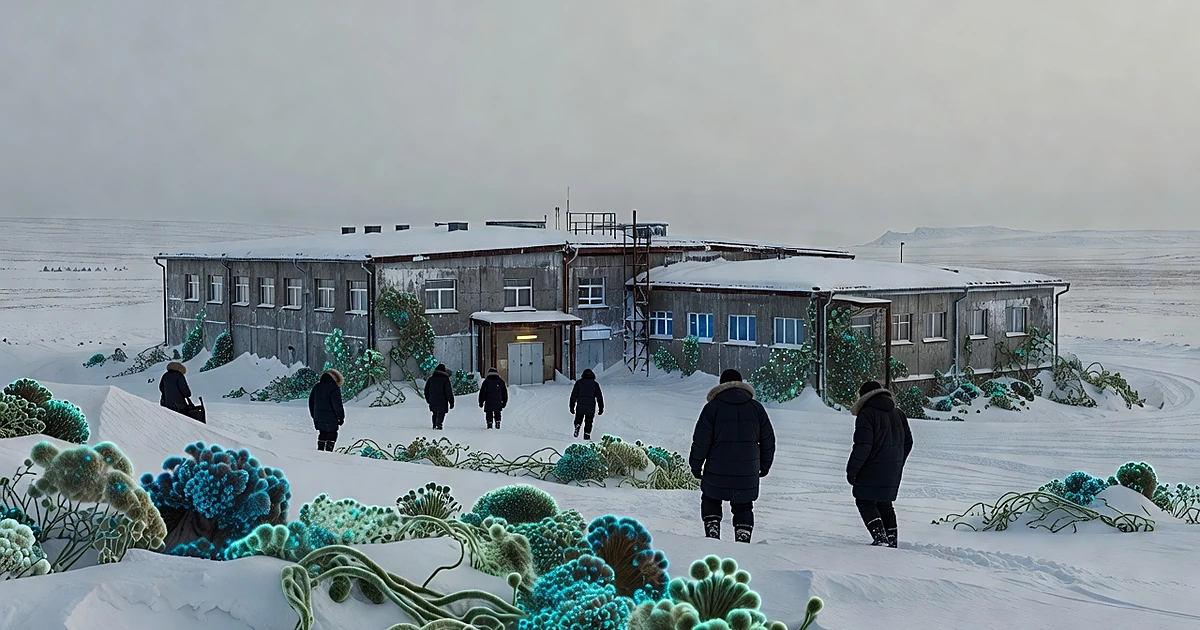
Trump flags Siberia lab death as ‘big problem for Russia’ as microbes grow stronger
President Trump called a suspected pneumonic plague scare in Siberia a “big problem for Russia,” offered U.S. help, and warned that germs have grown tougher even as Moscow has not confirmed the cause of a lab worker’s death.
Trump delivered the assessment Monday afternoon as he left the White House for a pre-midterm campaign rally in Nebraska, responding to reports that a young technician had died after an incident at a specialized plague research lab in the Irkutsk region.
Trump told reporters the situation was serious and that pathogens once easier to contain no longer respond the same way.
“It’s a rough disease. You know, that’s a disease we used to be able to control, but somehow those microbes have got stronger and smarter, they’re like an army,” he said.
“The germs have really become relatively stronger than they were, and things that used to work on pneumonia don’t work as well anymore. So we’ll help.”
He labeled the episode a “big problem for Russia” and said “the microbes and the germs have gotten stronger.” At the time of the remarks, he said he had not yet spoken with Russian President Vladimir Putin about the matter.
The comments fit a familiar pattern of Trump weighing in publicly on hard national and international developments, much as he has questioned Tennessee officials after a botched lethal injection case drew national attention.
Lab technician dies after broken test tube
Russian media identified the dead worker as Daria Shipilova, 28, a laboratory assistant at the Irkutsk Anti-Plague Research Institute of Siberia and the Far East. The facility is described as a Biosafety Level 3 lab, a high-security site built to handle serious pathogens, though not the top-tier BSL-4 labs that house the most dangerous agents.
The independent Moscow Times reported that Shipilova broke a test tube days before she was hospitalized on Sept. 29. She died of pneumonia on Oct. 2. Russian outlets framed the case as the country’s first fatal pneumonic plague death in years, though the Russian government has not confirmed plague as the cause.
Pneumonic plague is the form of the disease that can pass from person to person through the air when an infected person coughs or breathes. That sets it apart from the better-known bubonic form long tied to fleas and rodents.
After the death, Russian authorities quarantined hospitals in the Irkutsk area, placed about 200 people who had contact with the lab technician under observation, restricted public events, and screened domestic travelers for fevers.
Cases involving Americans held or harmed abroad often stay in the public eye long after the first headlines, as with Marine veteran Robert Gilman, freed from Russia and later fighting for his life in Texas.
State Department presses Moscow for open facts
Earlier Monday, the State Department urged Russia to “share accurate information quickly and openly” about the potential pestilence. The call underscored a basic demand: when a lab-linked death triggers mass observation and travel screening, other governments need clear data, not delay.
Secretary of State Marco Rubio spoke to reporters the same morning as he left Washington for Europe. He kept the tone measured while refusing to shrug the risk off.
“There’s very limited travel between the US and Russia, obviously. But like anything else, something like that gets out, it could certainly spread,” Rubio said.
“So we’re watching and monitoring it closely. I don’t think it’s cause for alarm but it is cause for focus and a cause just to keep an eye on it.”
Limited direct travel lowers the odds of a fast jump to the United States. It does not erase the need to track a respiratory plague case tied to a research institute that works with Yersinia pestis, the bacterium behind the disease.
Foreign-policy arguments around Russia rarely stay simple in Washington, a reality also visible when debate flared over Melania Trump’s role in Ukraine-Russia peace talk narratives.
Old Soviet work and a deadly history
Reporting on the episode has revived a Cold War footnote. In the 1980s, Soviet biological warfare scientists modified Yersinia pestis to resist antibiotics. The record does not prove that the Irkutsk lab held that altered strain in this case, and it remains unclear whether the BSL-3 site could have contained especially dangerous material. The historical fact still hangs over any plague-lab accident in Siberia.
The disease’s record is brutal when it spreads. A pneumonic plague outbreak in Manchuria from October 1910 to April 1911 killed about 60,000 people. An outbreak in Los Angeles in 1924 killed 30. Bubonic plague, the Black Death of the mid-1300s, killed half the population of London in a two-year span. Both bubonic and pneumonic plague still appear in small numbers most years, particularly in Africa.
Those numbers explain why a single lab death, a broken tube, and hundreds under observation trigger White House and State Department attention even before Moscow issues a final cause-of-death ruling.
Trump has used the same direct style on domestic enforcement fights, including when he pressed Congress for mandatory prison time on Medicare, Medicaid, and Social Security fraud.
Help offered, confirmation still missing
Trump’s message mixed blunt risk language with an offer of assistance. He said the United States would help Russia deal with the suspected outbreak. He also made plain that the germs themselves look harder to beat than in earlier decades.
Russian officials have answered with containment steps, hospital quarantines, contact observation, event limits, and fever checks, while stopping short of confirming that Shipilova died of plague. That gap is the core problem for outside governments. Precaution without a clear public diagnosis leaves partners guessing about scale, strain, and spread.
Rubio’s “focus, not alarm” line and the State Department’s demand for fast, accurate information point the same direction. Watch the pathogen. Demand the facts. Do not pretend opacity is cooperation.
Personnel and power fights at home continue on a separate track, including court battles such as the case where a Seattle judge reinstated a fired U.S. attorney and limited removal power. The Siberia file is different: it is about a dead lab worker, a respiratory plague risk, and whether an adversary tells the truth when microbes are involved.
When a plague lab loses a technician and a nation locks down contacts without confirming the killer bug, transparency is not a courtesy, it is the bare minimum free countries should expect.