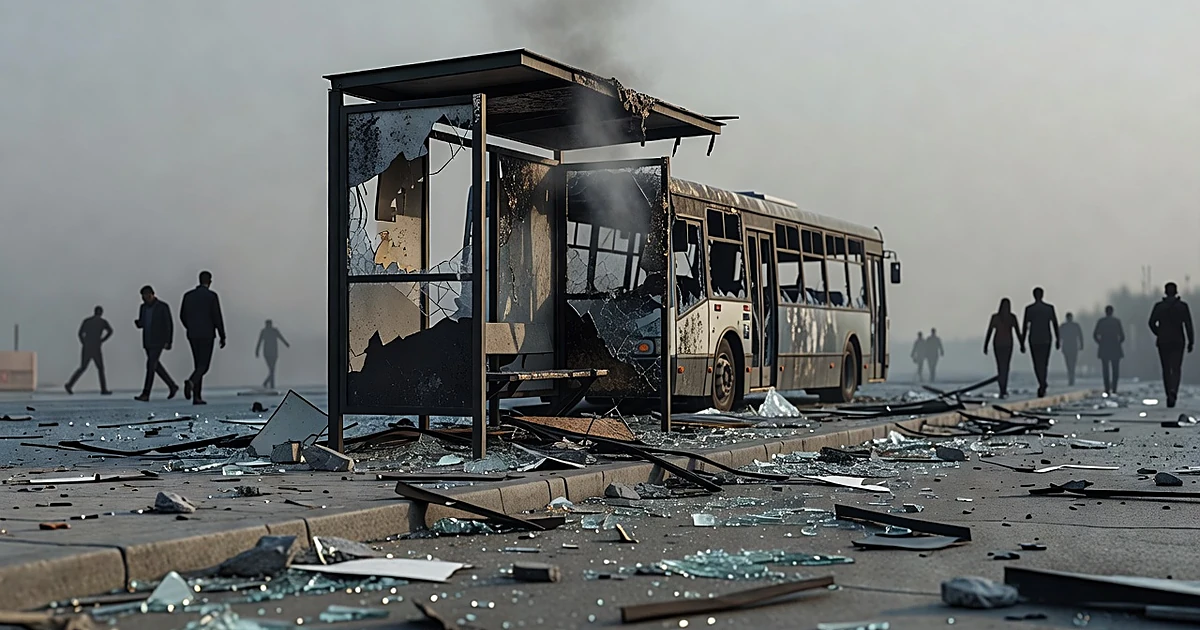
Russian guided bomb kills 30 at Kramatorsk bus stop
A Russian guided bomb killed 30 people at a Kramatorsk bus stop Thursday as Moscow’s aerial campaign escalated, and Ukraine pressed NATO for concrete defense aid.
Breitbart reported that a Russian guided bomb exploded next to public buses filled with passengers in Kramatorsk, in Ukraine’s Donetsk region. The Thursday morning blast killed 30 people and forced officials to suspend public transport in the area.
Oleksandr Honcharenko, head of the city’s military administration, said rescue work was then hampered by follow-on Russian attacks with small drones. He did not soften the charge.
Honcharenko stated the case directly:
"There is no doubt that Russia is cynically targeting civilians,"
Pryluky missile strike killed five children a day earlier
The Kramatorsk attack did not stand alone. A day earlier, a Russian missile strike on the northern town of Pryluky killed 22 people, including five children, and wounded at least 54. Rescuers were still searching the rubble of a residential building when the next wave hit.
Ukrainian President Volodymyr Zelenskyy traveled to Pryluky on Thursday with British Foreign Secretary Ed Miliband. Miliband announced new sanctions on Russia during the visit, adding to a wider push that has included measures such as the Lindsey Graham sanctions bill moved in Washington.
Late Wednesday, Russian drones struck Kyiv’s Obolonskyi and Desnianskyi districts. Kyiv police said four people were killed and 12 injured, including four children. Bomb disposal teams also defused two unexploded ballistic missile warheads near residential buildings. Each warhead weighed about half a ton.
Kyiv ordered into emergency power cuts
Ukraine’s energy company DTEK said national grid operator Ukrenergo ordered emergency power outages in the capital. Regular rolling blackouts were halted during those shutdowns. Officials urged families to prepare emergency kits, store drinking water, and keep backup power ready as winter nears.
Zelenskyy warned that Russia will likely escalate daily missile and drone attacks in the colder months. He appealed to NATO countries for more defense support and put the request in writing.
In an online post, Zelenskyy wrote:
"It is important that support in words takes concrete form in new packages for Ukraine´s defense,"
He added that supplies of anti-ballistic systems, ammunition for combat aircraft, and investments in interceptors are “directly helping save lives every day.”
Ukrainian drones reach far inside Russia
While Russian strikes hit Ukrainian cities, Kyiv’s forces pushed the other way. Russian technology giant Yandex said one of its data centers in the western Ryazan region was damaged in a Ukrainian drone attack and taken offline.
Ukraine’s General Staff said its forces struck a large oil refining and petrochemical complex in Salavat, about 750 miles east of Moscow. That claim could not be independently verified. Ukrainian drones also reached the Omsk region in western Siberia, more than 1,200 miles from the border, another reminder of the deep pressure points Russia now faces far from the front.
Omsk regional Gov. Vitaly Khotsenko said most of the drones were shot down by air defenses, but one “reached a northern industrial hub.” He did not elaborate. Russian independent outlet Astra reported the Omsk oil refinery was on fire after the attack. There was no official confirmation.
Neighbors tighten borders as the air war grinds on
Turkish Foreign Minister Hakan Fidan said his government presented proposals to both Russia and Ukraine aimed at protecting civilian shipping in the Black Sea. He warned that commercial trade and grain exports could be disrupted if military offensives keep rising.
Lithuania’s defense minister, Robertas Kaunas, said the NATO member deployed about 100 additional soldiers to help secure its border with the Russian enclave of Kaliningrad. The enclave remains a major security concern on NATO’s eastern flank.
More than four and a half years have passed since Moscow’s full-scale invasion. The armies remain largely deadlocked on the front line, while the long-range aerial war continues. Civilians at bus stops, apartment blocks, and power nodes keep paying the price, a pattern familiar to anyone who has watched other costly Russia standoffs, including the case of a Marine veteran freed after years held by Moscow.
Guided bombs on crowded buses are not accidents of war. They are a test of whether the West answers with hardware or with another round of empty statements.