Alito and Thomas dissent after Supreme Court declines Fourth Amendment case involving race-based seizure analysis
The Supreme Court on Monday refused to hear a case in which a D.C. appeals court ruled that a suspect's race should factor into whether police conducted an unlawful seizure, a decision Justices Samuel Alito and Clarence Thomas warned would force officers into a constitutionally dangerous guessing game every time they approach a citizen on the street.
The case, U.S. v. Donte J. Carter, began with a routine police encounter and ended with a lower court vacating a man's firearm and theft convictions. Along the way, the D.C. Court of Appeals introduced a race-conscious standard into Fourth Amendment law that two of the Supreme Court's most senior conservatives say flatly contradicts the principle that the Constitution is colorblind.
By declining to take the case, the full Court left that standard in place, at least for now. And the practical consequences, as Alito laid out in a pointed dissent, reach well beyond one defendant and one stolen gun.
The encounter that started it all
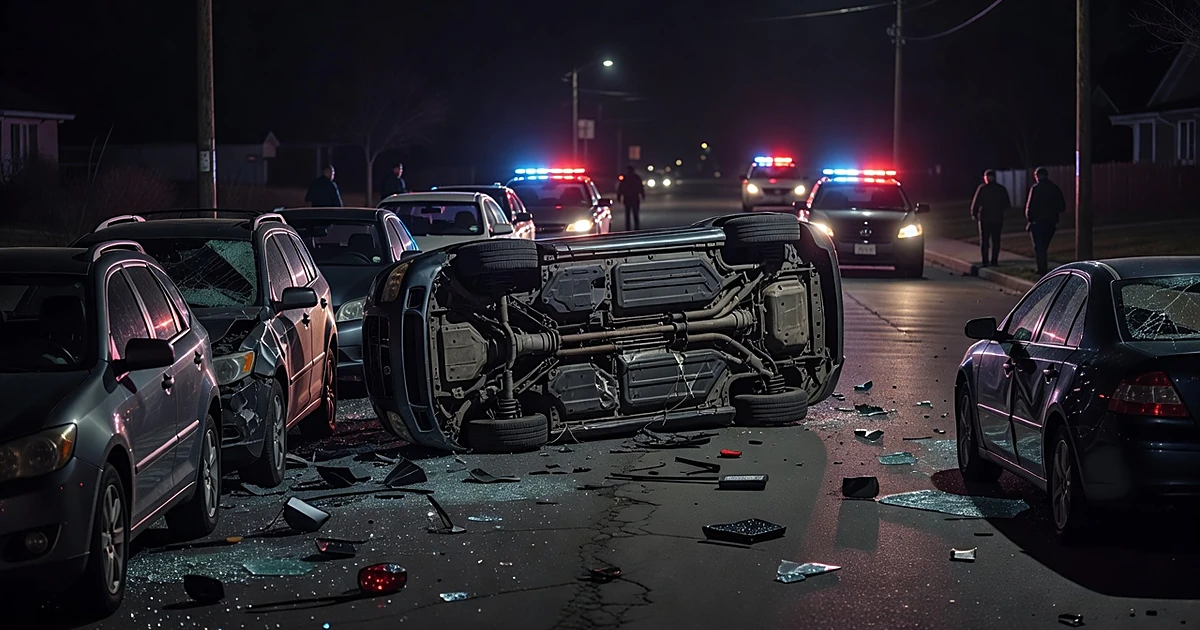
The facts of the Carter case are not complicated. Police officers approached Donte J. Carter and asked whether he was carrying a weapon. Carter said no. Officers then asked him to pull up his pants, at which point they noticed an L-shaped bulge. That bulge turned out to be a.40-caliber pistol, one that, as Fox News reported, had been stolen from an FBI agent's vehicle.
Carter was convicted on firearm and theft charges. Under most readings of Fourth Amendment law, the sequence would end there.
But the D.C. Court of Appeals saw it differently. The court held that police had effectively seized Carter before they had developed reasonable suspicion, the legal threshold required for a stop. And in reaching that conclusion, the court ruled that Carter's race was relevant to whether a reasonable person in his position would have felt free to walk away from the encounter.
The appeals court's reasoning rested on a striking claim: that Black Americans like Carter are "especially distrustful of law enforcement" and therefore "less likely" than other people "to terminate a police encounter" because of "skepticism that any attempt to exercise their constitutional rights will be respected." Because Carter, as a Black man, would supposedly have felt less free to leave, the court concluded the encounter became a seizure earlier than it otherwise would have, and that the seizure was unlawful.
Carter's convictions were vacated. The stolen FBI pistol, the lie about carrying a weapon, none of it mattered once the court decided the stop itself was tainted.
Alito's dissent: a colorblind Constitution under siege
Justice Alito, writing for himself and Justice Thomas, did not hold back about what the D.C. ruling means in practice. The dissent argued that the lower court's framework injects racial categorization into the heart of everyday policing, and does so in a way the Constitution does not permit.
"It is dangerous to allow an individual to be treated differently based on statistics, studies, or expert testimony that purports to show that members of the racial or ethnic group to which he belongs are more likely to act in a certain way than are members of other groups. Here, the special treatment helped the individual; in other situations it will not."
That last line deserves attention. Alito was not merely objecting to the outcome in Carter's case. He was flagging the logical endpoint of the D.C. court's reasoning: if race can be used to lower the threshold for what counts as a seizure, it can also be used to raise it, or to justify differential treatment in contexts far less favorable to the individual.
The dissent then turned to the operational absurdity the ruling creates for police officers on the street. Alito wrote that under the D.C. court's test, officers would need to make snap racial assessments during encounters, and then apply different legal rules depending on the result.
"Under the test, officers will need to quickly assess a person's race, and if officers and courts must craft special rules for black persons, what about dark-skinned Latinos, other Latinos, and members of other minority groups? We have said that our 'Constitution is color-blind.' It 'almost never' allows government actors to treat persons differently based on their race."
Alito and Thomas, both of whom are expected to remain on the bench, grounded their objections in a line of precedent the Court has built over multiple terms. The dissent cited Students for Fair Admissions v. Harvard, the landmark 2023 ruling that struck down race-conscious college admissions. It cited Louisiana v. Callais and Shaw v. Reno, cases dealing with racial gerrymandering.
From Shaw v. Reno, Alito quoted the Court's earlier rejection of the idea that the Constitution allows someone to be treated differently based on a "perception that members of the same racial group, regardless of their age, education, economic status, or the community in which they live, think alike."
That is precisely what the D.C. Court of Appeals did. It assumed that a Black man approached by police would react in a particular way, not because of anything specific to Donte Carter, but because of group-level generalizations about Black Americans' attitudes toward law enforcement.
What the government argued, and what the Court declined to address
Lawyers representing the United States had urged the Supreme Court to take the case. Their argument, as described in reporting on the dispute, was that the D.C. ruling effectively forced police officers to assume that all Black people share the same attitudes toward police officers. That framing tracks closely with Alito's dissent and with the broader constitutional concern: government actors sorting citizens by race and applying different rules accordingly.
The rest of the Court, however, chose not to engage. The denial of certiorari drew no separate opinions beyond the Alito-Thomas dissent. No other justice joined, wrote a concurrence, or explained a vote. The silence is itself notable. The Court has spent the last several terms aggressively pruning race-conscious government action, from university admissions to redistricting. Yet when a lower court wove racial assumptions directly into Fourth Amendment analysis, seven justices looked the other way.
That pattern of selective engagement has drawn scrutiny from multiple directions. Chief Justice Roberts has publicly cautioned against the Court overturning precedent on ideological grounds, a posture that may explain some reluctance to wade into a case with obvious political valence. But caution has costs. Every term the D.C. standard stands unchallenged, it becomes more entrenched, and more likely to spread.
The downstream problem for law enforcement
Set aside the legal abstractions for a moment and consider what the D.C. ruling means for a patrol officer working a night shift.
Under traditional Fourth Amendment analysis, courts ask whether a "reasonable person" would have felt free to end a police encounter. The standard is objective. It does not change based on the subject's demographics. An officer who approaches someone, asks a question, and gets a voluntary answer has not conducted a seizure, regardless of who the person is.
The D.C. Court of Appeals replaced that universal standard with a race-specific one. Now, in that jurisdiction, the answer to "Was this person seized?" depends partly on whether the person is Black. If so, the court presumes a heightened sense of coercion, rooted not in anything the officer did, but in sociological generalizations about group-level distrust of police.
For officers, that means the rules of engagement shift based on the perceived race of the person in front of them. Alito's question, "what about dark-skinned Latinos, other Latinos, and members of other minority groups?", is not rhetorical. It is a practical problem with no clean answer. The D.C. court offered none.
The result is a framework in which officers must either guess at a subject's racial identity and adjust their conduct accordingly, or risk having evidence thrown out after the fact because a court later decides the subject belonged to a group deemed "especially distrustful" of police. Either way, the officer is making decisions based on race, the very thing the Equal Protection Clause was designed to prevent.
This is not a minor procedural wrinkle. Alito and Thomas have repeatedly found themselves in dissent on cases where they believe the Court is failing to enforce clear constitutional limits. The Carter case fits that pattern. The two justices saw a lower court injecting racial classification into criminal procedure and flagged it. The majority chose silence.
A stolen gun, a vacated conviction, and an unanswered question
It is worth returning to the facts on the ground. Donte Carter lied to police about carrying a weapon. The weapon he was carrying had been stolen from a federal agent's vehicle. He was convicted. And then a court threw those convictions out, not because the evidence was fabricated, not because his rights were violated in any traditional sense, but because the court decided that a Black man in his position would have felt less free to walk away than a non-Black man would have.
That reasoning treats an entire racial group as a monolith. It assumes shared psychology based on skin color. It does exactly what Shaw v. Reno said the Constitution forbids.
The Supreme Court had a chance to say so. The institution has faced mounting pressure on a range of fronts in recent terms, and the reluctance to take on politically charged cases is understandable in the abstract. But the Fourth Amendment is not a culture-war artifact. It is the daily operating manual for every police officer in the country. When a lower court rewrites its terms along racial lines, the highest court owes more than a shrug.
Alito and Thomas understood that. The other seven justices, for reasons they chose not to explain, did not.
Open questions remain. No absolute date for the D.C. ruling has been publicly identified in available reporting. The specific charges underlying Carter's convictions, the location of the original encounter, and whether any other justice considered joining the dissent are all unaddressed. What is clear is the principle at stake, and the Court's decision to leave it unresolved.
Frustration with Republican-appointed justices who decline to hold constitutional lines is nothing new. But the Carter case puts the problem in unusually stark terms. A lower court told police to sort citizens by race before deciding what the law requires. Two justices objected. The rest said nothing.
A Constitution that is colorblind on Monday and race-conscious on Tuesday is not a Constitution at all. It is a suggestion, and suggestions do not protect anyone.