Gorsuch uses a tariff ruling to settle scores with fellow justices on the major questions doctrine
Justice Neil Gorsuch had something to say on Friday, and it took him 46 pages to say it. That's more than twice the length of the majority opinion itself.
The Supreme Court rejected President Trump's assertion of broad tariff authority under the 1977 International Emergency Economic Powers Act, a decision that landed as a significant check on executive power. But the real fireworks came from Gorsuch's solo concurrence, in which he turned his pen on colleagues to his left and to his right over the future of the major questions doctrine.
The doctrine, which holds that Congress must speak clearly before handing massive policy decisions to the executive branch, has become one of the most consequential tools in the conservative legal arsenal. Gorsuch wants to make sure it stays that way.
A 46-Page Settling of Accounts
William & Mary law professor Jonathan Adler described Gorsuch's opinion as something of a "Godfather-esque settling of family business." That framing is hard to argue with. Gorsuch went camp by camp through his colleagues' positions on the major questions of doctrine, dismantling each one he found wanting.
He started with the obvious. Justice Elena Kagan has long treated the doctrine as something the conservative majority conjured from thin air. On Friday, she again called it "so-called" and accused the majority of arriving at its conclusions "magically," The Hill reported. Kagan made her position clear when she addressed Gorsuch's apparent outreach directly:
"Given how strong his apparent desire for converts, I almost regret to inform him that I am not one. But that is the fact of the matter."
No surprises there. Kagan has never hidden her hostility toward the doctrine. But Gorsuch wasn't writing for her.
He turned next to Justice Amy Coney Barrett, whom he accused of trying to "soften the blow" of the doctrine. Barrett didn't take it quietly. She fired back that Gorsuch had constructed a false target, saying plainly: "He takes down a straw man." Gorsuch replied that the doctrine would be "better for it" after her concerns were addressed.
Then came the dissenters. Justices Kavanaugh and Alito argued the doctrine shouldn't apply to foreign affairs. Justice Clarence Thomas went further in a solo dissent, suggesting Congress could "hand over" most of its powers, including tariff authority, without constitutional limit. Thomas opined that the doctrine should only protect deprivations of life, liberty, or property.
Gorsuch skewered that position directly:
"Suppose for argument's sake that Congress can delegate its tariff powers to the President as completely as Justice Thomas suggests. Even then, the question remains whether Congress has given the President the tariff authority he claims in this case — or whether the President is seeking to exploit questionable statutory language to aggrandize his own power."
According to Gorsuch, only he and Chief Justice Roberts "have stayed the course." Everyone else has either attacked the doctrine or tried to carve exceptions into it before the ink was dry.
The Doctrine That Keeps Winning Enemies
The major questions doctrine has done more to restrain executive overreach in the last few years than perhaps any other legal principle. Its track record speaks for itself:
- In 2021, the Court ruled the Biden administration lacked authority to impose a nationwide eviction moratorium during the COVID-19 pandemic.
- The following year, the Court ruled the Clean Air Act did not authorize Obama-era actions aimed at curbing carbon emissions.
- The year after that, the Court invoked the doctrine again as it struck down Biden's effort to unilaterally cancel roughly $430 billion in student debt.
Every one of those cases involved the executive branch claiming vast authority from vague statutory text. Every one of those cases involved spending or regulatory power that Congress never clearly granted. The doctrine simply asks: Did Congress actually authorize this, or is the executive freelancing?
That question terrifies the administrative state and the politicians who rely on it. Sen. Sheldon Whitehouse, a Rhode Island Democrat, made that fear explicit when he spoke on the Senate floor in 2024:
"There is enormous upheaval from that novel doctrine imported by the billionaire-selected justices of the Supreme Court into American law."
The left calls it "novel." Gorsuch calls it a "bulwark of liberty" and describes the legislative process it protects as the "whole point" of constitutional governance. One side wants the executive to act unilaterally whenever Congress is too slow or too divided to legislate. The other side says that's precisely when unilateral action is least legitimate.
What This Means for Tariffs
On the narrow question of IEEPA and tariffs, Gorsuch was unambiguous:
"Whatever else might be said about Congress's work in IEEPA, it did not clearly surrender to the President the sweeping tariff power he seeks to wield."
Conservative law professor Josh Blackman speculated that Gorsuch's lengthy concurrence was the reason the decision took as long as it did. As he put it: "The Chief probably wrote his majority opinion before breakfast. … I think the reason for the delay has to be Justice Gorsuch."
Andrew Morris, senior counsel at the New Civil Liberties Alliance who represents businesses challenging Trump's tariffs, noted where the legal community's attention was focused: "The opinion of the court, what it says about the major questions doctrine, everyone has had their eyes on."
For businesses like VOS Selections, the wine importer that led the challenge, the ruling brings some measure of relief. Owner Victor Schwartz drew a sharp line between congressional tariffs and executive ones:
"These duties were not like past tariffs set by Congress, which we could plan around. Instead, these tariffs were arbitrary and simply put, just bad business. They forced us to gamble with our livelihoods by trying to predict the unpredictable."
The Bigger Fight
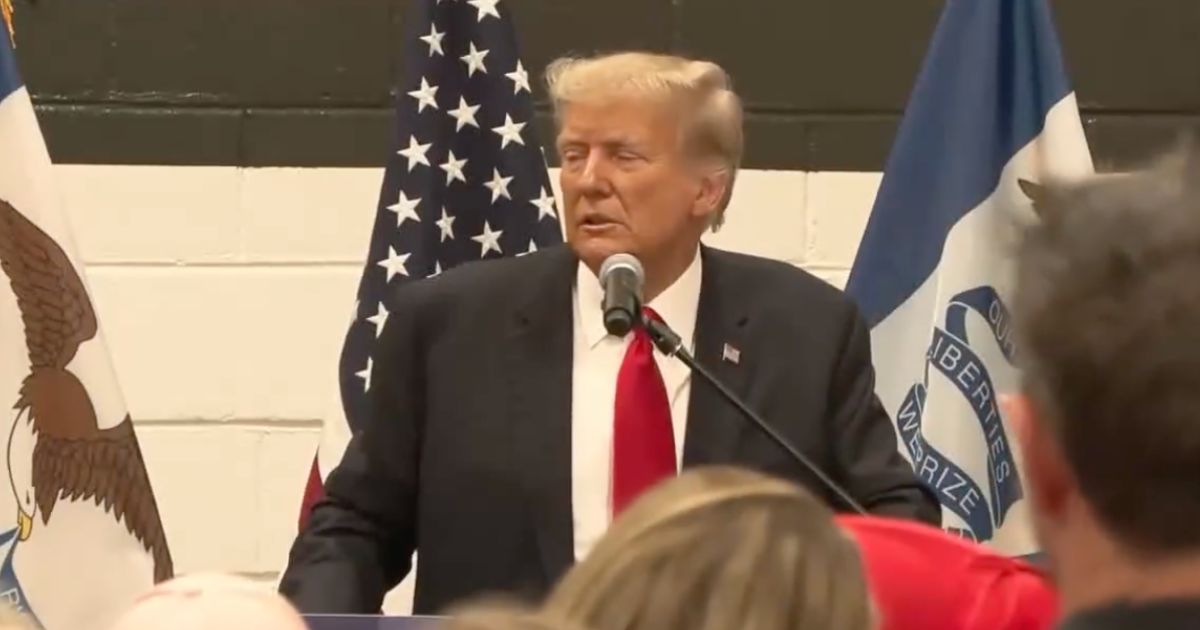
President Trump responded to the ruling by aiming at several justices on social media, saying the decision was "based on a complete lack of respect." When asked whether he would work with Congress on a tariff plan, he was direct: "I don't have to." He maintained he has the "right" to enact tariffs without congressional involvement.
Scott Lincicome, vice president of general economics at the Cato Institute, urged restraint in the aftermath. He called the President's comments "unfortunate" and warned about what comes next:
"I'm hoping that cooler heads prevail in the coming days, and the administration does make this as easy as possible, because if they don't, it will disproportionately burden small businesses that can't afford the lawyers and all the paperwork and the rest."
Here's what conservatives should understand about this ruling: it cuts in every direction over time. The same doctrine that limits Trump's tariff authority under IEEPA is the doctrine that blocked Biden's student loan giveaway, killed Obama's climate regulations, and stopped a nationwide eviction moratorium imposed by bureaucratic fiat. A president who governs through creative statutory interpretation today creates the precedent for the next president to do the same.
Gorsuch sees that clearly. His 46-page concurrence wasn't grandstanding. It was a warning to every faction on the Court that the major questions doctrine either means what it says or it means nothing. You don't get to invoke it when the other party holds the White House and shelve it when yours does.
That's the kind of consistency that earns a doctrine its authority. Whether his colleagues were listening is another matter entirely.