House votes to criminalize sex-change surgeries and puberty blockers for minors
The U.S. House of Representatives passed the Protect Children's Innocence Act on Wednesday, voting 216-211 to ban so-called gender transition procedures for minors and impose criminal penalties on practitioners who perform them. The bill now heads to the Senate, where its path is considerably less certain.
The legislation subjects anyone who "knowingly performs, or attempts to perform genital or body mutilation on another person, who is a minor" to a fine and the possibility of up to 10 years in prison. Individuals who assist in the performance of these procedures face the same penalty. The bill also prohibits "chemical castration" in the form of puberty-blocking drugs and cross-sex hormones.
Four House Republicans, Reps. Gabe Evans of Colorado, Brian Fitzpatrick of Pennsylvania, Mike Kennedy of Utah, and Mike Lawler of New York joined most Democrats in voting against the bill. Three House Democrats, Reps. Henry Cuellar and Vicente Gonzalez of Texas and Don Davis of North Carolina joined most Republicans in supporting it, the Christian Post reported.
Chloe Cole puts a face on the damage
The day after the vote, detransitioner Chloe Cole stood at a press conference hosted by the U.S. Department of Health and Human Services and shared the emotional anguish she has carried since undergoing life-altering procedures as a teenager, only to regret them. Cole had her breasts removed as a teenager. She will never be able to breastfeed a child.
She condemned the procedures plainly:
"This ideology is festering at an unimaginable scale within our hospital systems, our culture, our communities and too many within our own families."
Cole called what happened to her "unscientific medical abuse that violates every tenet of medical ethics." And she described the weight she carries privately:
"There's grief, every single day, I carry with me silently."
"The only thing in the world that makes me angry is knowing that this is continuing to happen to children all across the United States and throughout the globe."
The medical establishment spent years telling parents and legislators that these procedures were necessary, compassionate, even lifesaving. Cole's testimony says otherwise. She isn't an abstraction or a statistic. She's a young woman living with irreversible consequences imposed on her during an age when she couldn't legally buy a beer.
The administration moves on multiple fronts
The House vote didn't happen in a vacuum. At the same Thursday press conference, Secretary of Health and Human Services Robert F. Kennedy Jr. announced that his agency submitted a proposed rule that would withhold federal funding from hospitals that perform gender transition procedures on minors. That's a financial lever with real teeth.
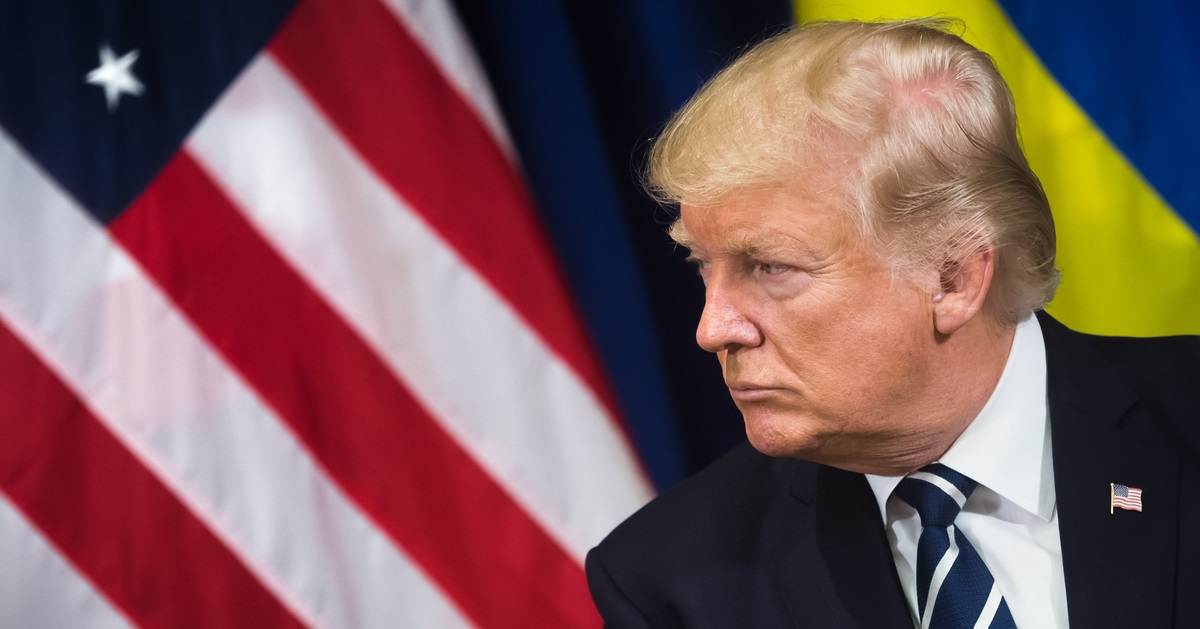
Just a week after taking office, Trump signed an executive order establishing a new federal policy regarding minors and gender transition. The order states that the United States will "not fund, sponsor, promote, assist, or support the so-called 'transition' of a child from one sex to another."
The order further directed the executive branch to "rigorously enforce all laws that prohibit these destructive and life-altering procedures." Between the executive order, the proposed HHS rule, and now a House vote, the pressure campaign is coordinated and deliberate. The legislative branch and the executive branch are moving in the same direction.
The Senate math
Republicans hold 53 of 100 seats in the U.S. Senate, but most legislation requires 60 votes to pass. Seven Senate Democrats are not expected to back the Protect Children's Innocence Act, which means proponents will need to find enough crossover support to clear the filibuster threshold. That's a heavy lift.
But the political landscape has shifted dramatically. Twenty-seven states have already enacted policies banning some or all types of gender transition procedures for minors. The U.S. Supreme Court ruled earlier this year in United States v. Skrmetti that Tennessee's ban on gender transition procedures for minors did not violate the U.S. Constitution. The legal ground is settled. The question is whether Senate Democrats want to be on the losing side of it.
The evidence keeps piling up
The defenders of pediatric gender medicine are running out of places to hide. The American College of Pediatricians has warned that puberty blockers carry risks of "osteoporosis, mood disorders, seizures, cognitive impairment, and, when combined with cross-sex hormones, sterility."
Overseas, the reckoning arrived even faster. Last year, the U.K.'s National Health Service instructed gender clinics to pause first appointments for kids under 18 following a formal review led by Dr. Hilary Cass, the retired former president of the Royal College of Paediatrics and Child Health. Cass found that there is: "No good evidence on the long-term outcomes of interventions to manage gender-related distress."
No good evidence. Not weak evidence, not mixed evidence. No good evidence. Britain's single-payer health system, hardly a bastion of American conservatism, looked at the data and hit the brakes. Yet for years, American hospitals raced in the opposite direction, fast-tracking irreversible procedures on children while branding any skeptic a bigot.
The pattern is by now familiar. An ideological movement captures medical institutions, silences internal dissent, and markets experimental interventions as settled science. When the evidence collapses, the institutions scramble, but the children who went through the procedures don't get a do-over.
What this is really about
Every society draws a line around what it will and will not allow adults to do to children. We don't let minors get tattoos in most states. We don't let them consent to contracts. We restrict their access to alcohol, tobacco, and firearms for the simple reason that adolescents lack the maturity to make permanent decisions with lifelong consequences.
Removing a teenage girl's healthy breast tissue is permanent. Chemically suppressing a child's natural puberty carries risks that even the advocates can't fully quantify. The notion that a thirteen-year-old possesses the judgment to consent to sterilization is not progressive. It is reckless.
Chloe Cole stood at that podium on Thursday carrying grief she says she will never fully show the world. She was failed by a system that told her it was helping. The House voted to make sure fewer children follow the same path. Now it's the Senate's turn to decide whether protecting kids from irreversible harm is worth sixty votes.