Jackson stands alone in dissent as Supreme Court reverses D.C. ruling on police stop
The Supreme Court reversed a District of Columbia appeals court 7-2 on Monday, ruling that a police officer had reasonable suspicion to stop a man in a suspicious vehicle, and Justice Ketanji Brown Jackson was the only member of the bench willing to say the high court had no business taking the case at all.
Jackson, a Biden appointee, accused her colleagues of overstepping their role to "wordsmith" a lower court's factbound determination in a routine Fourth Amendment dispute. Justice Sonia Sotomayor, the Court's most senior liberal, broke with the majority but declined to join Jackson's dissent, leaving Jackson entirely on her own.
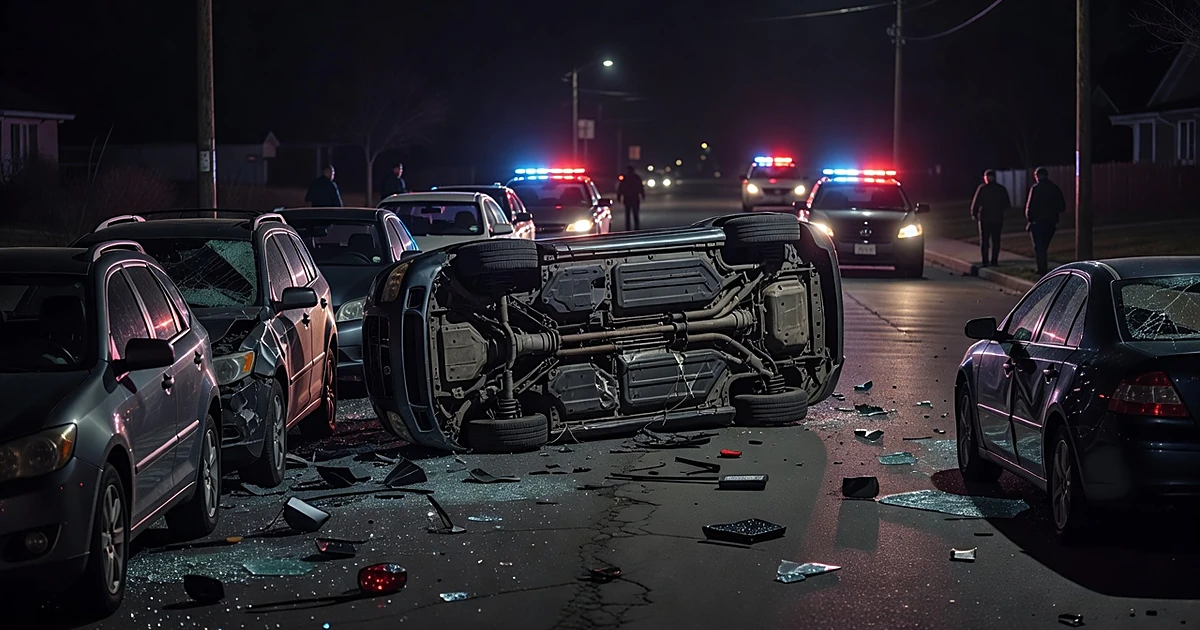
The case, as Fox News reported, arose from a 2023 dispatch call to Washington, D.C., police at 2 a.m. reporting a suspicious vehicle. When an officer arrived at the scene, two people ran from the car. The remaining passenger slowly began backing out of the parking lot with a door still open.
The officer stopped the driver. Lawyers for the police said the officer had "only seconds to decide whether to intervene." Within moments, the officer observed a smashed window and a punched-out ignition, confirming, the lawyers said, that the vehicle had been stolen.
The D.C. Court of Appeals found last year that the officer improperly stopped the man. The Supreme Court disagreed, emphatically, in an unsigned per curiam opinion that said the lower court had improperly ignored the fact that two people fled the vehicle before the third person was stopped.
Jackson's lone stand
Jackson did not dispute the facts. She disputed the Supreme Court's decision to intervene at all. In her dissent, she wrote:
"I am not sure why our Court sees fit to intervene in this case, let alone to do so summarily."
She went further, arguing that the D.C. appeals court had done basic "culling" of facts to reach its conclusion that the stop was unwarranted, a routine analytical exercise, in her view, that did not justify the unusual step of summary reversal by the nation's highest court.
Jackson also challenged the majority's reasoning head-on, writing that the lower court understood the Fourth Amendment just fine. She stated in her dissent:
"If the intervention reflects a worry that the District of Columbia Court of Appeals (DCCA) misunderstands the Fourth Amendment's totality-of-the-circumstances analysis, that worry seems unfounded."
And she made her frustration plain, adding that she "cannot fathom why that kind of factbound determination warranted correction by this Court."
This is not the first time Jackson has found herself as the sole dissenter in a case where the Court reversed a lower tribunal. In a recent Maryland attempted murder case, the Court similarly overturned an appeals court decision with Jackson dissenting alone, a pattern that raises questions about her judicial philosophy and her willingness to side with lower courts against the majority's corrections.
What the majority said, and what it means
The seven justices in the majority emphasized the "totality of the circumstances", a well-established Fourth Amendment standard that requires courts to weigh all available facts when determining whether an officer had reasonable suspicion for a stop. The per curiam opinion found that the D.C. appeals court had sliced the facts too thinly, ignoring the flight of two occupants and the suspicious behavior of the driver who remained.
Lawyers for the police framed the officer's decision in stark, practical terms:
"Under these circumstances, with only seconds to decide whether to intervene, the officer was entirely justified in detaining the driver."
They added that "within moments of stopping the driver, the officer observed a smashed window and punched-out ignition, confirming that the vehicle had been stolen." The D.C. attorney general's office had argued on behalf of police that the totality of facts, the 2 a.m. dispatch call, the suspicious vehicle, the fleeing occupants, the open door, amounted to reasonable suspicion.
The current Supreme Court has shown a willingness to engage with Fourth Amendment questions across ideological lines. In a separate case this term, the Washington Examiner reported that the justices unanimously rejected a narrow "moment-of-threat" standard in police excessive-force claims. Justice Elena Kagan wrote in that case, Barnes v. Felix, that courts must consider "all the relevant circumstances, including facts and events leading up to the climactic moment." Even Justice Brett Kavanaugh, joined by Justices Thomas, Alito, and Barrett, concurred while emphasizing the dangers officers face during traffic stops.
Taken together, these rulings suggest a Court broadly committed to the totality-of-the-circumstances framework, and willing to correct lower courts that try to narrow it, whether in use-of-force cases or routine stops.
The broader stakes on the bench
Jackson's solo dissent highlights the ideological fault lines on a Court whose composition may shift again in the near future. Speculation about whether Justices Alito and Thomas will remain on the bench has been a recurring topic in Washington, and any vacancy would carry enormous consequences for how the Court handles Fourth Amendment law and the rights of law enforcement.
The fact that Sotomayor, no friend to broad police powers, declined to join Jackson's dissent is itself telling. It suggests that even the Court's liberal wing recognized the D.C. appeals court had gone too far in second-guessing the officer's split-second decision. When the most senior liberal justice won't stand with you, it is worth asking whether the objection is principled or simply reflexive.
The Court has been active this term on high-profile constitutional questions, from birthright citizenship to First Amendment disputes over viewpoint discrimination. But cases like this one, a 2 a.m. police stop, a stolen car, fleeing suspects, are where constitutional rubber meets the road for ordinary Americans and the officers who protect them.
What remains unanswered
Several details remain unclear. The name of the case and its docket number were not specified. The identity of the man who was stopped has not been disclosed. Whether anyone was arrested or charged in connection with the stolen vehicle is not part of the available record. The exact date of the D.C. appeals court ruling that was reversed is also unspecified beyond "last year."
What is clear is the result: seven justices found that a police officer responding to a 2 a.m. call about a suspicious vehicle, watching two people flee and a third try to drive away with a door open, had every reason to make the stop. The lower court said otherwise. The Supreme Court corrected it.
Jackson's objection was not that the officer acted unreasonably. Her objection was that the Supreme Court should have stayed out of it, that the D.C. appeals court's reading of the facts, however flawed, did not rise to the level requiring the high court's intervention.
That argument has a certain procedural logic. But it also has a cost. When lower courts strip officers of the authority to make reasonable, split-second decisions based on the full picture in front of them, and the Supreme Court looks the other way, the message to police is unmistakable: hesitate, even when the facts are screaming at you to act.
Seven justices refused to send that message. One justice would have. The margin tells you everything you need to know about where the law stands, and where Jackson would like to take it.