Justices Barrett and Kagan press Congress for security funding as threats against the court surge
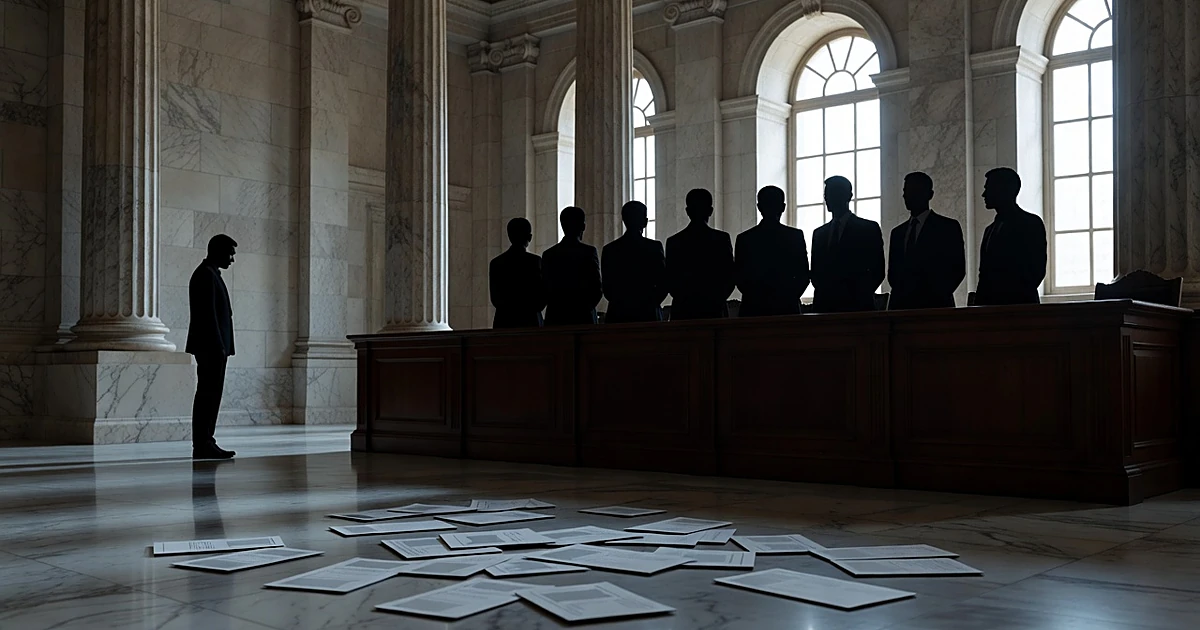
Justice Amy Coney Barrett told Congress on Tuesday that she had to explain to her twelve-year-old son what a bulletproof vest was, and why his mother needed one. Justice Elena Kagan warned that threats against members of the Supreme Court "have come very close" and that every justice lives with the knowledge they may come again. The two appeared in rare, back-to-back testimony before House and Senate appropriations subcommittees, making a direct case for more than $14 million in new security funding as the threat environment around the federal judiciary continues to escalate.
It was the first time sitting justices had testified before congressional appropriators since 2019, when Kagan and Justice Samuel Alito appeared in a budget-focused hearing. The unusual step underscored just how urgent the court considers the danger. And the numbers the justices brought with them left little room for debate.
A 57 percent rise in threats, and counting
U.S. Marshals Service data cited during the hearing showed a 57 percent rise in "security incidents of significant concern" involving federal judges in fiscal year 2025. As of July 1, the Marshals had already recorded 370 threats to judges this fiscal year and opened 512 investigations, on pace to exceed the 564 total threats logged in the prior year. The Supreme Court Police, which took over residential security for the justices from the Marshals, anticipate a 38 percent increase in threats for 2026, Kagan told lawmakers.
The court's total budget request tops $228 million, an increase of more than $20 million. The largest single line item: $14.6 million to expand the Supreme Court Police force, adding six agents per justice on top of the current four-to-eight-officer details. Another $6.5 million would fund a facility to screen visitors outside the court building. Roughly $2.3 million is earmarked for cybersecurity.
Kagan noted that recent budget increases have gone "almost entirely" toward security. That is not a sign of institutional bloat. It is a sign of what happens when a coordinate branch of government cannot keep its members safe.
Barrett's testimony: bulletproof vests and a swatting call
Barrett's account was the most personal. She described receiving a bulletproof vest after the May 2022 leak of the draft opinion overturning Roe v. Wade, when protesters descended on the homes of several conservative justices, including hers. Her then-twelve-year-old son asked about the vest.
"I didn't expect that performing this service was going to put me in the position of explaining to my children what a bulletproof vest was and why I had to wear one."
Roughly six weeks before Tuesday's hearing, Barrett's home was targeted in a swatting incident, a fake emergency call designed to provoke an armed police response. Her teenage son opened the front door to find the street filled with police cars. National Review reported that Barrett also disclosed a bomb threat directed at her sister in Charleston, South Carolina, a detail that deepened the picture of a justice whose family, not just her office, lives inside the threat zone.
Barrett also addressed a pattern known as "pizza doxxing," in which anonymous individuals order deliveries to judges' homes using the name of Daniel Anderl, the twenty-year-old son of U.S. District Judge Esther Salas who was shot and killed at their New Jersey home by a disgruntled lawyer in 2020. The deliveries are meant to send a message.
"It's hard to interpret, particularly those anonymous deliveries that are sent in the name of Judge Salas's murdered son, as anything other than an attempt to intimidate and influence decisions."
Barrett said the threats are not random. They follow rulings.
"They're designed to intimidate or designed maybe to punish after decisions that the person sending the threat didn't like, as a warning not to do it in the future."
The court wrapped its latest term just weeks before Tuesday's hearing. That term included high-profile rulings on immigration, voting rights, executive power, and birthright citizenship, decisions guaranteed to generate political heat.
Kagan: rhetoric from political figures is "really unhelpful"
Kagan took a broader view, warning that inflammatory rhetoric from elected officials, regardless of party, fuels the threat environment. She drew a clear line between legitimate criticism of the court's work and something more dangerous.
"Wherever these come from, and whatever political figure says them, whatever party that political figure is a member of, these statements are really unhelpful."
She went further, distinguishing between disagreement and intimidation.
"Intimidation is a different thing entirely. And when political figures of any stripe are trying to intimidate judges and justices to do things that they like rather than the things that they don't, that's where we really have crossed the line."
Kagan called criticism of court rulings "fair game." But she made clear the justices see a difference between a senator arguing that a decision was wrong and a political figure issuing statements designed to pressure outcomes.
Sen. Susan Collins, the Maine Republican who leads the Senate Appropriations Committee, was more direct about where the problem originates. She called out rhetoric from officials on both sides of the aisle and singled out Senate Minority Leader Chuck Schumer's 2020 remarks aimed at Justices Neil Gorsuch and Brett Kavanaugh: "you have released the whirlwind and you will pay the price." Collins also referenced sharp criticism of Republican-appointed justices following the court's tariff ruling.
"It is increasingly dangerous to be a Supreme Court justice these days, and it's appalling to me that some of the rhetoric is coming from public officials on both sides of the aisle who should know better than to levy personal and political attacks against the judiciary and the court specifically."
The Kavanaugh incident and its aftermath
The most serious known threat against a sitting justice in recent memory came in June 2022, when Sophie Roske, a California individual, was arrested outside Justice Kavanaugh's Maryland residence carrying a handgun, knife, and tools. Prosecutors alleged Roske had researched the home addresses of three Supreme Court justices and aimed to kill them. Roske pleaded guilty in April 2025 to attempting to kill or kidnap a Supreme Court justice and was sentenced to more than eight years in prison.
That incident followed the leak of the Dobbs draft opinion by roughly one month. The leak itself triggered protests outside conservative justices' homes. The timeline is hard to ignore: leak, protests, armed individual outside a justice's home. And yet Congress has moved slowly on security upgrades ever since.
CBS News analysis found 126 prosecutions in 2025 stemming from threatening communications, twelve of which involved menacing messages directed at judges. Those numbers suggest a system that is processing threats, but the volume keeps climbing.
A rare appearance, and a question of institutional norms
The justices' testimony broke with years of institutional reticence. A Congressional Research Service report found that justices appeared before House and Senate panels at least once a year from 1960 through 2011. The last Senate hearing featuring sitting justices was in 2011, when Justices Stephen Breyer and the late Antonin Scalia testified. On the House side, Kagan and Alito last appeared in 2019.
Chief Justice John Roberts declined to testify in 2023 when then-Senate Judiciary Committee Chairman Dick Durbin asked him to appear on ethics rules, calling such testimony "exceedingly rare" and citing "separation of powers concerns and the importance of preserving judicial independence." The court adopted a formal code of conduct that same year.
That Kagan and Barrett chose to appear now, together, before both chambers, signals the court views the security situation as serious enough to override its usual reluctance. AP News reported that the justices also fielded questions on ethics and the court's emergency orders docket during the hearings, though security dominated the proceedings.
Rep. David Joyce, the Ohio Republican who chairs the relevant House subcommittee, said judicial officers "must be able to do their jobs without fear for their safety or their family's safety." Rep. Steny Hoyer, the Maryland Democrat and top Democrat on the panel, struck a similar note.
"With a deeply divided country and increasingly violent rhetoric being directed at judges, Congress must provide sufficient funding to ensure the safety of all judicial personnel."
The bipartisan agreement on the need for funding is notable. Whether it translates into appropriations is another matter.
The broader pressure on the court
The justices' testimony comes during a period of extraordinary political tension around the court. The latest term produced rulings on tariffs, birthright citizenship, immigration, and executive power, each one a flashpoint. Some Democratic leaders have openly called for restructuring the court, a posture that does nothing to lower the temperature.
Last month, the court ruled that Federal Reserve Board member Lisa Cook can remain in her post while her lawsuit challenging her attempted removal moves forward, another decision that drew political fire.
Kagan addressed the court's growing emergency-orders docket, sometimes called the "shadow docket", in response to a question from Rep. Mark Pocan, a Wisconsin Democrat. She acknowledged the court has recognized "a need for additional information" in some emergency cases and has begun issuing opinions, including dissents, in those matters. She also noted that the volume of emergency petitions has grown in part because litigants "see that there is at least a potential for us to grant relief, and so why not file a petition."
That candor was welcome. But the real story of the day was not procedural reform. It was a justice telling Congress that her children live inside a security perimeter, and the perimeter is not big enough.
Just The News noted that the Supreme Court's fiscal 2027 budget request represents roughly a 10 percent increase over the prior year, with security infrastructure as the driving priority. The justices made clear the money is not optional.
What Congress owes the court
The facts here are not complicated. Threats against federal judges are surging. A would-be assassin was arrested outside a justice's home. A justice's child answered the door to a swatting response. Anonymous packages arrive at judges' homes invoking the name of a slain twenty-year-old. And the court's in-house police force says it needs more agents and better screening to keep the justices alive.
The court has its own internal debates about how to exercise its power. But no debate about jurisprudence changes the basic obligation Congress has to protect a coordinate branch of government from physical harm.
Elected officials who spend their days attacking judges by name, and then drag their feet on funding the security those judges need, should not be surprised when the next threat comes closer than the last. The justices asked for help on Tuesday. Congress should stop talking about how appalling the threats are and start writing the check.