Kansas voters reject constitutional amendment to elect state Supreme Court justices
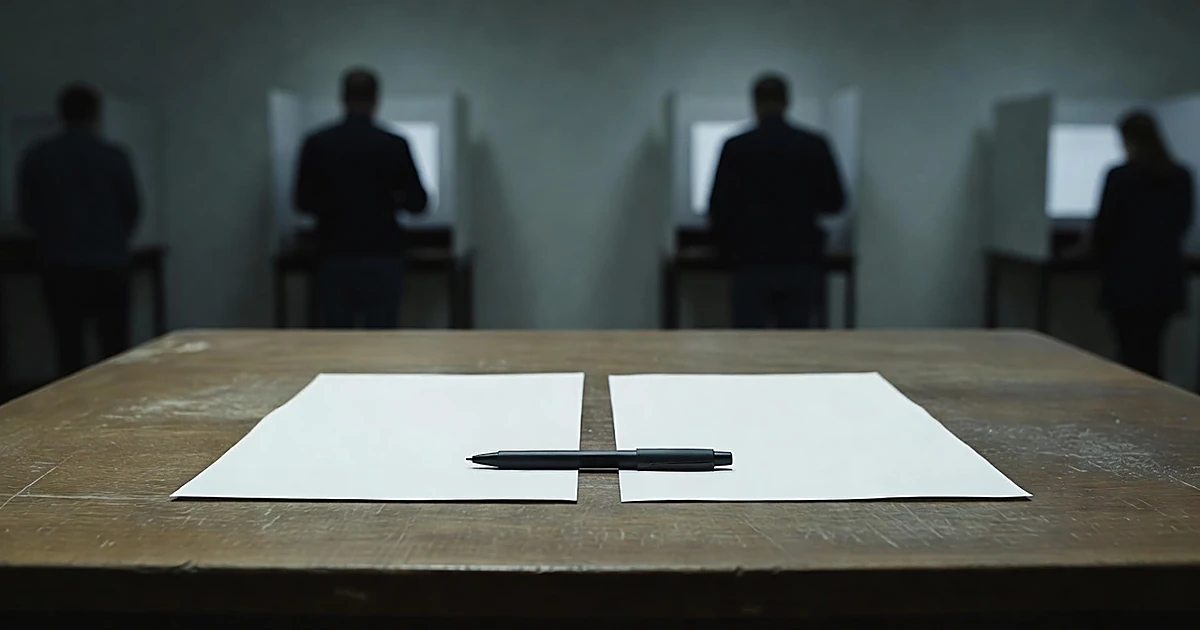
Kansas voters turned down a Republican-backed ballot measure that would have replaced the governor's power to appoint state Supreme Court justices with direct elections, a defeat that leaves a Democratic-appointed liberal majority intact on the state's highest court.
The Associated Press projected the result Tuesday night after voters rejected the constitutional amendment, which the GOP-controlled Kansas Legislature had placed on the ballot. The measure would have scrapped a system in place since 1958, under which the governor picks justices from a list prepared by a nine-member nonpartisan nominating commission. Justices then face a retention vote after one year and every six years after that. NBC News reported that the campaign drew more than $12 million in ad spending, with opponents outspending supporters by more than two to one.
The fight was never really about process. It was about who controls the Kansas Supreme Court, and what that court has done on abortion, school funding, and election integrity.
A 2019 abortion ruling set the fuse
The push to elect justices traces directly to a 2019 Kansas Supreme Court ruling that declared the state constitution protects the right to an abortion. That decision put Kansas at odds with the national conservative movement, and it stuck. In 2022, after the U.S. Supreme Court overturned Roe v. Wade, Kansas voters sided with the state court's ruling in a separate ballot measure, keeping abortion protections in place.
For Kansas Republicans, the court's composition became the problem. Governor Laura Kelly, a Democrat who took office in 2019, holds the appointment power. Six of the court's seven justices will have been appointed by Democratic governors after Kelly's next pick, the Washington Examiner noted, creating what critics call a reliable liberal majority.
State Attorney General Kris Kobach, who formerly served as Kansas secretary of state, began calling on the Legislature to put a direct-election amendment before voters as far back as 2019. In 2022, he told The Wichita Eagle that such a move would allow, "slowly and quietly," for anti-abortion justices to be placed on the court.
Supporters were explicit about the goal. If the amendment had passed, backers hoped to elect at least four conservative, anti-abortion justices to the seven-member court by 2033, the Associated Press reported.
$12 million and dueling ad campaigns framed the stakes
The air war was expensive. Ad spending on the ballot measure topped $12 million, according to the tracking firm AdImpact. A Nashville-based Republican nonprofit funneled $1.7 million to the pro-amendment campaign, while Planned Parenthood affiliates contributed $1.6 million to the opposition.
Opponents organized under the banner Kansas United for Impartial Courts. Their ads warned that a "no" vote would stop "judges from becoming politicians" and "prevents billionaires from buying seats on the court." The group pointed to Wisconsin, where nominally nonpartisan Supreme Court elections have drawn tens of millions of dollars and heavy spending from billionaire donors, including Elon Musk.
The pro-amendment side, led by the group Kansans for Democracy Inc., framed the current system as an insider arrangement. Their ads argued that "elites" get to "decide who's on the Kansas Supreme Court, behind closed doors, trading favors, rewarding friends," and that "the public can't see it or control it. Voters like you completely cut out."
Courts across the country have become flashpoints for political conflict, from redistricting battles to challenges over election procedures. Kansas was the latest state where the judiciary itself became the ballot question.
Kansas Senate president tied the court to school spending
The conservative case for the amendment went beyond abortion. Kansas Senate President Ty Masterson made the argument in blunt terms.
Breitbart reported Masterson's pitch to voters:
"If we elect our Supreme Court, they won't force you to spend money on schools."
That line pointed to years of Kansas Supreme Court rulings ordering the Legislature to increase school funding, decisions that infuriated fiscal conservatives who saw the court dictating spending policy from the bench. For supporters of the amendment, the issue was accountability: justices who make policy should answer to voters, not to a nominating commission dominated by lawyers.
Elizabeth Patton, the state director of Americans for Prosperity, framed the case in democratic terms: "Globally and over history, even in its imperfection, the best system is democracy."
Opponents pushed back hard. Jamie Swan, an abortion rights advocate, called the amendment "just a power grab." Kansas Democratic Party Chair Jeanna Repass was more direct in an interview with NBC News ahead of the vote:
"This is about abortion. Plain and simple."
Justice Dan Biles and the recusal question
Beyond the abortion debate, supporters of the amendment pointed to specific conduct on the bench as evidence that the current system lacks accountability. The Washington Examiner highlighted the case of Justice Dan Biles, who recused himself from the election-integrity case League of Women Voters v. Schwab in October 2021 without explanation. In February 2024, Biles abruptly rescinded his recusal, also without explanation, and then issued a dissent against signature verification for mail-in ballots.
Former Kansas Solicitor General Anthony Powell said Biles's return to the case without addressing the original conflict was:
"Improper, has the potential to compromise the public's confidence in the integrity and impartiality of the Court, and creates at least an appearance of impropriety."
That episode captured the frustration driving the amendment's supporters. Under the current system, justices face retention votes but never competitive elections. A justice who behaves erratically faces no real electoral consequence, voters can only say yes or no to a name on a retention ballot, with no alternative candidate. Federal courts have faced similar scrutiny over judicial independence and the boundaries of judicial authority.
Twenty-two states already elect their top judges
Kansas is an outlier in how it selects its highest court. Twenty-two states currently elect their top court judges, while 26 use some form of gubernatorial appointment, according to the Brennan Center for Justice at New York University School of Law. Kansas itself elected justices for nearly a century before switching to the appointment system in 1958. No state has adopted a similar amendment reverting to elections since Mississippi did so in 1914.
Proponents argued Kansas was simply asking to rejoin the majority of states that trust voters with this decision. Opponents countered that states with elected judiciaries, particularly Wisconsin, have seen campaigns dominated by outside money and partisan rancor, the opposite of judicial independence. The growing role of courts in shaping political maps and policy outcomes has made judicial selection a live issue far beyond Kansas.
Opponents spent more, and won
In the end, the opposition's financial advantage proved decisive. Opponents outspent supporters by more than two to one, flooding the airwaves with warnings about politicized courts and billionaire influence. The result leaves Kelly's appointment power intact and ensures the court's current ideological balance will hold for the foreseeable future.
The defeat is a setback for Kansas Republicans who saw the amendment as the only realistic path to reshaping a court that has blocked their priorities on abortion, school funding, and election procedures. With the current appointment system still in place, the court's direction depends on who sits in the governor's mansion, and Kelly, a Democrat, still holds that office.
Corruption and accountability in government remain persistent concerns for voters regardless of party. But in Kansas, the question of who picks the judges, and who those judges answer to, will remain unresolved.
Kansas voters had every right to keep their current system. But the result does not change the underlying problem: a court that issues sweeping policy rulings while answering to no one at the ballot box is a court that operates on borrowed legitimacy.