Nassau County DA opens criminal probe into Long Island school clerk accused of destroying ballots
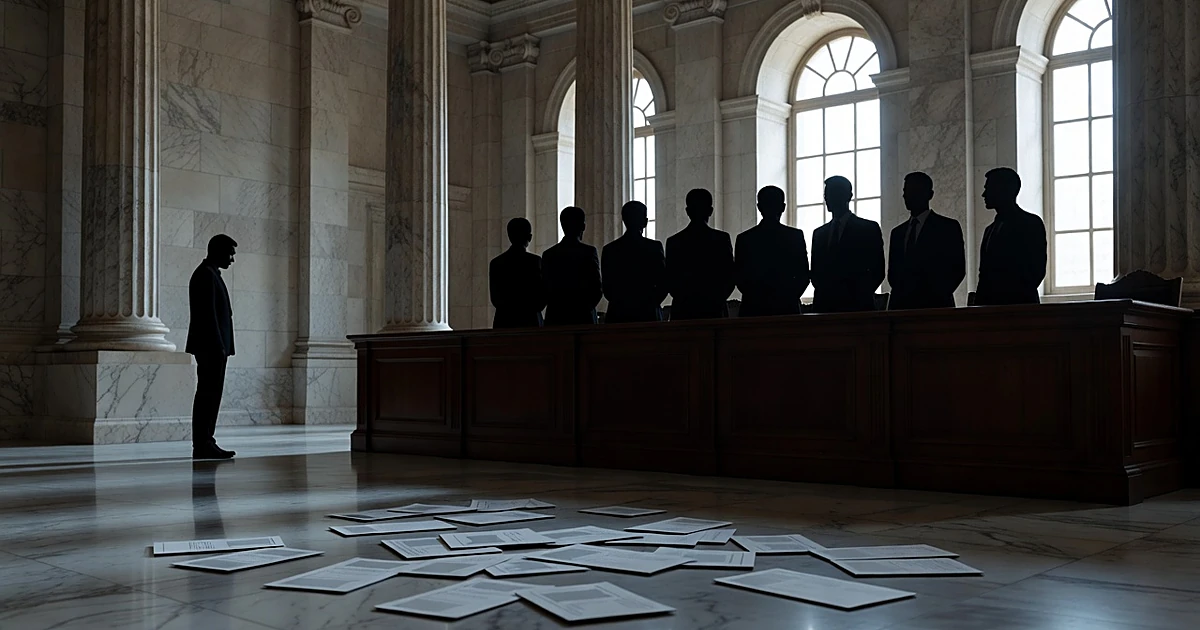
The Nassau County District Attorney has launched a criminal investigation into a Long Island school district clerk and the incumbent board president she allegedly helped re-elect, after evidence surfaced that she tore up officially cast ballots and hauled them to a dumpster.
April Keys, the Hempstead Union Free School District clerk who was in charge of running the May school board election, and Victor Pratt, the incumbent board president who also goes by "DJ Vic-Lover," are both subjects of the probe. A spokesperson for DA Anne Donnelly confirmed the investigation to the New York Post but declined further comment.
The district itself passed the evidence along to prosecutors after completing a 51-page internal investigation report that laid out what it described as serious irregularities in the May vote. Pratt won re-election by just 81 votes, a margin built almost entirely on absentee and early mail ballots that arrived in numbers wildly out of proportion to every other candidate in the race.
The numbers that triggered the probe
The internal report's statistical picture alone should have raised alarms. Pratt pulled 87 percent of absentee votes and 55 percent of early mail votes. On the in-person machines, where voters mark their choices under the eyes of poll workers, he managed only 27 percent, good enough for third place.
Other trustee candidates in the same election received fewer than 100 absentee and early mail ballots combined. Pratt's haul dwarfed them all.
That gap between mail-in dominance and in-person weakness is the kind of red flag that election integrity experts have long warned about. When one candidate's performance swings that dramatically depending on the ballot type, something beyond ordinary voter preference is usually at work.
Election fraud cases at the local level often fly under the radar precisely because school board races attract little outside scrutiny. The Hempstead case is a reminder that the vulnerability exists wherever oversight is thin, and wherever a single official controls the process. Keys was the clerk responsible for administering the election. She was also, the district's investigation found, the person allegedly ripping up the ballots.
Ballots torn up, smuggled to a dumpster
The 51-page report described a scheme that was brazen in its simplicity. Keys allegedly tore up officially cast ballots inside her office, then smuggled them out and discarded them in a dumpster. She did not act alone. Custodian Owen Peters and Pratt himself allegedly helped move the destroyed ballots to the trash.
Three days after the election, the district placed Keys on administrative leave. The speed of that action suggests officials recognized the severity of the allegations almost immediately.
The report was released in June, and the fallout was swift. New York State intervened, ordering a new election now slated for August 17. The state also appointed Neil Boyd, a superintendent for the Putnam-Northern Westchester BOCES, as temporary clerk to oversee the revote, removing the process entirely from the hands of the people accused of corrupting it.
Whether Peters faces the same criminal exposure as Keys and Pratt remains unclear. The DA's spokesperson named only Keys and Pratt as subjects of the investigation.
A pattern that demands attention
The Hempstead case is not an isolated episode. Across the country, local election integrity failures keep surfacing in ways that undermine public confidence in the democratic process. An FBI raid on an Ohio voter organization's headquarters over a reported fraud investigation highlighted how organized schemes can operate at the grassroots level.
The common thread in these cases is access and opportunity. When one person or a small group controls ballot handling with minimal oversight, the temptation to tip the scales can overwhelm whatever institutional guardrails exist on paper.
On Long Island, the guardrail was a school district clerk who was supposed to be the neutral administrator of the vote. Instead, she allegedly became the instrument of its corruption. The person charged with safeguarding ballots allegedly destroyed them, and the candidate who benefited allegedly lent a hand.
That kind of insider manipulation is harder to detect than external interference, and it strikes at the foundation of self-governance. Voters in Hempstead cast their ballots in good faith. Those ballots, the district's own investigation found, ended up in the trash.
Absentee ballot vulnerabilities
The statistical anomaly in Pratt's vote totals underscores a persistent concern about mail-in and absentee voting. In-person voting offers layers of verification, poll workers, sign-in logs, machine tabulation witnessed by observers. Absentee ballots travel through a chain of custody that is only as strong as the people handling them.
When Pratt captured 87 percent of absentee votes but only 27 percent of machine votes, the gap was not subtle. It was a chasm. And it existed in a race where every other candidate's absentee totals were negligible.
Concerns about ballot integrity and election manipulation have grown louder in recent years, and cases like Hempstead show why. The problem is not theoretical. It is a school district clerk allegedly shredding votes in her office and walking them to the garbage.
Critics who dismiss election fraud worries as conspiracy theories rarely grapple with the documented cases that keep emerging from local races, where the stakes are lower but the controls are weaker.
State intervention and the road ahead
New York State's decision to order a new election and install an outside clerk signals that officials recognized the original vote could not stand. The August 17 revote will give Hempstead voters another chance to choose their school board representatives, this time under supervision that did not exist in May.
Neil Boyd's appointment as temporary clerk is designed to ensure the new election is administered by someone with no ties to the district's internal politics. Whether that is enough to restore confidence among voters who watched their ballots allegedly end up in a dumpster remains to be seen.
The DA's criminal investigation is still in its early stages. No charges have been filed, and neither Keys nor Pratt has made any public statement in response to the allegations, based on available reporting. The specific charges prosecutors may pursue have not been disclosed.
Several critical questions remain unanswered. What was the total number of votes cast in the May election? Who conducted the district's internal probe, staff, outside counsel, or another entity? And what specific evidence did the district hand over to the DA's office beyond the 51-page report?
Voter fraud prosecutions at the local level are notoriously difficult, not because the evidence is always thin, but because the cases attract limited resources and public attention. The fact that DA Donnelly's office moved to open a formal criminal investigation suggests the evidence the district provided was substantial enough to warrant it.
The integrity of elections, from the presidency down to the local school board, depends on clean voter rolls and honest administration. When the people entrusted with running the process become the ones corrupting it, the system has failed at its most basic level.
Cases like the felony charges filed against a noncitizen who voted illegally in Minnesota demonstrate that prosecutors can and do act when election laws are broken. The question in Hempstead is whether accountability will follow the evidence, or whether a school board race will be treated as too small to matter.
If a clerk can tear up ballots, stuff them in a dumpster, and walk away without consequence, the message to every other small-time operator with access to a ballot box is unmistakable: the system won't stop you. Hempstead voters, and voters everywhere, deserve better than that.