Netanyahu heads to White House as Iran digs in on missiles and proxies
Israeli Prime Minister Benjamin Netanyahu will sit down with President Trump at the White House on Wednesday, a meeting moved up at Netanyahu's own request as U.S.-Iran negotiations gain momentum — and as Tehran makes clear it intends to give up as little as possible.
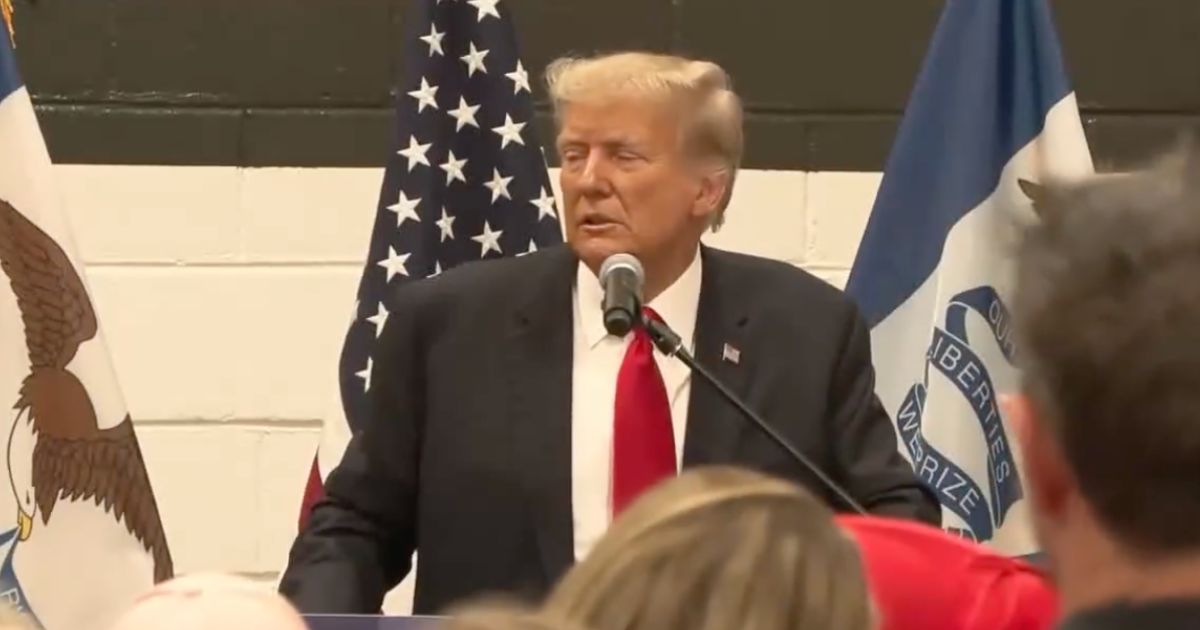
The Prime Minister's Office announced the visit Saturday night, just one day after U.S. envoy Steve Witkoff and Trump adviser Jared Kushner held indirect talks with Iranian Foreign Minister Abbas Araghchi in Muscat, Oman. Trump, speaking aboard Air Force One on Friday, offered a characteristically direct read of the situation:
"They want to make a deal. They don't want us to hit them."
He described the Oman talks as "very good" and acknowledged another round could come soon. But the gap between what the U.S. and Israel demand and what Iran says it will accept remains a canyon — one that Wednesday's meeting is designed to address.
Netanyahu draws the red lines.
Netanyahu's position is unambiguous. Any deal with Tehran, he argues, must go far beyond the nuclear file. The Prime Minister's Office stated that Netanyahu believes in negotiations:
"Must include limitations on ballistic missiles and a halting of the support for the Iranian axis."
That framing — "the Iranian axis" — isn't rhetorical decoration. It refers to the network of proxy forces that have destabilized the region for decades: Hezbollah, Iraqi militias, and Yemen's Houthis among them. Netanyahu isn't interested in a narrow nuclear understanding that leaves the architecture of Iranian aggression intact. Breitbart reported.
He also issued a warning aimed squarely at Tehran. Any Iranian attack on Israel, he said, would trigger a response:
"The likes of which has never been seen."
Secretary of State Marco Rubio has echoed the broader framework, insisting that any agreement must address Iran's ballistic missile arsenal, its regional proxy network, and its internal repression. This isn't a side negotiation. For the administration and for Israel, missiles and proxies are the negotiation.
Iran's answer: no, no, and no
Tehran responded to all of this on Saturday with the diplomatic equivalent of a slammed door.
Araghchi dismissed calls to limit Iran's ballistic missile program outright:
"This is a defensive matter. No external country will deal with it."
He also ruled out a complete halt in uranium enrichment and declared that enriched uranium:
"Will not leave Iran."
Araghchi claimed Tehran could accept terms that satisfy "all sides" — a formulation that sounds flexible until you realize he just took every meaningful concession off the table. Missiles? Defensive. Enrichment? Continuing. Fissile material? Staying put.
This is the Iranian playbook: project reasonableness while conceding nothing. The question is whether anyone still falls for it.
The pressure campaign is working.g
If Araghchi's tone suggested calm, the evidence behind the scenes told a different story. Treasury Secretary Scott Bessent offered lawmakers a vivid picture on Thursday:
"We have seen the Iranian leadership wiring money out of the country like crazy. That is a good sign that they know the end may be near."
Bessent characterized the capital flight bluntly — "the rats are leaving the ship" — as sanctions accelerate Iran's economic deterioration. The White House reinforced the squeeze on Friday by announcing expanded sanctions authority targeting countries that maintain trade ties with Iran.
This is the leverage that makes negotiations possible in the first place. Iran didn't come to Oman because it had a change of heart. It came because the financial walls are closing in, and the regime's own leaders are moving their money to the exits. That tells you everything about how Tehran's ruling class assesses its own future.
Missile cities and carrier decks
The backdrop to all of this is a deliberate display of force on both sides.
On Thursday, Iran unveiled an underground "missile city" housing the Khorramshahr-4 ballistic missile, which state media described as capable of striking Israel "within minutes" and carrying a heavy payload capable of threatening U.S. bases and allied assets across the region. IRGC-linked outlets framed the disclosure as part of a shift toward offensive doctrine. A multi-stage war blueprint published by regime-aligned media outlined missile barrages on U.S. forces, coordinated proxy escalation, cyberattacks, and threats to global energy shipping through the Strait of Hormuz.
This is what "defensive matter" looks like in practice: underground missile arsenals and published war plans.
The American side answered without words. On Saturday morning, Witkoff, Kushner, and U.S. Central Command commander Adm. Brad Cooper visited the USS Abraham Lincoln in the Arabian Sea. Witkoff posted on X that they met with:
"The brave sailors and Marines aboard the USS Abraham Lincoln, her strike group, and Carrier Air Wing 9 who are keeping us safe and upholding President Trump's message of peace through strength."
He added that they observed live flight operations and spoke with the pilot who:
"Downed an Iranian drone that approached the carrier without clear intent."
That incident — an Iranian drone intercepted near a U.S. carrier — received little mainstream attention. It should. When you're negotiating with a country whose drones are probing your naval assets, the conversation about "defensive" capabilities takes on a different character.
What Wednesday means
Netanyahu requested that this meeting be moved up. That urgency matters. Israeli officials remain skeptical that any deal emerging from the current track will adequately address the threats they face — and the last 72 hours explain why.
Consider the sequence:
- Iran unveils an underground missile city
- Iran's foreign minister declares missiles off the table
- Iran refuses to halt enrichment or export fissile material
- Regime-aligned media publishes a multi-front war blueprint
- An Iranian drone probes a U.S. carrier group
And then Tehran says it wants a deal that works for "all sides."
Netanyahu is flying to Washington to make sure the definition of "all sides" doesn't shrink to fit Iran's comfort zone. The lesson of the Obama-era Iran deal — which sidelined missiles entirely and sunset its own restrictions — is still fresh. Israel paid the price for that diplomatic convenience during last summer's war with Iran.
The Trump administration's posture is fundamentally different. Expanded sanctions, carrier deployments, and a diplomatic team that visits a strike group the morning after talks — none of this is ambiguous. But Netanyahu wants the architecture of any agreement to match the rhetoric. Missiles in. Proxies in. Enrichment addressed honestly. No elegant frameworks that leave the regime's tools of war untouched.
Iran's leadership is wiring money out of the country. Its foreign minister is drawing red lines he may not be able to hold. And the Prime Minister of Israel is boarding a plane to Washington to make sure this moment doesn't get wasted on a deal that solves nothing.
Wednesday will tell us whether the pressure translates into something real — or whether Tehran's stalling runs out the clock once more.