Northern Ireland pastor appeals conviction for preaching the Gospel near abortion clinic buffer zone
A 78-year-old retired pastor in Northern Ireland plans to appeal his conviction under a law that made it a crime to "influence" people about abortion within 100 meters of a hospital, even though his open-air sermon never mentioned abortion at all.
Clive Johnston was found guilty earlier this month on two charges under the Abortion Services (Safe Access Zones) Act for preaching on John 3:16 near Causeway Hospital in Coleraine. A court fined him £450. Now Johnston, backed by The Christian Institute, says he will fight the ruling in what amounts to a direct test of whether the United Kingdom still protects religious speech in public spaces.
The case has drawn attention from American evangelists, former British lawmakers, and even the U.S. State Department, all of whom see in Johnston's prosecution a warning about the reach of abortion-access laws when turned against ordinary religious expression.
What happened outside Causeway Hospital
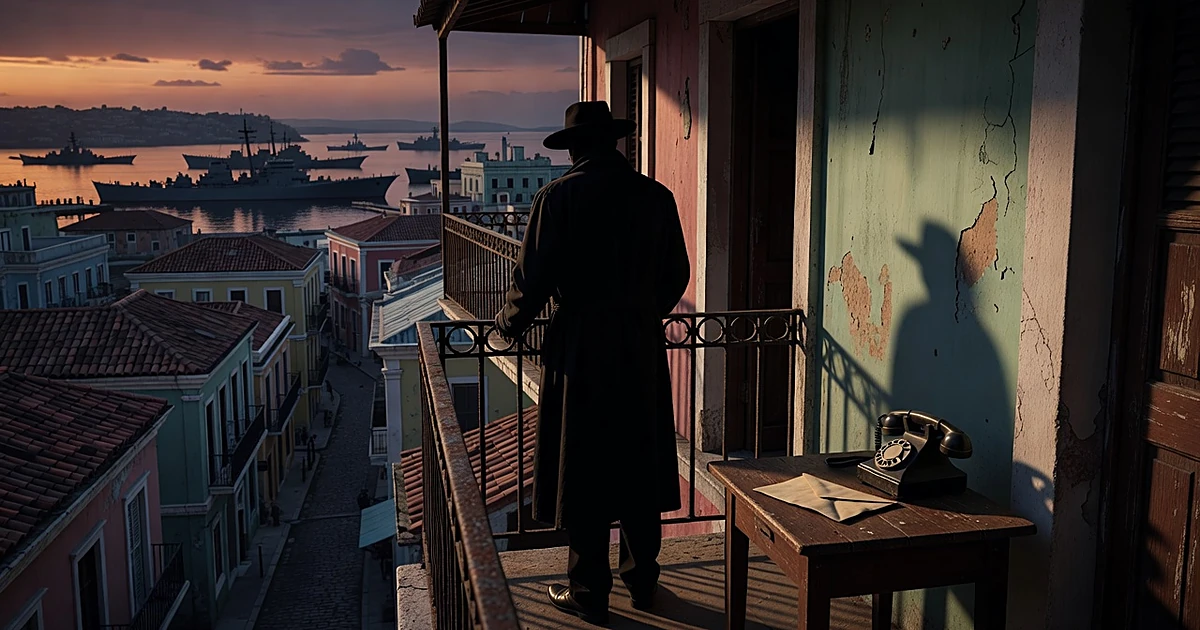
The facts, as Christian Today reported, are straightforward. In 2024, Johnston held an open-air religious service within 100 meters of Causeway Hospital in Coleraine. His sermon centered on John 3:16, one of the most widely known verses in Christianity. He did not mention abortion.
Police officers approached Johnston during the service. They told him he should preach in a "safe" space like a chaplaincy instead. He was later charged on two counts under the safe access zone statute.
The law prohibits "influencing," "preventing or impeding access," or "causing harassment, alarm or distress" within 100 meters of facilities that provide abortion services, as the Washington Examiner detailed. Johnston was convicted under the "influencing" provision, a term so broad it apparently covers a Bible reading that makes no reference to the procedure the law was designed to protect.
No one has alleged that Johnston harassed or intimidated anyone. No one has claimed he blocked access to the hospital. The Christian Institute's Simon Calvert made that point directly:
"This case was never about harassment or intimidation, nobody has alleged Clive Johnston engaged in anything close to this form of behaviour. It is about whether the state can criminalise the peaceful expression of Christian faith in a public place under abortion buffer zones laws."
A pastor's defense, and a precedent he refuses to accept
Johnston has been clear about what he was doing and why he believes the conviction cannot stand. He told reporters he was not protesting abortion:
"I was not protesting abortion. I was peacefully preaching the Gospel, reading from the Bible, and pointing people to the hope found in Jesus Christ."
His concern is not only personal. Johnston framed the ruling as a threat to every believer who dares speak publicly about their faith. The conviction of a retired pastor for preaching John 3:16 near a hospital has implications that reach well beyond one man and one sermon in Coleraine.
"If this conviction is allowed to stand, it will signal that basic Christian witness and public expressions of faith can be criminalised simply because they take place in the wrong location. That should concern every person who values freedom of religion and freedom of expression, regardless of their views on abortion."
Johnston described the ruling as setting "a deeply troubling precedent." That language is measured. The facts support it.
International reaction signals broader alarm
The case has not stayed local. Fox News reported on the conviction and fine, amplifying the story to an American audience already sensitive to government overreach against religious expression. Franklin Graham, the American evangelist, expressed shock at the outcome:
"Pastor Johnston didn't even mention abortion; he just preached the Gospel in a public space. I hope his legal team at [The Christian Institute] will have success in appealing this. Religious freedoms are being threatened not only in the UK, but here in the US, Canada, and around the world."
Graham's warning is not hypothetical. Finnish MP Päivi Räsänen has taken her own Bible pamphlet conviction to the European Court of Human Rights, in a case that tracks a similar pattern: a Western democracy using hate-speech or access-zone statutes to punish the public expression of traditional Christian belief.
Former Conservative MP Jacob Rees-Mogg weighed in with characteristic directness:
"It is extraordinary that in a Christian country the police think it is an offence to preach the word of God outside a hospital."
Perhaps most striking, the U.S. State Department voiced concern that cases like Johnston's represent an "egregious violation" of fundamental rights and a "concerning departure" of UK authorities from the "shared values" underpinning the transatlantic relationship. When Washington feels compelled to lecture London on religious liberty, something has gone badly wrong.
The law's reach, and what it criminalizes
The Abortion Services (Safe Access Zones) Act was sold as a measure to protect women from harassment outside clinics. That is a goal most people can understand. But the statute's operative language goes far beyond harassment. It criminalizes "influencing", a word elastic enough to cover a street preacher reading Scripture aloud to passersby who may or may not be entering the hospital for any reason, let alone for an abortion.
Johnston's sermon was on John 3:16: "For God so loved the world, that he gave his only begotten Son, that whosoever believeth in him should not perish, but have everlasting life." He did not mention abortion. He did not address patients. He did not block a door. And yet the court found that his presence and his words constituted criminal "influence" within the zone.
The New York Post covered the conviction, noting Johnston's age and the specific Bible verse at issue, details that underscore how far the law's enforcement has stretched from its stated purpose.
If reading John 3:16 qualifies as criminal influence, what doesn't? The statute provides no clear answer. And that ambiguity is the point. Vague laws hand enormous discretion to police and prosecutors. In practice, that discretion tends to land hardest on people whose views the prevailing culture finds unfashionable.
A pattern, not an isolated case
Johnston's prosecution does not exist in a vacuum. Across the English-speaking world, governments have increasingly treated traditional Christian expression as a public-order problem to be managed, zoned, and, when convenient, prosecuted. Reports have alleged that the Biden administration used abortion group dossiers to pursue pro-life Christians in the United States, raising parallel concerns about state power being aimed at religious believers under the cover of protecting access to abortion services.
The Washington Examiner warned that the secular left in the United States will "someday try to establish similar 'safe access zones' where they can prosecute Christians for sharing the gospel message of John 3:16." Whether that prediction proves accurate, the legal architecture for such enforcement already exists in Northern Ireland, and it just convicted a 78-year-old man for reading his Bible outdoors.
The Christian Institute's Calvert put the stakes plainly:
"The implications of this dangerous ruling reach far beyond one individual pastor in Northern Ireland. If public authorities can prosecute someone for reading the Bible and preaching on God's love, then fundamental freedoms are at risk."
What comes next
Johnston has announced his appeal. Key details remain unknown: the exact date of his conviction, the court that heard the case, the judge who presided, and the procedural timeline for the appeal itself. No statement from prosecutors or police explaining their rationale for pursuing charges has been made public. The appeal will test whether Northern Ireland's courts recognize any limit on the safe access zone law's reach, or whether "influencing" means whatever authorities want it to mean on any given day.
The prosecution never alleged harassment. It never alleged obstruction. It alleged influence, and found it in a sermon about God's love delivered by a retired pastor on a public sidewalk.
When a government can fine a man for reading John 3:16 in the open air, the buffer zone isn't protecting anyone's safety. It's protecting the state from hearing things it would rather not hear.