Ohio Supreme Court shuts down Mackenzie Shirilla's last state appeal in double murder case
The Ohio Supreme Court has rejected Mackenzie Shirilla's final bid to reopen her murder conviction at the state level, leaving the 22-year-old to serve her sentence for intentionally killing two passengers in a 100 mph crash.
Chief Justice Sharon L. Kennedy denied Shirilla's motion for reconsideration on Tuesday, September 1, closing the last door available to her in Ohio's courts. The one-line order was blunt:
"It is ordered by the court that the motion for reconsideration in this case is denied."
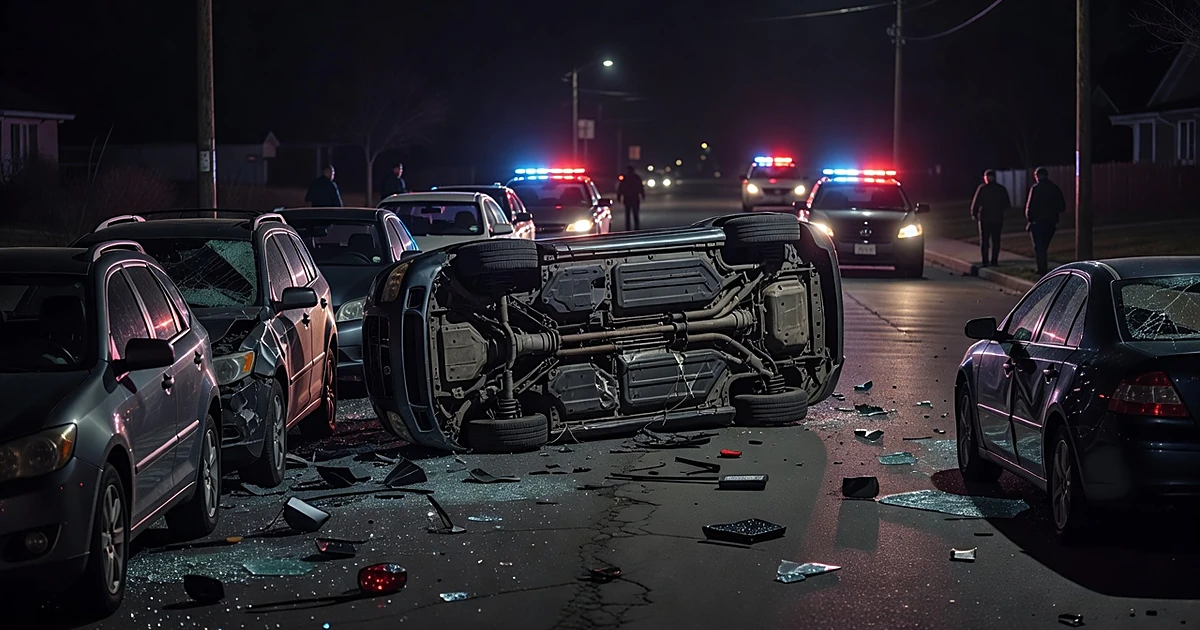
The ruling, first reported by FOX 8, ends a string of failed appeals stretching back to Shirilla's August 2023 conviction for murder in Cuyahoga County. She drove her Toyota Camry into a brick wall on a dead-end street in a Strongsville, Ohio, business park in July 2022, killing her boyfriend Dominic Russo and their friend Davion Flanagan. Prosecutors proved the crash was intentional. A judge found her guilty and sentenced her to 15 years to life.
Shirilla was 17 at the time of the crash. She is now 22, incarcerated at the Ohio Reformatory for Women in Marysville, Ohio. State prison records show her first parole hearing is not expected until September 2037, when she will be 33.
One day late cost Shirilla her appeal
The procedural detail that sank Shirilla's state-level challenge is almost too simple to believe. In 2024, her attorney filed a postconviction appeal citing new evidence, a medical condition allegedly affecting her heart rate and blood flow, which she claimed caused her to black out before the crash. But the filing landed one day past the statutory 365-day deadline.
An Ohio appeals court threw the petition out as untimely. Shirilla's lawyer tried a creative argument: because the filing period included a leap year, the extra calendar day meant the petition was actually on time. The Ohio Supreme Court was unmoved. In June 2026, the justices declined to hear the case, ruling that the statutory language setting the 365-day deadline is clear.
Tuesday's denial of the motion to reconsider that June ruling was the final step. Fox News reported that Chief Justice Kennedy's order left Shirilla's two concurrent sentences of 15 years to life fully intact.
Courts across the country routinely enforce filing deadlines without exception, and for good reason. Deadlines exist to bring finality to victims' families and to prevent the justice system from becoming a revolving door of indefinite challenges. When a convicted killer's own legal team cannot meet a basic calendar requirement, the court owes no one a do-over.
In another recent case where a convicted murderer sought to overturn a guilty verdict, a Texas judge upheld Karmelo Anthony's murder conviction and denied a bid for a new trial, a reminder that courts are not obligated to grant endless second chances when the evidence supports the original verdict.
Shirilla now turns to federal court
With state-level options exhausted, Shirilla filed a petition in Ohio's Northern District federal court in July 2026. In that filing, she argued her 2023 trial and imprisonment violated her constitutional rights to due process and that her attorneys did not do enough to help her, an ineffective-assistance-of-counsel claim. That federal case remains pending.
The New York Post reported on the federal petition as a separate track from the now-concluded state proceedings. Whether a federal judge will find merit in Shirilla's constitutional arguments remains an open question, but the bar for overturning a state murder conviction in federal court is high.
Ineffective-assistance claims require a defendant to show not just that her lawyers made mistakes, but that those mistakes were so severe they changed the outcome of the trial. Given that prosecutors presented evidence Shirilla deliberately accelerated to roughly 100 mph on a dead-end street, that will be a steep hill to climb.
Judicial proceedings in high-profile murder cases often draw scrutiny not just for the verdicts themselves but for the conduct of judges and attorneys involved. In one notable example, a judge was removed from a murder appeal after making post-trial television comments that raised questions about impartiality.
Two lives lost, one clear verdict
Dominic Russo and Davion Flanagan were passengers in Shirilla's car the night she drove it into a brick wall in Strongsville. Russo was her boyfriend. Flanagan was a friend of both. Neither survived.
Shirilla's defense at trial and in her subsequent appeals has centered on the claim that a medical episode, not intent, caused the crash. But the trial court found otherwise. Prosecutors demonstrated that Shirilla intentionally crashed the vehicle, and a Cuyahoga County judge convicted her of murder.
Criminal sentencing and the question of how long convicted killers should remain behind bars continues to be debated in Ohio. Governor Mike DeWine recently made headlines when he called for abolishing the death penalty, a reversal of his decades-old position, a move that underscored the state's evolving conversation about justice and punishment.
Shirilla's case, though, is not about the death penalty or sentencing reform. It is about whether a convicted murderer can use procedural maneuvers and shifting legal theories to escape accountability for killing two people. So far, every court that has reviewed the matter has said no.
The 365-day deadline her attorney missed is not an obscure technicality buried in fine print. It is a straightforward statutory requirement. The Ohio Supreme Court said as much when it ruled the language is clear. Shirilla's legal team filed one day late, and no amount of leap-year arithmetic changes the outcome.
Courts that uphold guilty verdicts against procedural challenges serve a purpose that extends beyond any single case. In a legal system where new evidence sometimes surfaces after trial, the rules governing when and how that evidence can be introduced exist to balance fairness to defendants with finality for victims and their families.
Shirilla's federal petition is the last thread. If it fails, she will remain at the Ohio Reformatory for Women until at least 2037, when a parole board, not a sympathetic judge, will decide whether she has earned a chance at release.
Two families buried their children because of what Mackenzie Shirilla did on a dead-end street in Strongsville. The courts have spoken, repeatedly. Accountability is not a technicality, it is the point.