Progressive Democrats back Massie’s bill to curb Trump’s war powers
Strange bedfellows are making waves in Washington as a staunch conservative joins forces with the progressive “Squad” to challenge presidential war powers.
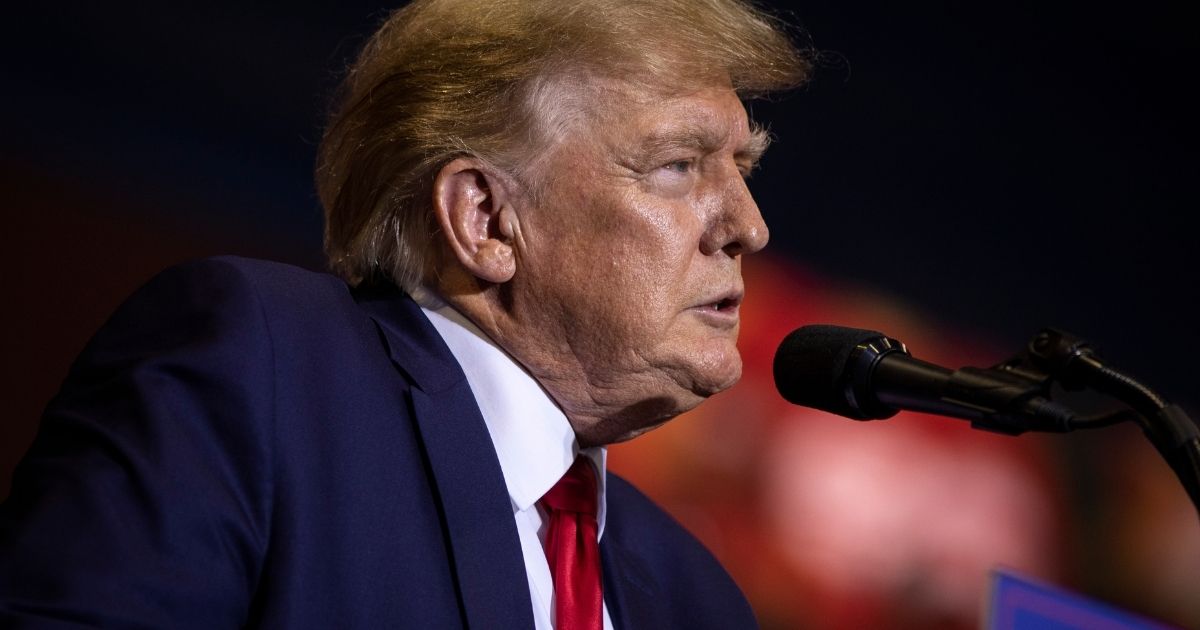
This unexpected alliance centers on a bipartisan bill introduced by Rep. Thomas Massie (R-KY) to curb President Donald Trump’s authority regarding U.S. involvement in the Israel-Iran conflict. As reported by Breitbart, the legislation aims to ensure Congress, not the executive branch, decides whether America steps into this volatile situation.
Massie, a lone Republican voice on this measure, took to X to lay out his reasoning with characteristic clarity. “This is not our war. But if it were, Congress must decide such matters according to our Constitution,” he declared. Well, that’s a refreshing nod to constitutional checks—something too often ignored in the rush to flex military muscle.
Unlikely Allies in a Constitutional Fight
Remarkably, Massie’s call for restraint has found eager support among some of the most progressive Democrats in Congress. Far-left “Squad” members like Reps. Alexandria Ocasio-Cortez (D-NY), Rashida Tlaib (D-MI), and Ilhan Omar (D-MN) have all signed on to back this War Powers Resolution. It’s a rare sight to see such ideological opposites unite, even if their motivations might differ.
Ocasio-Cortez kept it short and sweet on X, replying simply, “Signing on.” While her brevity is noted, one wonders if this signals a deeper shift or just a convenient alignment against executive overreach. After all, skepticism of unchecked power should cross party lines, shouldn’t it?
Tlaib, meanwhile, didn’t hold back, stating, “I look forward to supporting this War Powers Resolution. The American people aren’t falling for it again.” She referenced past deceptions like the Iraq War’s “weapons of mass destruction” narrative, implying Trump can’t be trusted to act without congressional approval—a jab that hits hard but raises fair questions about historical lessons.
Progressive Voices Echo Anti-War Sentiment
Ilhan Omar added her voice to the chorus, asserting, “I support this resolution because the American people do not want another war.” Her point resonates with a war-weary public, though some might argue it oversimplifies the complex stakes of Middle Eastern geopolitics. Still, the sentiment of avoiding endless conflicts is hard to dismiss.
Rep. Ro Khanna (D-CA), no stranger to criticizing military engagements, also jumped aboard with a pointed post: “No war in Iran.” He framed the issue as a choice between siding with “neocons” behind the Iraq debacle or standing with everyday Americans—a rhetorical flourish that’s clever, if a bit reductive for such a nuanced issue.
Khanna didn’t stop there, proudly announcing, “I am proud to co-lead this bipartisan War Powers Resolution with Rep. Massie. It is privileged and must receive a vote.” That insistence on a vote is a bold move, forcing Congress to confront its constitutional duty head-on, which is a win for accountability no matter where you stand.
Senate Progressives Join the Fray
On the Senate side, progressive heavyweights are also stepping into the ring with similar measures. Sen. Tim Kaine (D-VA) issued a statement on Monday revealing his own War Powers Resolution to block unauthorized military action against Iran. It’s a parallel effort that underscores just how seriously some lawmakers take this issue.
Sen. Bernie Sanders (I-VT) went further, introducing the “No War Against Iran Act” with support from a roster of like-minded senators. Backers include Sens. Elizabeth Warren, Jeff Merkley, Chris Van Hollen, Ed Markey, Tammy Baldwin, and Tina Smith. This broad coalition shows the anti-war push isn’t just a House phenomenon—it’s gaining traction across chambers.
While Sanders and company lean hard into progressive ideals, their involvement adds weight to the argument that unilateral war decisions shouldn’t be left to one branch of government. Yet, critics might question if this is more about scoring political points than genuine policy concern. The balance of power, though, remains the core issue worth debating.
A Conservative Lens on Bipartisan Restraint
From a conservative standpoint, Massie’s initiative is a principled stand for constitutional fidelity—something the MAGA base often champions when it comes to reining in overreaching government. Partnering with far-left figures might raise eyebrows, but if the goal is to prevent unnecessary wars, shouldn’t the focus be on the outcome rather than the company kept? It’s a pragmatic approach, even if it feels like dining with unlikely guests.
The progressive agenda often pushes for less military intervention, which can align with conservative desires to avoid foreign entanglements that drain resources and lives. However, the risk of appearing soft on national security looms large for any Republican in this mix. Massie’s gamble is that voters will see this as a strength in principle, not a weakness in resolve.
Ultimately, this bipartisan push reminds us that the Constitution isn’t a partisan document—it’s a safeguard for all. Whether driven by skepticism of executive power or genuine pacifism, the alliance between Massie and the “Squad” forces a vital conversation about who gets to decide when America fights. And in a world of endless conflicts, that’s a question worth asking, no matter who’s asking it.