Republicans aim to lock in a dozen new House seats through aggressive redistricting push
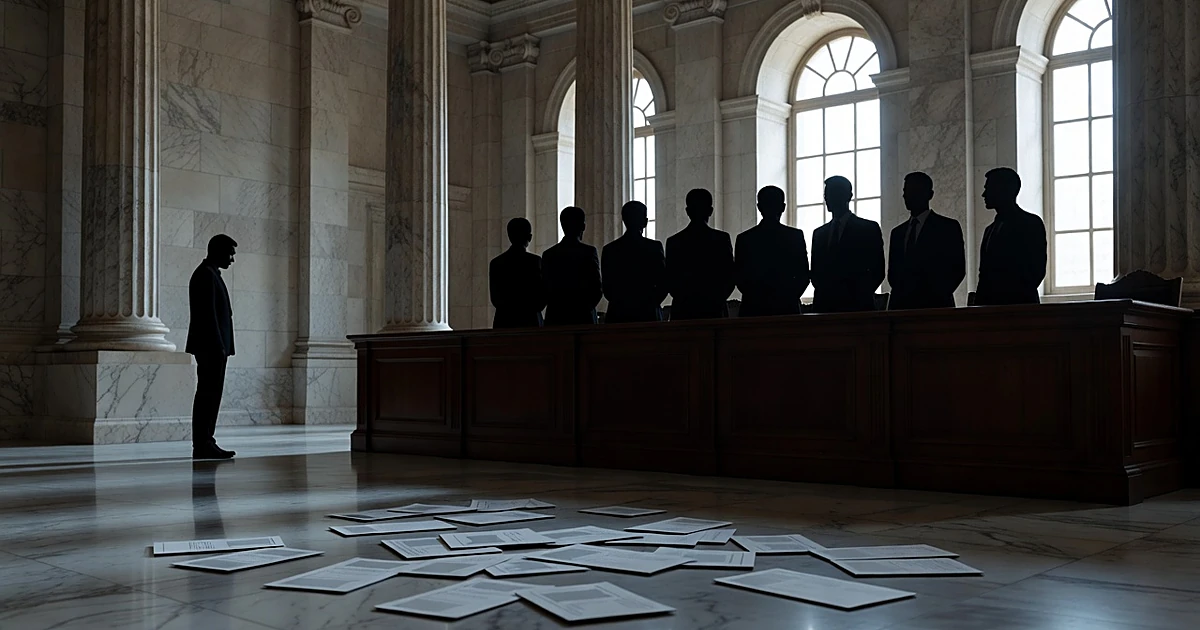
With less than six months before the midterm elections, White House Deputy Chief of Staff James Blair is preparing to leave the West Wing and take direct command of a Republican redistricting campaign that could redraw the congressional map in the party's favor across at least five states. The effort, as the Daily Mail reported, estimates Republicans could gain up to 13 additional House seats from newly drawn districts in Texas, Florida, Missouri, North Carolina, and Ohio, enough to turn a razor-thin majority into a comfortable cushion heading into November.
The stakes are plain. Republicans hold a margin-thin House majority. Democrats, led by Senate Minority Leader Chuck Schumer and House Minority Leader Hakeem Jeffries, believe they need only a couple of seats to reclaim power. Blair's plan is designed to make sure that doesn't happen, and to punish Republicans who stand in the way.
Blair's exit from the White House signals the fight ahead
Blair, President Trump's deputy chief of staff and political strategist, kicked off the redistricting project from inside the White House. He plans to leave by the end of the month to focus full-time on the Republican midterm effort. The move signals how seriously the administration treats the map-drawing battle, not as a sideshow, but as the central front in the fight for Congress.
The strategy relies on Republican-led states breaking tradition and redrawing their political districts ahead of the normal cycle. An Associated Press tally puts the potential Republican gain at up to 13 seats across the five target states. Democrats, by contrast, are looking at single-digit gains from their own redistricting wins in California and Utah.
That math matters. If the estimates hold, Republicans could absorb the kind of midterm losses that historically punish the party in power and still keep the House. It would also give President Trump a friendlier Congress during what some expect to be a difficult stretch of his term.
Indiana: a warning shot to dissenters
Blair has already demonstrated what happens to Republicans who resist. In Indiana, six Republican state senators publicly opposed the Trump-supported redistricting plan. Five of the six lost their primaries to Trump-endorsed challengers.
Blair did not mince words about the result. In an interview with CNN after the Indiana defeats, he said:
"Sometimes you can vote your conscience, other times you have to vote with the boss."
The message landed. When five out of six dissenters lose their seats, the remaining holdouts in other states have a clear picture of the cost of opposition. That kind of party discipline is rare in Republican politics, where internal leadership challenges have plagued the caucus in recent months.
Whether voters see that discipline as strength or heavy-handedness may depend on the results in November. But Blair is betting that a wider House majority will settle the argument.
Democrats have their own redistricting machine
Republicans are not operating in a vacuum. The Democratic Party's redistricting infrastructure has been running since 2017, when former U.S. Attorney General Eric Holder launched the National Democratic Redistricting Committee with what was described as an ambitious ten-year plan. The NDRC and its affiliates have raised over $80 million to challenge existing maps in courts and force districts to be redrawn in ways more favorable to Democrats.
That effort has produced results. Democrats successfully challenged maps in several states and chipped away at districts that once favored Republicans. In Virginia, Democrats pursued a referendum, though the Virginia Supreme Court ultimately ruled it unconstitutional.
The California and Utah redistricting wins give Democrats a partial offset against the Republican push. But single-digit gains against a potential 13-seat Republican haul still leaves the left side of the ledger short. And the internal pressure on Democratic leadership to explain their strategic shortcomings has only grown louder.
Blair's midterm messaging: pin Democrats to the left
Redistricting alone won't decide the midterms. Blair knows that. His plan extends beyond map lines into a broader messaging campaign designed to define Democrats before they can define themselves.
In an interview with Politico, Blair laid out the approach:
"Swing voters already think the Democratic Party's too far left, and we're going to make sure voters know just how far left they are."
He went further:
"They are woke, weak and way too liberal. And the whole country will be reminded of that."
The language is blunt. But it reflects a calculation rooted in polling and political positioning. If swing voters already view Democrats as too far left, and Blair clearly believes they do, then the Republican task is reinforcement, not persuasion. Draw the districts right, run the message hard, and let the math do the rest.
That approach carries risk. Midterm elections historically punish the party in the White House, and voters often use them to register dissatisfaction. Republicans who break with their own party on key votes complicate the "unified front" image Blair wants to project.
The Iran factor looms over the midterm landscape
Blair's redistricting gambit also faces headwinds from policy. A Daily Mail/JL Partners poll found that only 33 percent of Americans believe the latest war in Iran was the right thing to do, while 52 percent called it a mistake. That kind of public skepticism could energize Democratic turnout and depress Republican enthusiasm in swing districts, exactly the kind of environment where a few extra safe seats on the map could prove decisive.
The war question has already created friction within Republican ranks. A recent Senate vote on Iran hostilities saw three Republicans break with their party, illustrating the difficulty of holding a coalition together when the public is skeptical of military action.
Blair's bet is that favorable district lines can absorb that kind of turbulence. If a seat that leaned Republican by two points now leans Republican by eight, the incumbent can survive an unpopular war, a bad news cycle, or a well-funded challenger. That's the whole point of redistricting: building structural advantages that outlast any single issue.
The broader fight over who draws the lines
Both parties understand that congressional maps shape power for a decade. Eric Holder's $80 million operation was built on that premise. Blair's counter-offensive operates on the same logic, just from the other side.
The difference right now is scale. Republicans control the state legislatures in Texas, Florida, Missouri, North Carolina, and Ohio. That gives them the pen. Democrats have to go to court to challenge the results, a slower, more expensive, and less certain path. The Virginia Supreme Court ruling against the Democratic-backed referendum shows that legal strategies don't always pay off.
Meanwhile, the partisan maneuvering in Congress continues on multiple fronts. Fights over politically charged spending measures and policy riders reflect the same underlying reality: every procedural lever matters when the majority is this thin.
Blair's departure from the White House to run the midterm operation full-time underscores the administration's priorities. This is not a background effort managed by party committees and consultants. It is a centrally directed campaign with direct lines to the president.
What remains unanswered
Several questions hang over the redistricting push. Which specific districts in the five target states are being redrawn? How will courts respond to maps that opponents will inevitably challenge? And can Blair's messaging strategy hold up if the war in Iran continues to drag on public sentiment?
The Associated Press tally of up to 13 seats represents an estimate, not a guarantee. Legal challenges could trim that number. Democratic turnout driven by anger over the war or other issues could narrow margins in districts that look safe on paper. And the history of midterm elections is littered with parties that thought they had the map locked down, only to discover that voters had other plans.
But the structural advantage is real. When you control the pen that draws the lines, you start with an edge that your opponent has to overcome in court, at the ballot box, or both. Republicans have that pen in five large states. Democrats have $80 million and a team of lawyers.
In American politics, the pen usually wins.