Supreme Court lets White House ballroom construction move forward in 5-4 ruling as Roberts breaks with conservatives
The Supreme Court ruled 5-4 that construction on President Trump's $400 million White House ballroom can continue, but Chief Justice John Roberts sided with liberal justices and called the project "likely unlawful."
Five conservative justices cleared the way Monday for crews to keep building the 90,000-square-foot ballroom on the East Wing grounds, rejecting a legal challenge from the National Trust for Historic Preservation. The unsigned majority opinion did not address whether Trump has the authority to build without congressional approval. It found, instead, that the preservation group likely lacks the legal standing, the right to sue, needed to bring the case in federal court.
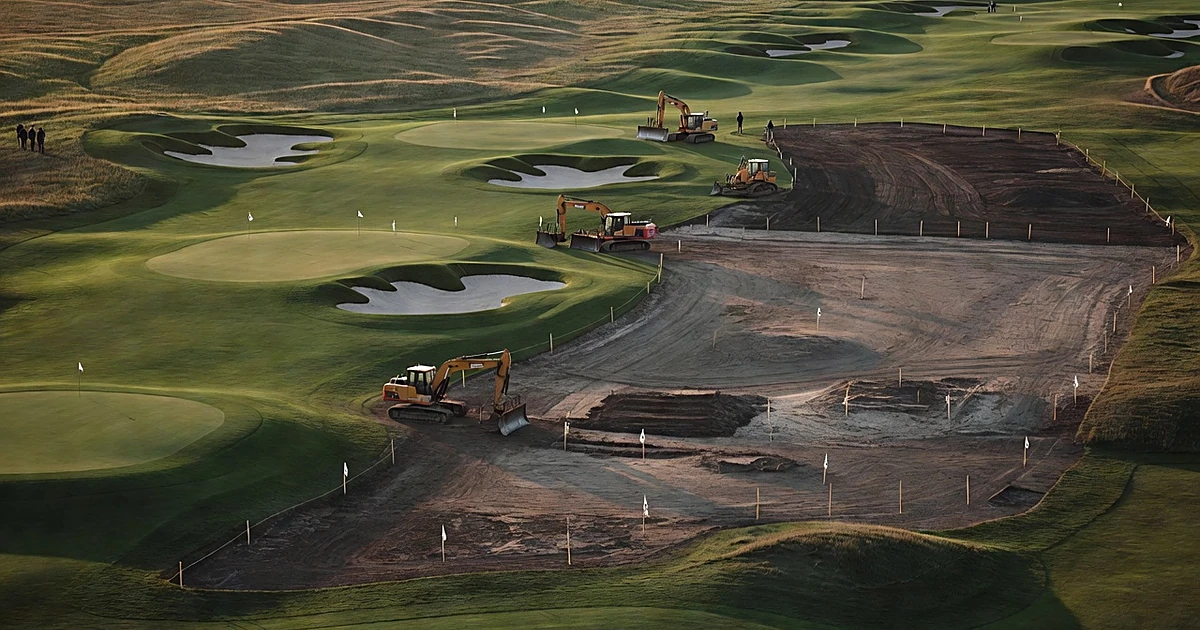
The ruling hands Trump a practical victory even as the underlying legal fight remains unresolved. Administration lawyers told the Court that construction is already 65% complete, with crews working 20 hours a day. The project is expected to wrap up by August 2028, according to court documents. By declining to rule on the merits, the majority gave the administration enough runway to finish the job before any final legal judgment arrives.
Roberts joined the liberal justices and called the project "likely unlawful"
Chief Justice Roberts wrote the dissent, joined by Justices Jackson, Kagan, and Sotomayor, Breitbart reported. Roberts did not hold back about what he sees as the core problem: the president is building on federal land without explicit permission from Congress.
"Construction of the ballroom has proceeded apace for the better part of a year. That construction is likely unlawful."
Roberts went further in his dissent, arguing that Congress never passed anything resembling express authority for the project. The Washington Examiner reported Roberts wrote that "the ballroom is a building or structure being erected on federal park grounds, President's Park, in the District of Columbia. Yet Congress has not passed any law resembling express authority for the Executive's construction of it."
Roberts also declared that "today's decision is no victory for the separation of powers." The chief justice has previously issued rulings on the ballroom dispute, making his shift to the dissent a notable development in the case's trajectory.
The five justices in the majority, Thomas, Alito, Gorsuch, Kavanaugh, and Barrett, sided with the administration's position that the Trust had no standing. Their unsigned opinion stated the point plainly:
"Today, we do not pass upon the legality of the government's East Wing project. We conclude only that, based on the submissions before us, the government is likely to prevail in showing that the Trust lacks... standing to challenge the project in federal court."
Standing, not legality, decided the case, for now
The distinction matters. The majority did not say Trump has the legal authority to build. It said the group challenging him probably does not have the legal right to bring the lawsuit. Standing, the requirement that a plaintiff show a concrete, personal injury caused by the defendant's action, is a threshold question. If a challenger cannot clear it, the court never reaches the substance.
The National Review noted the ruling was issued on the emergency docket as a per curiam opinion in National Park Service v. National Trust for Historic Preservation, and that the complex statutory and appropriations questions at the heart of the dispute remain unresolved.
Federal law gives Congress control over federal property, including the White House grounds. But federal law has also long allowed presidents to undertake the "care, maintenance, repair, alteration, refurbishment, and improvement... of the Executive Residence." The tension between those two provisions is the legal question the Court left untouched.
The case reached the Supreme Court after a district judge ruled that no federal statute granted Trump the authority to build the ballroom without congressional approval. The D.C. Circuit Court of Appeals then upheld a preliminary injunction blocking above-ground construction in a 2-1 decision on August 7, Just The News reported. The appeals court panel observed that "each President is a temporary tenant, not the owner, of the White House and its Executive Residence."
Solicitor General D. John Sauer argued to the Supreme Court that the injunction "would wrongfully install a single district judge as sole arbiter of what further construction is strictly necessary to protect the safety of the President" and others. The administration framed the project not as a luxury addition but as a security and military necessity.
Trump has emphasized the security and military importance of the ballroom in recent weeks, referring to it as a "Ballroom/Military Complex." The administration's approach mirrors a pattern seen across several legal fronts, where the White House has sought Supreme Court intervention to override lower-court orders blocking executive action.
Trump celebrated the ruling on Truth Social
The New York Post reported that Trump posted on Truth Social after the decision came down:
"I am pleased to report that the United States Supreme Court has just ruled in favor of the Ballroom/Military Complex being built without any further contingency, doubt, or threat. We are living in the Golden Age of America, and this Building will be one of the Greatest ever constructed in Washington, D.C."
Trump's characterization overstated the scope of the ruling. The Court did not rule "in favor" of the ballroom on the merits. It ruled that the challenger likely lacks standing, a procedural finding that leaves the underlying legal questions open. The litigation is expected to continue, though the practical effect of Monday's decision is that construction proceeds uninterrupted while lawyers argue.
That gap between what the Court actually decided and what can be accomplished before any final ruling is the real story. At 65% complete, with crews working 20-hour days and a projected finish date of August 2028, the ballroom may well be standing and in use before any court ever rules on whether it should have been built.
The administration has faced similar dynamics on other fronts. Lower courts have repeatedly attempted to block executive actions, only for the Supreme Court to intervene, sometimes on narrow procedural grounds that let the administration's preferred outcome take hold. The pattern of lower-court orders being reversed or narrowed at the high court has become a defining feature of this administration's legal strategy.
More construction fights loom beyond the East Wing
The ballroom is not the only Trump building project drawing legal challenges. Rep. Joyce Beatty, a Democrat from Ohio, is challenging Trump's bid to renovate the Kennedy Center. Other groups are trying to stop construction of a planned arch at Arlington National Cemetery. Each dispute raises the same core question: how far can a president go in reshaping federal property without explicit congressional authorization?
The broader tension between executive power and congressional authority has defined much of the legal landscape during Trump's time in office. Monday's ballroom ruling did not resolve that tension. It sidestepped it.
Roberts's dissent made clear he believes the construction violates the law. The majority made clear it believes the people complaining about it have no right to be in court. Neither side addressed the other's point directly.
For now, the crews keep working. The concrete keeps setting. And the question of whether a president can spend $400 million of federal money on a building Congress never approved will be answered, if it ever is, long after the building is finished.
When the legal system moves slower than the construction crews, the bulldozer wins by default. Congress might want to take note.