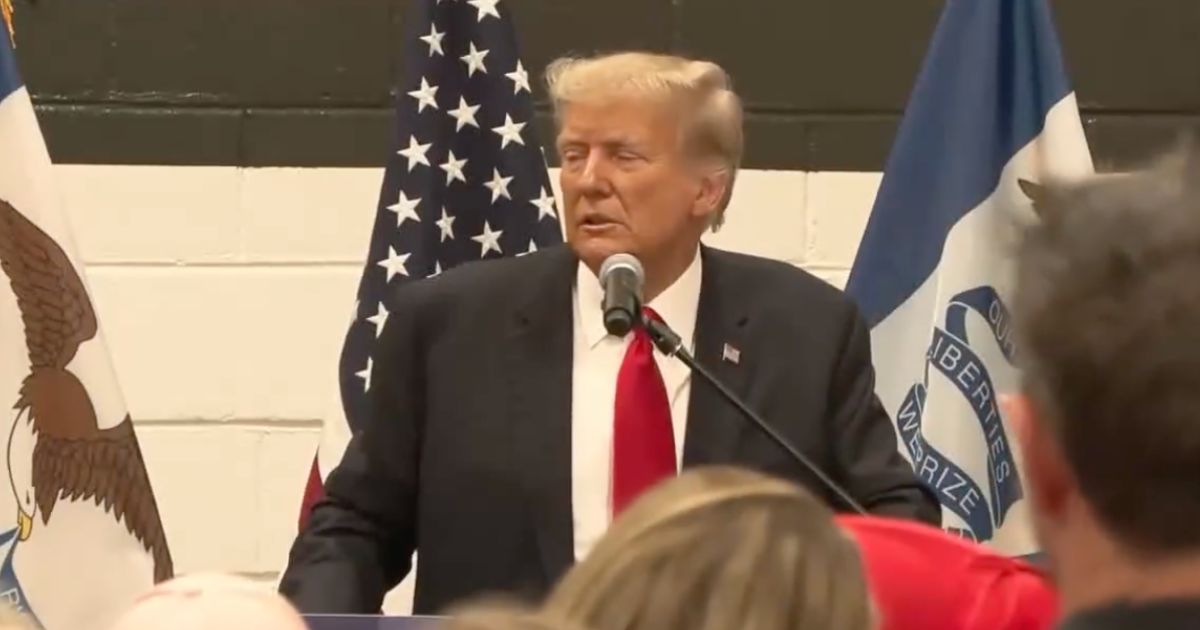
Trump criticizes Supreme Court over transgender athlete cases
President Donald Trump has taken a firm stand against Supreme Court justices who seemed to back transgender athletes competing in women's sports during recent hearings.
On Tuesday, Trump addressed reporters at a White House press conference, expressing disbelief at some justices' apparent support for policies allowing biological males to participate in female sports categories, while the Court reviewed challenges to state bans in Idaho and West Virginia.
The debate has ignited fierce discussion, with many questioning whether such rulings undermine the integrity of women's athletics or protect individual rights.
Challenging the Court's Credibility on Sports Fairness
Trump didn't hold back, stating that justices siding with transgender plaintiffs "should lose a lot of credibility," as reported by Fox News. His blunt assessment reflects a broader frustration among those who see these policies as a direct affront to female athletes.
Look at the numbers: weightlifting, swimming, track records all show a clear physical disparity. How can anyone argue this setup doesn't disadvantage women who've trained their whole lives for a fair shot?
Trump also pointed to the previous administration's stance, suggesting they were either clueless or willfully pushing an agenda that defies basic fairness in competition.
Justices' Questions Raise Eyebrows in Hearing
During the hearings, Justice Ketanji Brown Jackson challenged Idaho's Solicitor General Alan Hurst, asking, "Why is that not a classification on the basis of transgender status?" Her line of questioning hinted at a perspective that could favor the plaintiffs, focusing on legal definitions over biological realities.
Justice Sonia Sotomayor added fuel to the fire, citing an estimated 2.8 million transgender individuals in the U.S. and questioning, "What’s percentage enough?" While her point about human dignity resonates, it sidesteps the core issue of competitive equity in sports.
Meanwhile, observers noted Justice Clarence Thomas visibly slouching, hand over face, during these exchanges, a posture that might signal dissent or frustration with the direction of the arguments.
State Laws Under Scrutiny for Women's Sports
The cases center on Idaho's Fairness in Women's Sports Act and West Virginia's Save Women's Sports Act, both designed to restrict participation based on biological sex. Transgender athletes sued, successfully blocking these laws temporarily, leading to Supreme Court review.
Supporters of the bans argue they’re not about exclusion but about preserving a level playing field. Opponents claim they target a specific group unfairly, ignoring personal identity.
Yet when you strip away the legal jargon, the question remains: how do you balance individual rights with the undeniable physical advantages in certain sports?
Past Rulings Hint at Uncertain Outcome
Recent Supreme Court decisions offer mixed signals on how this might play out, with a 6-3 ruling in 2025 upholding Tennessee's ban on gender-affirming care for minors, while a narrower 5-4 vote in 2024 rejected expanded Title IX protections pushed by the prior administration. A decision on this sports case isn’t expected until June 2026 at the latest.
These precedents suggest a conservative lean, but with justices like Jackson and Sotomayor pressing hard, the outcome feels far from guaranteed. It’s a tightrope walk between policy and principle.
For now, the nation watches as this cultural flashpoint unfolds, knowing the ruling could reshape school athletics for years. Female athletes, standing outside the Court in protest, deserve a system that honors their fight for fairness, not one that muddies the waters with ideological battles.