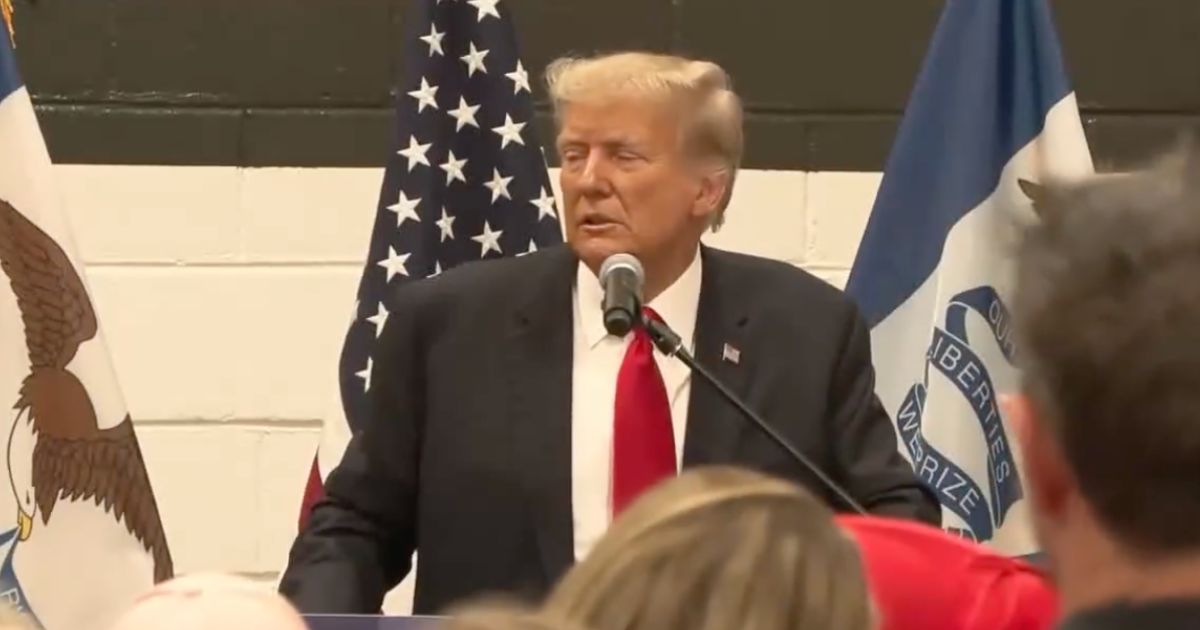
Trump pulls back National Guard from Democratic strongholds
President Donald Trump has made a bold move by withdrawing National Guard troops from Chicago, Los Angeles, and Portland, signaling a sharp pivot in his approach to urban crime and immigration enforcement.
This decision follows a rare Supreme Court ruling on December 23 that upheld blocks on the Chicago deployment, effectively derailing similar efforts in Portland and Los Angeles, the Daily Mail reported. The President had initially sent troops to these Democrat-led cities earlier in 2025 to shield Immigration and Customs Enforcement agents during raids amid fierce protests.
Trump took to Truth Social on New Year's Eve, declaring, 'We are removing the National Guard from Chicago, Los Angeles, and Portland, despite the fact that CRIME has been greatly reduced by having these great Patriots in those cities, and ONLY by that fact.' Let's unpack this: the data backs him up with violent crime plunging nationwide in 2025, yet local leaders seem more obsessed with resisting federal authority than acknowledging the results.
Crime Drops, But Resistance Persists
In Washington, D.C., where around 2,000 troops were deployed starting in August, the impact was undeniable, with violent crime dropping nearly 50 percent in the first 20 days compared to the prior year. Homicides in the capital alone fell by 31 percent, a staggering figure that should have silenced critics but instead fueled more political grandstanding.
Across the targeted cities, the President’s strategy focused on curbing crime and addressing homelessness while protecting federal agents from violent far-left agitators. Yet, Democrat mayors and governors pushed back hard, framing the deployments as overreach rather than a lifeline for struggling communities.
Trump warned on Truth Social, 'We will come back, perhaps in a much different and stronger form, when crime begins to soar again - Only a question of time!' His words carry a pointed jab at local incompetence, suggesting these leaders prioritize ideology over the safety of their own citizens.
Legal Roadblocks and a Rare Setback
The legal battles began almost immediately after troops were ordered into these cities, with federal courts ruling that Trump lacked the authority to federalize the Guard without clear evidence of rebellion. In Illinois, U.S. District Judge April Perry found no substantial proof of a brewing uprising, effectively halting the Chicago deployment indefinitely by October.
Similar rulings in California, Oregon, and Tennessee either limited or outright blocked troop presence, with lower courts consistently challenging the administration’s stance. Protests outside facilities like the ICE center in Broadview, a Chicago suburb, turned tense, with tear gas deployed and 21 arrests made last month, alongside injuries to four officers.
The Supreme Court’s refusal to lift the Chicago block marked an unusual stumble for Trump, even with a 6-3 conservative majority often siding with his policies. Justices Samuel Alito, Clarence Thomas, and Neil Gorsuch dissented, arguing the administration’s need to enforce immigration laws deserved consideration, but the decision stood firm.
Tragic Incidents Fuel the Debate
On November 26, tragedy struck when two National Guard soldiers were shot less than a mile from the White House, one fatally, with an Afghan who served alongside U.S. forces charged in the attack. Trump pointed to this as proof of the urgent need for troops in crime-plagued areas, while Democrats spun it as evidence of soldiers being politicized.
The incident intensified an already heated clash over the Guard’s role, with critics accusing the President of turning military personnel into pawns in a cultural showdown. Yet, the numbers from D.C. and elsewhere show a clear correlation between troop presence and safer streets, a fact conveniently ignored by opponents.
Initial plans for hundreds of troops per city were scaled back or placed on standby as legal hurdles mounted, diluting the full potential of the initiative. Still, the early successes in reducing violence raise serious questions about why local leaders fought so hard against a policy that measurably worked.
Future Moves and Political Chess
The administration repeatedly sought Supreme Court intervention to push through policies stalled by lower courts, often finding success with the conservative-leaning bench. This latest ruling, however, stands as a reminder that even a favorable court can draw a line when evidence falls short of legal thresholds.
Trump’s argument that troops were essential to protect federal personnel and property from violent resistance during immigration enforcement didn’t sway enough justices this time. But his promise of a return in a 'much different and stronger form' hints at a strategy recalibration, likely aimed at forcing Democrat-run cities to confront their own failures.
As violent crime dropped by an historic 20 percent nationwide in 2025, the withdrawal from these three cities feels less like a retreat and more like a calculated pause. The President seems poised to let local leaders stew in the consequences of their opposition, betting that public demand for safety will eventually drown out the progressive noise.