Trump says Clinton probe 'bothers' him as Clintons agree to depositions in Epstein investigation
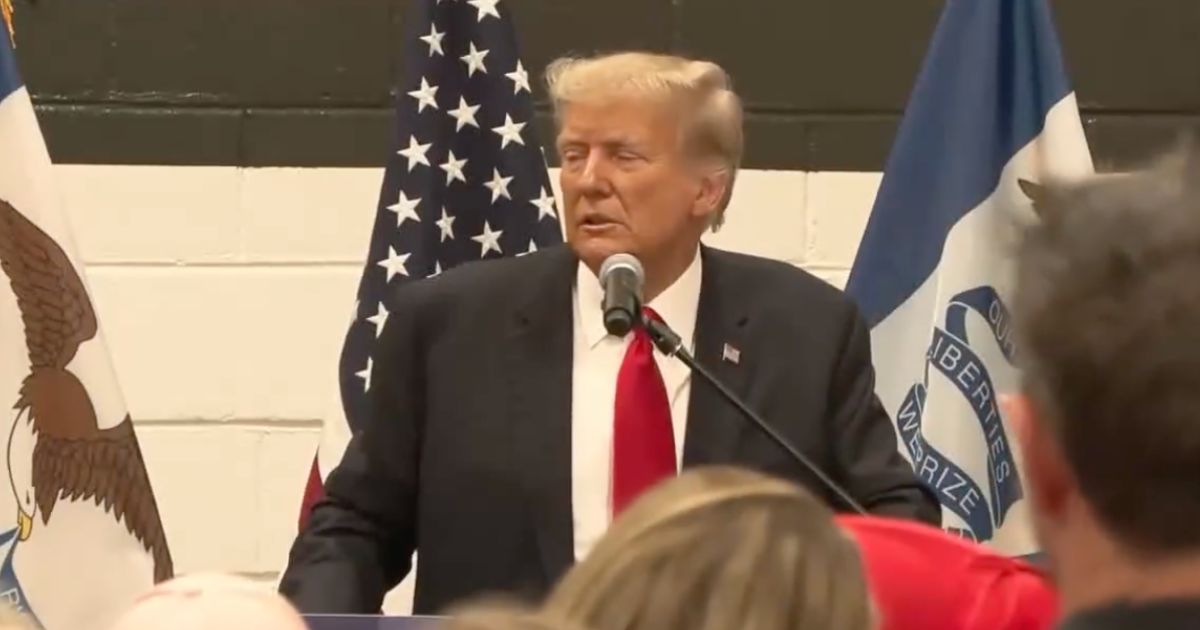
President Trump told NBC News this week that he is "bothered" by the House Oversight Committee's investigation into former President Bill Clinton's ties to Jeffrey Epstein — a probe led by his own party, authorized in part by his own directive.
"It bothers me that somebody is going after Bill Clinton."
That was the president, on the record, to NBC News on Wednesday. The same week, Bill Clinton agreed to sit for a deposition on February 27. The same week, Hillary Clinton agreed to appear the day before. The same week, the investigation moved closer to producing real testimony than it ever had before.
The timing demands attention. So does what the president said next.
"See, I like Bill Clinton. I still like Bill Clinton." / "I liked his behavior toward me. I thought he got me. He understood me."
White House Press Secretary Karoline Leavitt, when pressed on why the president appeared to be defending Clinton, offered a measured response:
"The President has respect for the former president." / "They shared a good relationship."
Personal warmth is one thing. But a congressional investigation into a former president's relationship with a man credibly accused of sex trafficking minors is not a social matter. It is a legal and moral one. And House Republicans shouldn't need anyone's permission to pursue it.
What the Oversight Committee Is Actually Doing
As reported by the Daily Mail, House Oversight Committee Chairman James Comer has been pursuing depositions from both Bill and Hillary Clinton as part of the committee's broader Epstein probe. The Clintons initially fought back, claiming depositions were unnecessary. Comer accused them of delaying and defying congressional orders, and he threatened to hold them in contempt of Congress if they refused to comply.
That pressure worked. Both Clintons have now agreed to appear — Bill on February 27, Hillary on February 26.
But they aren't coming quietly. The couple is now pushing to replace closed-door depositions with public, on-camera hearings. Hillary Clinton issued a written statement Thursday that landed somewhere between a dare and a campaign ad:
"You love to talk about transparency. There's nothing more transparent than a public hearing, cameras on. We will be there."
The pivot is transparent in a different way. Closed-door depositions are where real answers get extracted — under oath, without grandstanding, without a gallery to perform for. Public hearings are where politicians go to filibuster. The Clintons know this. They've survived congressional testimony before by turning it into theater. Cameras aren't accountability. They're covered.
The Clintons' Long History of Running Out the Clock
This is a pattern so familiar it barely registers anymore. Subpoena. Delay. Negotiate. Reframe the terms. Show up on your own schedule, under your own conditions, and declare yourself vindicated before a single question lands.
The Clintons have spent decades perfecting this choreography. What's different now is that a Republican-led committee actually has the votes, the chairman, and the legal leverage to compel cooperation. Comer's contempt threat wasn't ceremonial — it moved the needle. That matters.
What also matters is the underlying substance. Trump himself, back in July 2025, drew the contrast plainly:
"And by the way, I never went to the island, and Bill Clinton went there supposedly 28 times."
In November, Trump instructed Attorney General Pam Bondi to investigate Epstein's involvement and relationship with Bill Clinton. That instruction was specific and directional. It pointed the executive branch toward the same questions the legislative branch is now pursuing.
Which is what makes the president's latest remarks so unusual. The man who ordered the investigation now says it bothers him.
Juanita Broaddrick's Response
Juanita Broaddrick — who has claimed since 1978 that Bill Clinton raped her when he was attorney general of Arkansas, and who has been a fervent Trump supporter — reacted to the president's remarks with visible frustration:
"This is bothersome. Bill Clinton is a serial sexual predator and rapist."
Broaddrick's allegations have never resulted in criminal charges, but her consistency over nearly five decades and her willingness to speak publicly have earned her a following among those who believe powerful men have evaded accountability for too long. Her reaction captures something real: the dissonance between pursuing the Epstein investigation at the institutional level and expressing personal discomfort with it at the presidential level.
What Should Happen Next
Comer should hold the line. The depositions should proceed as scheduled — closed-door, under oath, with follow-up questions that cameras would make impossible. If the Clintons want a public hearing afterward, fine. But the deposition comes first. That's how oversight works.
The Clintons' gambit to move everything into the spotlight is a strategy, not a principle. They are not demanding transparency because they believe in it. They are demanding the format most favorable to evasion. Every Republican on the Oversight Committee should see that clearly.
As for the president's remarks, they are what they are. He expressed a personal sentiment about a man he's known for decades. That sentiment doesn't override the committee's authority, the attorney general's investigation, or the gravity of what's being examined. Congressional Republicans were elected to conduct oversight regardless of which powerful figures it inconveniences. That mandate doesn't come from the White House. It comes from voters.
Bill and Hillary Clinton are going to sit for depositions this month. That fact alone represents more accountability than either has faced in years. The question isn't whether the president likes Bill Clinton. The question is what Bill Clinton knew, what he did, and how long the political class protected him from having to answer for it.
February 27 is twenty-one days away. The oath is what matters now.