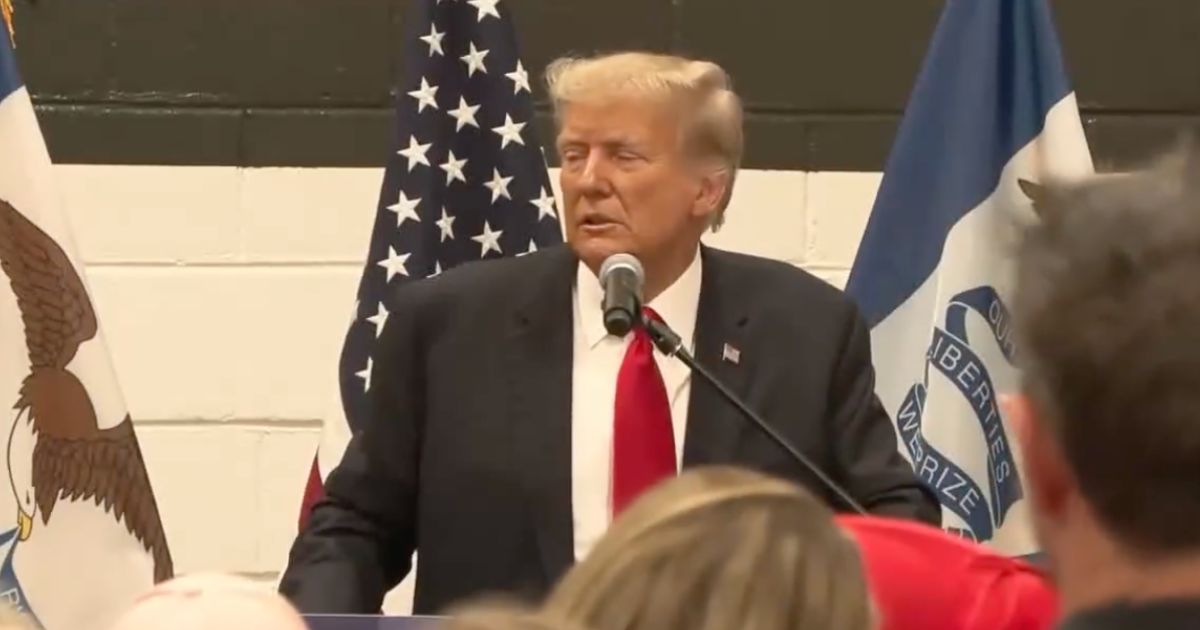
Trump warns of 100% tariffs over Canada-China trade deal
President Donald Trump has dropped a major ultimatum on Canada, threatening steep tariffs if it dares to ink a trade agreement with China.
On Saturday, Trump announced via Truth Social that he would impose a 100% tariff on all Canadian goods entering the U.S. if Canada proceeds with a trade deal involving China. This warning came less than a week after Trump had publicly supported such a deal, stating it would be beneficial for Canadian Prime Minister Mark Carney to negotiate with Chinese President Xi Jinping. The potential agreement includes reduced tariffs on electric vehicles and canola, with Canada set to receive up to 49,000 Chinese electric vehicles at a 6.1% tariff and China lowering tariffs on canola seeds by March 1.
From Support to Threats in Days
The Hill, biased as always, reports the sudden shift in Trump’s stance has left many scratching their heads. Just a week ago, he told reporters, “I mean, it’s a good thing for him to sign a trade deal.”
But that goodwill evaporated fast. Tensions between Trump and Carney had already flared at the World Economic Forum in Davos, Switzerland, where the two leaders exchanged sharp words over tariffs and global alliances. Carney criticized Trump’s proposed tariffs on European nations, while Trump accused Canada of taking advantage of U.S. generosity.
The issue has sparked heated debate across the border. While some see Trump’s tariff threat as a necessary move to protect American interests, others worry it could fracture a vital economic partnership. The U.S.-Canada relationship, already strained by past tariffs of 35% last July and a 10% hike in October, now teeters on what experts call a dangerous edge.
Tariff Threats and Social Media Warnings
Trump didn’t hold back on Truth Social, posting, “If Governor Carney thinks he is going to make Canada a ‘Drop Off Port’ for China to send goods and products into the United States, he is sorely mistaken.” That blunt message underscores a fear that Canada could become a conduit for Chinese goods, bypassing U.S. trade barriers. It’s a concern that resonates with many who prioritize domestic markets over global deals.
Hours later, Trump doubled down, warning of dire consequences if China gains a foothold in Canada. His posts painted a grim picture of potential economic and cultural erosion. While the rhetoric is strong, it reflects a deep unease about foreign influence in North America.
Carney, for his part, has pushed back against Trump’s narrative. He emphasized Canada’s independence, asserting that the nation thrives on its own merits. His defiance, while admirable to some, risks escalating an already tense situation.
Strained Relations at a Breaking Point
The fallout from Davos hasn’t helped matters. Trump revoked Carney’s invitation to join the Board of Peace overseeing Gaza Strip rehabilitation, a move that signals personal as well as political friction. No explanation was offered by the White House, leaving observers to speculate on the depth of the rift.
Adding to the drama, Ontario Premier Doug Ford, a vocal critic of Trump, previously funded an anti-tariff ad during the World Series, prompting Trump’s October tariff hike. Carney apologized for the ad, but the damage was done. These incidents show how quickly small sparks can ignite larger fires.
Political science expert Aaron Ettinger from Carleton University in Ottawa described the U.S.-Canada relationship as hanging by a thread. His assessment that Canada may be dealing with an unpredictable U.S. leader raises valid concerns about future negotiations. Stability, it seems, is in short supply.
What’s at Stake for Both Nations
The proposed Canada-China deal, with its tariff cuts on electric vehicles and canola, could reshape trade dynamics in the region. But at what cost? Allowing China a stronger foothold risks undermining U.S. economic leverage, a point Trump’s tariff threat aims to hammer home.
For Canada, the stakes are just as high. Balancing economic opportunity with maintaining a strong U.S. partnership is no easy task, especially under the shadow of a 100% tariff penalty. Carney’s vision of uniting “middle countries” might sound noble, but it’s a gamble with real consequences.
Ultimately, this standoff is about more than trade numbers. It’s about sovereignty, influence, and the future of North American cooperation. As both leaders dig in, the path forward looks anything but certain.