Vatican stops sainthood cause of Jesuit priest who survived Soviet gulag for over 20 years
The Vatican has halted the cause for sainthood of Father Walter Ciszek, the Pennsylvania-born Jesuit priest who endured more than two decades of imprisonment, torture, and hard labor in the Soviet Union, a decision that has left faithful Catholics searching for answers about what went wrong in a process that began more than three decades ago.
Monsignor Ronald Bocian of the Walter Ciszek Prayer League disclosed the decision in an April 9 letter, as EWTN News reported. The Diocese of Allentown, Pennsylvania, confirmed the news separately.
The halt marks a striking reversal for a cause that the Vatican itself approved for advancement in 2012 and that drew on more than 4,000 archival documents gathered over years from Jesuit records and Russian archives. Ciszek was declared a servant of God in 1990. Now, after what Bocian described as "years of careful study and discernment at the level of the Holy See," the Church has concluded the documentation does not support moving forward.
A life forged under communist persecution
Walter Ciszek's biography reads like something out of a Cold War novel, except every word of it was real. Born in 1904 in the coal town of Shenandoah, Pennsylvania, he entered the Jesuit novitiate in 1928. By 1937 he was ordained, having been specifically trained to say Mass in the Russian rite.
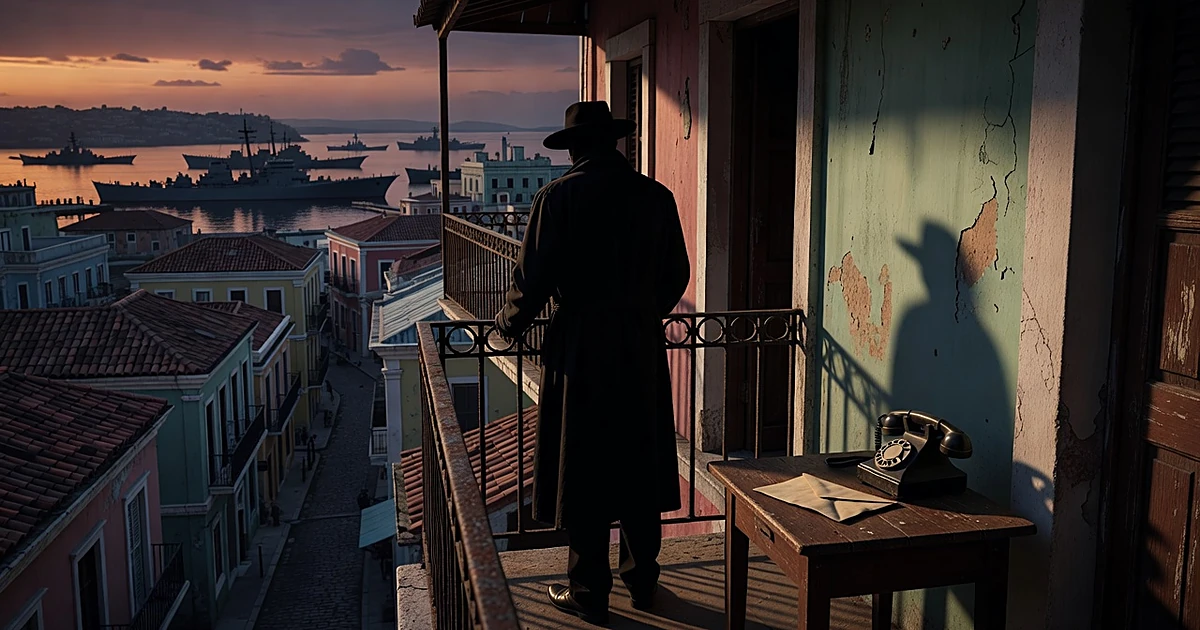
After spending two years in Poland, Ciszek used the chaos of World War II as cover to cross into the Soviet Union. His purpose was direct: minister to Christians living under communist persecution. Soviet authorities arrested him in 1941, believing him to be a spy.
What followed was 22 years of suffering. Ciszek survived torture at the hands of the Soviet secret police. He endured years of hard labor near the Arctic Circle. Through it all, he said Mass in secret and heard confessions from fellow prisoners, acts of faith that carried the risk of further punishment or death.
President John F. Kennedy negotiated the prisoner swap that finally secured Ciszek's release in 1963. He returned to the United States and wrote two books about his ordeal, "He Leadeth Me" and "With God in Russia," both of which became spiritual touchstones for Catholics drawn to his witness of faith under extreme duress. He died at Fordham University in New York on December 8, 1984.
The Vatican's canonization process has long been marked by stops and starts, with causes advancing and stalling for reasons that are not always made public. But the Ciszek case is unusual in its abruptness and in the stature of its subject.
What the Vatican won't say
The most conspicuous feature of this decision is its opacity. Bocian's letter offered no specifics about what the problematic "documentation" contained or why it fell short.
"The diocese has been informed that the documentation relating to his cause does not support advancing his cause for beatification or sainthood."
That is the full extent of the explanation. No names of reviewers. No description of the deficiency. No indication of whether new evidence surfaced or whether existing evidence was simply re-evaluated under stricter standards.
Bocian framed the decision in institutional terms, attributing it to the Holy See's responsibility for "evaluating each cause with thoroughness, integrity, and fidelity to the Church's norms." The Diocese of Allentown echoed that language almost verbatim, calling it a matter of the Church evaluating "each cause with thoroughness, integrity, and fidelity to its norms." The coordinated phrasing suggests a carefully managed message, one designed to close the door without inviting further questions.
The diocese acknowledged the "disappointment" the faithful would feel. That may be an understatement. Ciszek's supporters spent decades assembling witness testimonies, personal writings, and thousands of archival documents from both Jesuit and Russian sources. All of that work has now been set aside with a single, vaguely worded letter.
Tensions between the Vatican and Catholic communities in the United States have surfaced on multiple fronts in recent months, from clashes over immigration policy to questions about the Holy See's institutional priorities.
A pattern of halted causes
Ciszek's case is not the only sainthood cause the Vatican has shut down this month. Earlier in April, the Holy See also halted the cause of Jorge Novak, an Argentinian bishop and servant of God from the Diocese of Quilmes. The Quilmes diocese said the decision expressed "no moral judgment regarding the life, virtues, and pastoral ministry" of the bishop and stemmed from his failure to carry out "a possible canonical procedure" as a priest.
Two halted causes in a single month is notable. Whether it reflects a broader institutional housecleaning or simply coincidence, the Vatican has not said.
The Novak explanation, while still opaque, at least pointed to a specific procedural deficiency. The Ciszek explanation does not even go that far. Faithful Catholics are left to speculate, and speculation, in the absence of transparency, tends to fill the vacuum with the worst possible assumptions.
The legacy continues, in a different form
Bocian's letter announced that the Walter Ciszek Prayer League, which had advocated for the priest's canonization, will be renamed the "Father Walter J. Ciszek Society." The group said it would continue honoring Ciszek's memory and sharing his spiritual message.
"Even as the formal canonization process has been stopped, the grace flowing from his witness remains alive in the hearts of the faithful."
That is a gracious statement from a man whose life's work on behalf of Ciszek's cause has just been undone. But graciousness does not answer the questions that matter. What did the Holy See find? Why did it take years of study after the 2012 approval to reach this conclusion? And why can't the faithful, the people who prayed, donated, and testified on behalf of this cause, be told what happened?
The broader Catholic world has watched a series of institutional controversies unfold in recent months, from confrontations involving Church leaders at holy sites to troubling questions about accountability within the hierarchy itself.
Bocian urged supporters not to let the decision diminish what Ciszek's life represented. He wrote that the group would "remain committed to honoring his memory, sharing his message, and encouraging devotion to the profound spiritual insights he left to the Church." The Diocese of Allentown encouraged the faithful to remember the grace of Ciszek's life.
Those are fine sentiments. But they cannot substitute for the institutional transparency that a case of this magnitude demands. A man who was arrested as a suspected spy, tortured by a totalitarian regime, labored near the Arctic Circle, and secretly administered sacraments to fellow prisoners for more than two decades deserves more than a form letter and a name change for his prayer league.
The story of Catholic faith shaping public life has taken many forms in American culture. Ciszek's story, a man who chose suffering over silence, who chose the gulag over abandoning persecuted Christians, is among the most extraordinary of them all.
Accountability and the faithful
The Vatican operates by its own rules, on its own timeline, answerable to its own hierarchy. That is its prerogative. But the faithful who sustain the Church with their prayers, their labor, and their trust are not wrong to expect more than bureaucratic boilerplate when a cause they championed for decades is quietly closed.
More than 4,000 archival documents. Witness testimonies gathered over years. A 2012 approval to advance. And then, in April 2026, a letter that says the paperwork doesn't support it, without a single specific detail about why.
Institutions that demand faith from their members owe those members something in return: honesty about the process, even when the outcome is painful. The Catholic Church has faced hard questions about institutional accountability on other fronts. This is another one.
Father Ciszek spent 22 years in a Soviet prison because he refused to stop being a priest. The least the Vatican can do is explain why it stopped his cause.