Venezuelan man shot by ICE agent in Austin held in federal custody with bullet still lodged near his spine
A 28-year-old Venezuelan man shot in the back by an ICE agent while delivering food in Austin, Texas, is being detained and interrogated with the bullet still inside him, and his attorney says he received almost no medical care in custody.
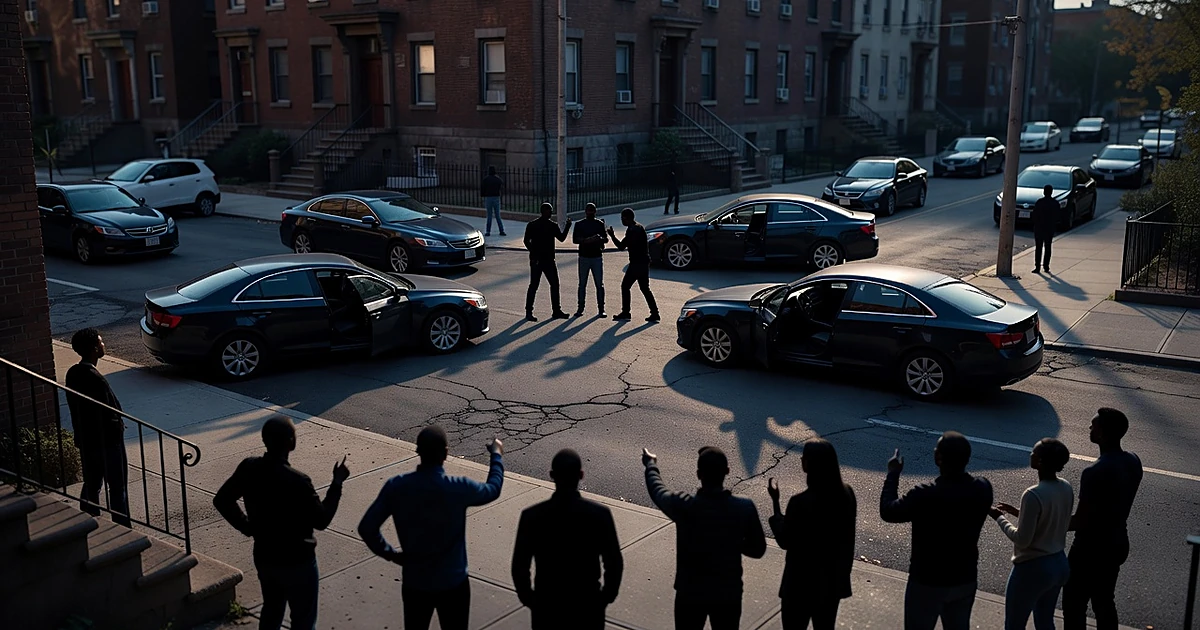
Wilber Rafael Garces Perez was shot by an Immigration and Customs Enforcement officer on a Sunday in Austin during what his attorney described as a traffic stop that escalated. The Washington Examiner reported that Garces Perez was hospitalized, released the following day, and placed in federal custody with the bullet still lodged near his spine. Doctors had attempted to remove it but stopped because of its proximity to his spinal cord.
The shooting has triggered protests in Austin, drawn condemnation from local officials, and opened a fight over whether Garces Perez, who the Department of Homeland Security says has a final order of removal, should be deported or kept in the country as the key witness to what happened.
Attorney says Garces Perez was shot while making a DoorDash delivery
His attorney, Kate Lincoln-Goldfinch, offered a detailed account of the moments before the shooting. She told reporters that Garces Perez was working as a DoorDash driver when an unmarked truck pursued him, sideswiped his vehicle, and forced a confrontation.
Lincoln-Goldfinch told Fox News:
"The truck chased him and sideswiped him again. And the agents came out and shot him in the back of the neck and pulled him out of the car."
The bullet fractured his clavicle and came to rest near his spinal cord. Surgeons at the hospital halted the procedure to remove it, determining the risk of paralysis was too high. He was then released from the hospital into ICE custody.
What followed, by his attorney's account, was worse than the shooting itself. Lincoln-Goldfinch said Garces Perez was transferred to an ICE detention center in Pearsall, Texas, roughly 200 miles south of Austin, without adequate pain medication and without a bed. He was forced to sleep on the floor before a nurse eventually gave him a single pill.
Garces Perez himself, speaking in Spanish by phone, described his condition plainly:
"I am not doing well due to the gunshot wound, and I have not received the medical attention that I require."
He also told reporters, simply: "I still have the bullet inside."
AP News reported that he was eventually returned to the hospital after receiving inadequate care at the detention facility. The timeline between his transfer to Pearsall and his return to the hospital remains unclear.
DHS confirms Garces Perez had a final order of removal
Lincoln-Goldfinch claims her client was legally present in the United States with a work permit. DHS disputes that. The department confirmed that Garces Perez is an illegal immigrant who entered the country under the Biden administration and has a final order of removal. He is in federal custody pending deportation proceedings.
That contradiction sits at the center of the legal and political fight now unfolding. If Garces Perez had a valid work permit, the shooting demands one set of answers. If he was an illegal immigrant with an outstanding removal order, the encounter looks different, though shooting an unarmed food delivery driver in the back still requires a thorough explanation from the agency.
The shooting has become a flashpoint in the broader debate over ICE enforcement tactics. Lincoln-Goldfinch did not hold back in her criticism of the agency, telling Breitbart:
"There is absolutely zero justification for having shot him. This is why we're calling for a stop to ICE traffic stops. ICE officers are over armed, overpaid, undertrained, and violent."
That characterization is the attorney's opinion, not established fact. But the basic question, why an ICE agent discharged a firearm during what began as a traffic stop involving a DoorDash driver, remains unanswered. ICE has not publicly released body camera footage or a detailed account of the encounter. No official statement explaining the use of force appeared in any available reporting.
Shooting incidents involving law enforcement continue to draw national scrutiny, as seen in a recent case where a deputy police commissioner was fired over a shooting involving his son. When officers use deadly force, the public expects a clear accounting, regardless of the target's immigration status.
LULAC demands Garces Perez stay in the U.S. as a witness
The League of United Latin American Citizens, known as LULAC, has called on the federal government not to deport Garces Perez. The organization's CEO, Juan Peruano, framed the issue as a matter of accountability for the agency itself:
"Wilber is a victim of the shooting and the most important witness to it. You do not deport the key witness to your own officers' use of force."
That argument carries weight regardless of where one stands on immigration enforcement. If ICE deports the only civilian witness to a shooting by one of its own agents before any independent investigation is complete, the agency will have effectively eliminated the person best positioned to contradict its account.
Austin Mayor Kirk Watson weighed in publicly. "I'm very angry about this. I'm not surprised at all," Watson said. "It's happened in other cities with the nature of ICE and the way ICE is doing its business these days." Austin Police Chief Lisa Davis struck a more measured tone, promising transparency: "The city of Austin deserves answers. We're going to get all those questions answered, and we'll be as transparent as we can be."
The shooting also drew a response from U.S. Rep. Greg Casar, a Texas Democrat, who said: "Now, we have to make sure he fully recovers, is reunited with his family, and gets to tell law enforcement the full story of how he was shot in the back by ICE."
Protests erupted in Austin following the incident. The New York Post reported that demonstrations included property damage and arrests, though the scale and specifics were not detailed.
Austin shooting fits a pattern of ICE use-of-force incidents in 2025 and 2026
The Garces Perez case is not an isolated event. Multiple sources note that ICE-involved shootings have occurred with increasing frequency. Two American citizens were killed by ICE in Minnesota, and a Mexican man was fatally shot in Houston. Another fatal shooting occurred in Biddeford, Maine.
Each of those incidents raises its own questions, but together they form a pattern that demands serious institutional review. Americans who support strong immigration enforcement, and most conservatives do, also expect that enforcement to be conducted lawfully, proportionally, and with proper accountability. Shooting incidents involving firearms and their legal consequences remain a subject of intense national debate.
An agency that cannot explain why its officers are discharging weapons during routine traffic stops will lose the public trust it needs to carry out its mission. That is not a progressive argument. It is a law-and-order argument.
Conservatives have long insisted that the rule of law applies to everyone, including the government. When shooting incidents leave survivors with lasting injuries, the public deserves a full and honest accounting of what happened and why.
Critical questions ICE has not answered
The name of the ICE officer who fired the shot has not been released. No body camera or dashcam footage has been made public. ICE has not issued a detailed statement describing the circumstances that led the agent to discharge his weapon. No charges have been filed against Garces Perez in connection with the encounter, only his immigration status has been cited.
Whether Garces Perez was lawfully present with a work permit, as his attorney claims, or subject to a final removal order, as DHS asserts, is a factual question that should be easy to resolve with documentation. Neither side has produced that documentation publicly.
The medical question is equally urgent. A man with a bullet lodged near his spinal cord was, by his own account and his attorney's, transferred to a detention facility without adequate pain management and forced to sleep on the floor. Even if every element of the immigration enforcement action was justified, the treatment of a wounded detainee in federal custody is a separate matter, and one that reflects on the government's basic obligations. Cases involving individuals facing serious charges after shootings still require that the accused receive proper medical care.
Garces Perez was eventually returned to the hospital, but the gap between his release from initial treatment and his readmission, and what happened during that gap, remains one of the most troubling parts of this story.
Enforcing immigration law is necessary. Doing it in a way that cannot withstand public scrutiny is not. If ICE wants the credibility to carry out its expanded mission, it owes the country a straight answer about what happened on that Austin street, and why a DoorDash driver ended up in a detention cell with a bullet still in his back.