Hegseth bars troops from betting on military outcomes with nonpublic information
Defense Secretary Pete Hegseth banned Pentagon personnel from using nonpublic information to bet on prediction markets, citing enemy signals and warped judgment after a Special Forces soldier’s big score.
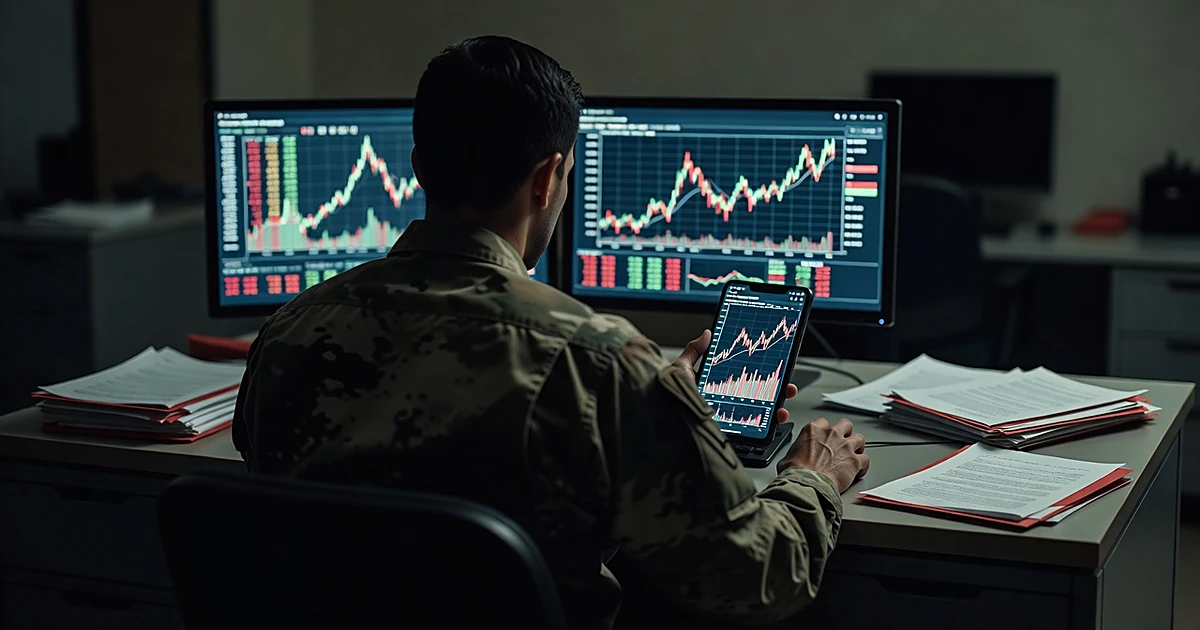
In a one-page memo dated Tuesday, Hegseth told service members, intelligence professionals, and Department of Defense civilians they cannot use classified or unclassified but nonpublic information to trade on platforms such as Polymarket and Kalshi. The New York Post reported that the Associated Press reviewed the directive, which arrived months after federal charges against a Special Forces soldier tied to the same kind of wagers.
Violators face administrative punishment and possible criminal charges under the Uniform Code of Military Justice or federal law. A defense official said the Pentagon had nothing to add beyond the memo itself.
Hegseth framed the ban as basic operational security and personal discipline. Enemies track these markets. A bet from someone with inside access creates a trail others can read.
"Our enemies watch movements in these markets. When an American Service member, intelligence professional, or other Department civilian engages in a financial transaction on a military outcome, they create a signal."
He went further on the judgment problem. Money on the line changes how people see the mission.
"Beyond operational security, financial stakes can warp judgment. A logistician with money riding on a strike date has an interest in that date. An analyst with a position on an outcome has an interest in that outcome."
Breitbart reported additional language from the secretary tying the order to a larger reset inside the building. Hegseth wrote that the department is restoring lethality, discipline, and singular focus on fighting and winning the nation’s wars, and that nothing should distract from that mission, “Not entertainment. Not a payout.”
Special Forces sergeant charged after Maduro-timed Polymarket wins
The memo did not appear in a vacuum. In April, federal prosecutors and regulators charged Master Sgt. Gannon Ken Van Dyke, a 38-year-old U.S. Special Forces soldier, with using classified information about a mission to capture then-Venezuelan President Nicolás Maduro. Officials said he won more than $400,000 on Polymarket.
According to the complaint details reported in the coverage, Van Dyke placed a series of bets totaling more than $32,500 on when Maduro might be removed from power. The wagers ran from Dec. 30 to Jan. 2. The vast majority landed the night of Jan. 2, just hours before the first missiles fell on Caracas.
Breitbart put the profit figure at $409,881. That case put a concrete face on the risk Hegseth described: access plus a prediction market equals a security hole and a conflict of interest rolled into one.
Hegseth has spent his tenure pushing personnel standards and clearing out distractions, including moves that halted promotions for officers tied to earlier leadership fights. The prediction-market ban fits the same pattern, draw a bright line, attach real consequences, and keep the force focused on the fight.
White House warning and Kalshi’s candidate crackdown landed the same season
The soldier’s case was not the only red flag. The same April window brought other well-timed action on the platforms. A group of new Polymarket accounts placed highly specific bets just before President Donald Trump announced a U.S.-Iran ceasefire. Those wagers produced hundreds of thousands of dollars in profits.
The White House warned its own staff that day against using private information to trade on prediction markets. Kalshi, for its part, fined and suspended three congressional candidates who the company said had wagered on the outcome of their own elections.
Those episodes showed the problem was not limited to one rank or one service. Anyone with nonpublic information and a smartphone could turn operational knowledge into a personal payday, and leave a trail for hostile intelligence services to follow.
Critics of Hegseth have tried to turn every discipline push into a political story, from impeachment talk on the left to media fights over his interviews. The memo itself stays on the practical point: markets move when people with real knowledge place money, and adversaries watch those moves.
Signal risk and warped incentives cut both ways
Hegseth’s language leaves little room for ambiguity. A service member or civilian who bets on a strike date or a regime outcome is no longer a pure observer. That person has a financial rooting interest in the calendar and the result. In a force that depends on timing, secrecy, and clear-eyed analysis, that interest is a liability.
The platforms named in the directive, Polymarket and Kalshi, sit in public view. Volume and price shifts are easy to scrape. When the people placing the bets sit inside the Pentagon or the intelligence community, the signal is not theoretical. It is a live feed of possible intent, targets, and timing.
That is why the ban covers both classified material and unclassified information that is still nonpublic. The test is not the classification stamp. The test is whether the trader knows something the market does not, and whether that knowledge comes from the job.
Hegseth has backed the administration’s harder line on media access and messaging discipline, including support for White House limits on certain outlets. The prediction-market order applies the same standard inward: no freelancing with privileged information for personal gain.
The Pentagon has also pushed back hard when it believes coverage misstates the secretary’s record, as it did when it called a CNN account of a 60 Minutes interview a complete lie. On this memo, the department simply pointed back to the text and declined to elaborate.
Discipline first, payouts never
Prediction markets have grown fast. They price everything from elections to ceasefires to leadership changes. For ordinary citizens with public information, that is a form of speech and speculation. For people sworn to protect classified and sensitive operational details, it is a different category.
Hegseth’s directive treats the difference as obvious. The Uniform Code of Military Justice and federal criminal law already give commanders and prosecutors tools. The memo makes the expectation explicit so no one can claim surprise.
It also closes the incentive loop. A logistician who stands to win money if a strike slips or accelerates no longer has a clean professional stake. An analyst with a position on the outcome no longer has a clean analytic stake. Remove the payout, and the judgment problem shrinks.
Other Hegseth-era decisions have drawn courtroom challenges, including a supply-chain fight over an AI firm that a federal judge later voided. The prediction-market ban rests on simpler ground: protect the mission, protect the force, and keep personal finance out of operational timing.
The soldier’s alleged $400,000-plus haul on the Maduro timeline made the abstract risk concrete. Hours before missiles hit Caracas, the bets were already down. Enemies who watch those markets did not need a leak. They only needed a chart.
Hegseth answered with a short memo and a clear rule. Use nonpublic information to bet on military outcomes, and you risk your career and possibly your freedom. The force has one job. The payout is not part of it.
Taxpayers fund the military to win wars, not to seed private fortunes on the timing of the next strike. Hegseth drew the line. Commanders should enforce it without apology.