Trump touts $4.2 billion Audi plant for Georgia at midterm rally
President Trump announced a $4.2 billion Audi auto plant for Georgia at a campaign rally, a manufacturing win timed just weeks before the midterm elections.
Speaking to supporters in Georgia on Saturday, President Trump said German automaker Audi had committed a major U.S. investment near Macon and framed the project as fresh proof that American manufacturing is coming back. The Hill reported the announcement landed almost a week before November’s midterms, with the White House leaning hard on jobs and industrial growth as voters head to the polls.
Trump told the crowd the company would pour billions into the state and stand up a large production site capable of turning out hundreds of thousands of vehicles a year. He tied the deal to a broader push for factories, tariffs, and domestic production rather than more offshoring.
Audi backed the core claim the same day with a press release saying it plans its first U.S. plant site in Georgia and calling the move one of the brand’s largest production footprints worldwide.
Trump puts the Macon numbers on the table
At the rally, Trump gave the deal hard edges that voters can measure, dollars, location, and output.
He said:
"Today, I’m thrilled to announce a massive auto manufacturing investment in the great state of Georgia by a fantastic company,"
He then laid out the scale he wanted the crowd to hear:
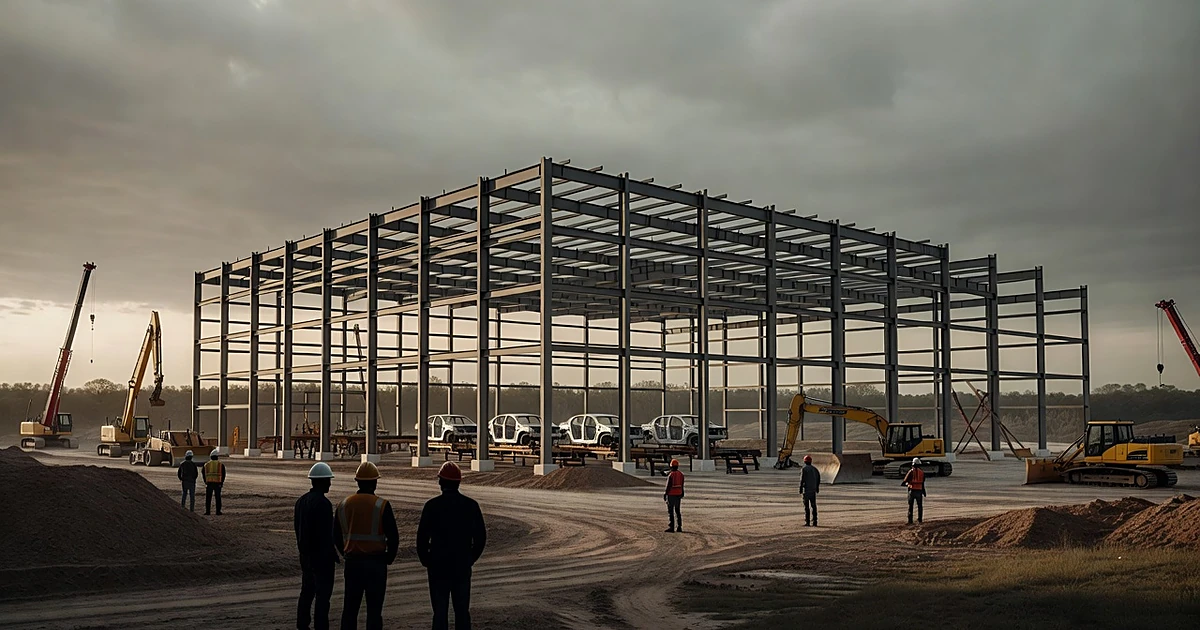
"Audi has just committed to invest $4.2 billion in nearby Macon, Georgia, to begin the construction next month on a massive plant that will produce 200,000 cars a year. Think of that, think of that. Two hundred thousand cars a year, that’s incredible,"
Breitbart reported the same $4.2 billion figure and 200,000-car annual target, and added that the project is expected to create about 4,500 jobs. That kind of payroll matters in middle Georgia, where large industrial sites can reshape local hiring for years.
The announcement fits a pattern of high-profile Trump project rollouts, including plans that set firm start dates on major public works when the administration wants results voters can see.
Audi’s release confirms a first U.S. plant in Georgia
Audi’s Saturday statement did not read like a vague corporate gesture. The company said it is taking a major step in its global growth strategy with plans to establish its first U.S. plant site in Georgia, describing the site as among the brand’s largest production footprints globally.
Vito Paladino, president of Audi of America, put the strategy in plain terms in the release:
"Audi is building its future in America. As part of our larger U.S. strategy, we are focused on becoming an even more significant player in this market,"
He added:
"This investment signifies the brand’s commitment to our customers, dealers, employees, and communities across the country."
Breitbart also quoted Audi CEO Gernot Döllner saying, “This is a long-term investment, because we believe in the American market.” Construction timing in that account runs to 2027, with production eyed for the early 2030s, a longer runway than the “next month” start Trump described from the stage.
The Hill’s account of Audi’s release likewise said the company described construction starting next year, not next month. The shared facts remain the big ones: a first U.S. Audi plant site in Georgia, a multi-billion-dollar commitment as presented by Trump, and a production goal of 200,000 vehicles a year.
Perry rally doubles as a Senate battlefield stop
The New York Post reported the stop was in Perry, Georgia, where Trump stumped for Rep. Mike Collins in the race against Sen. Jon Ossoff and also backed Rick Jackson in the governor’s contest. The factory pitch sat beside a direct political contrast over inflation, border security, and what Trump called Ossoff’s record.
Trump did not soften the attack. He said:
"Jon Ossoff is a far-left extremist that votes to destroy everything Georgia values,"
That line put the economic announcement inside a larger argument: factories and paychecks on one side, and what Trump cast as destructive Washington votes on the other. For voters worried about costs and illegal immigration, the contrast was the point of the weekend swing.
The same accountability theme has shown up in other Trump-era enforcement fights, including moves that tightened legal immigrant visa levels while the border crackdown hardened.
Jobs message lands before a tough political map
The timing was not subtle. The announcement came shortly before November’s midterms, with Republicans looking for tangible wins on work, wages, and industry. A foreign automaker choosing Georgia for its first American plant gives the president a concrete example to put against years of plant closures and overseas production shifts.
Polling background in The Hill’s report underscored the political pressure. A Decision Desk HQ average on Sunday morning put Trump’s approval at 39.1 percent and his disapproval at 59.5 percent. In that climate, a $4.2 billion manufacturing pledge and thousands of expected jobs become more than a ribbon-cutting line, they become a closing argument about who delivers work for American communities.
Administration officials have pressed cost-of-living and household issues on other fronts as well, including an executive order aimed at lower single-family home and mortgage costs for families squeezed by housing prices.
Georgia’s role is central. Trump cast Macon as the nearby home for the investment. Audi’s language stayed at the state level, a first U.S. plant site in Georgia, while still confirming the company’s intent to expand its American footprint in a serious way.
What is locked in, and what still needs daylight
Several pieces are on the record from both the rally and the company release: Audi plans a first U.S. plant site in Georgia; Trump said the investment is $4.2 billion near Macon with output of 200,000 cars a year; Breitbart’s account put expected hiring around 4,500 jobs; and Audi leaders described a long-term bet on the American market.
Other details remain thinner in the public paper trail so far. Full contract terms, state or federal incentives, and a final synchronized construction calendar were not laid out in the cited reports beyond the competing “next month” and “next year”/2027 descriptions. Even so, the direction of the story is clear: a major European brand is preparing a large Georgia production site after Trump put the deal at the center of a campaign stop.
That matters for workers who have watched auto investment chase subsidies and cheap labor overseas for a generation. It also matters for a state fighting to keep advanced manufacturing on U.S. soil while national politics turn on prices, borders, and growth.
Similar delivery fights have defined other Trump-facing stories this cycle, from Camp Lejeune settlement pressure near the billion-dollar mark to legal contests over election procedure. The through-line is the same: force institutions to produce outcomes, then take the results on the road.
When a president can point to billions in new auto capacity and thousands of expected jobs in Georgia, the argument writes itself for voters who still believe factories belong here, not somewhere else.