White House stands by Trump after Milwaukee archbishop brands Oval Office prayer political
The White House is defending President Donald Trump after a Milwaukee archbishop apologized for an Oval Office prayer and claimed the moment was manipulated for politics less than two weeks before the midterms.
Milwaukee Archbishop Jeffrey Grob issued a public apology Sunday for taking part in a prayer with President Trump and other Catholic leaders in the Oval Office, saying photographs and video of the gathering were shared without the bishops’ consent and turned a sacred act into a political prop.
Fox News reported that White House spokeswoman Taylor Rogers rejected the attack on Monday by pointing to Trump’s record on religious liberty, pro-life causes, and parents’ rights, and by calling him the strongest president Catholic Americans have ever had.
The clash landed in the final stretch before the midterm elections. It also exposed a familiar split inside Catholic leadership: some bishops want distance from any photo that looks political, while others keep showing up to raise Church priorities with the president who will actually hear them.
Heritage arranged the sit-down on immigration and visas
The meeting was arranged by the Heritage Foundation. It was meant to cover immigration enforcement, religious worker visas, and other Catholic priorities with White House domestic policy staff and advisors.
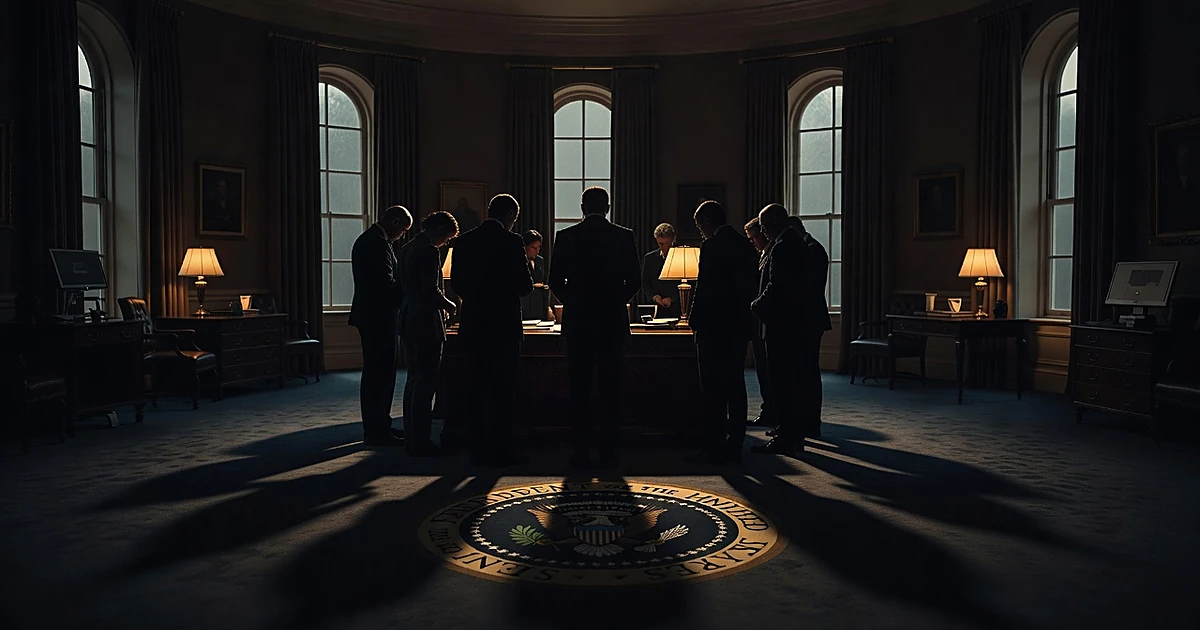
After a 90-minute discussion, the bishops entered the Oval Office. Trump presented commemorative tokens. Then the group prayed together. Denver Archbishop James Golka led the prayer. Twelve bishops took part.
Grob later said the bishops did not know video was being recorded. He said the White House distributed the photographs and video afterward, and that Catholics wrote him worried the prayer looked like a political endorsement.
Those same bishops came to talk enforcement and visas at a moment when Catholic groups have also pushed back on other Trump immigration moves, including birthright citizenship orders targeting birth tourism. Policy fights and prayer photos now sit in the same news cycle.
Grob says a sacred moment was turned into a photo opportunity
In a statement titled “A Public Apology,” Grob described heavy regret over the distress he caused fellow Catholics. He framed the White House’s use of the images as a breach of the prayer itself.
"I feel a heavy sadness, not only over the pain I caused, but also for the fact that something so sacred to a group of religious leaders, prayer to our Heavenly Father, would be manipulated in that way."
Grob also said the bishops arrived in good faith, to ease suffering, build up the common good, and pray with a president, not to stage a partisan tableau.
"We came in good faith to try to work for the betterment of our fellow human beings, to ease their suffering, to build up the common good, and to pray with a president, not to pose for a political photo opportunity to benefit the few."
The Archdiocese of Milwaukee declined further comment when reached by Fox News Digital.
Joensen knew the election was close and still walked in
Des Moines Bishop William Joensen published his own statement Saturday. He did not pretend the calendar was a mystery. He said none of the bishops were unaware the meeting sat on the cusp of a national election. He also said none of them meant to endorse a party or a candidate.
"None of us bishops were unaware that our meeting was on the cusp of a national election. Yet in no way did any of us intend by our involvement to endorse any political party or any individual candidate."
Joensen then turned the blade on himself and on whoever publicized the gathering. He cited Jesus’ warning about sheep among wolves and said he wished he had been more shrewd and less simple.
"That said, in retrospect, I would have done well to be more mindful of Jesus’ admonition: ‘Behold, I am sending you like sheep in the midst of wolves; so be shrewd as serpents and simple as doves’ (Matthew 10:16). I wish I had been more shrewd and less simple, like those who exploited our meeting for partisan political purposes."
That line treats publicity as exploitation. It does not erase a basic fact: adult bishops chose a White House meeting weeks before an election, then recoiled when cameras did what cameras do in the Oval Office.
Golka led the prayer and called it what Catholics do
Archbishop Golka, who led the prayer, gave a different emphasis in an interview with Denver Catholic. He said he had mixed feelings going in. He saw a chance to raise Church issues. He also knew some people would be upset if the meeting became public.
He originally thought the session would stay private. He still understood it could be shared and used for politics. After prayer, he decided the older Catholic habit mattered more than the risk of optics.
"But as I prayed about it, I thought that this is what Catholics do."
Golka added that Catholics pray for people whether they agree or disagree, and that they pray for the country and its leaders. That is the historic posture: engage the office, pray for the man, argue the policy without turning every handshake into a purity test.
Faith and public life keep colliding in this administration in other rooms as well, from JD Vance’s wide-ranging faith interview to closed-door talks with religious leaders on life issues.
Rogers answers with Trump’s Catholic record, not a retreat
Rogers did not litigate every claim about consent or camera angles in the quoted reply. She answered with results. She told Fox News Digital that no president has done more for Catholic Americans, and she listed the reasons.
"There has never been a greater president for Catholic Americans than President Trump, and his strong record proves it: he stopped the weaponization of the federal government against Christians, proudly defended and expanded our religious rights, pardoned pro-life activists, stopped the chemical mutilation of our nation’s children, and protected parents’ rights."
That is the administration’s case in plain terms. Prayer in the Oval Office fits a president who has treated religious liberty as a governing priority, not a seasonal talking point. The same coalition has heard Justice Department leaders tell faith audiences they intend to lock in the Dobbs abortion ruling as lasting nationwide policy.
Disagreement on immigration never required demonization
Catholic leaders still clash with the administration on parts of immigration policy. In February 2025, the U.S. Conference of Catholic Bishops sued over the suspension of refugee resettlement funding. That dispute is real. It is also not a license to treat every shared prayer as a dirty trick.
Bishop Robert Barron, a member of Trump’s Religious Liberty Commission, made a related point in a May interview with Fox News Digital. He warned the Church against a habit of demonizing the Trump administration even when bishops disagree on policy.
"What I don't want from the church is a kind of demonization of the Trump administration."
Barron’s caution sits uneasily beside Grob’s language of manipulation and Joensen’s charge of partisan exploitation. Bishops can object to a photo. They can regret the optics. Turning a requested White House meeting into evidence of bad faith is a different move, and a weaker one.
Trump’s broader record keeps giving his defenders concrete examples to cite, from religious-liberty fights to large-scale commitments such as the push toward Camp Lejeune settlements near $1 billion for Marines and families harmed by toxic base water. Results travel farther than apologies for being seen praying.
Midterms raise the temperature; they do not revise the duty
Grob timed his complaint to the election calendar, less than two weeks out. Joensen admitted the bishops knew that calendar when they walked through the door. Golka said praying for leaders is simply what Catholics do.
Those three statements cannot all carry equal weight if the real grievance is that a president allowed a public prayer to be public. The White House hosted a policy meeting, the bishops entered the Oval Office, tokens were presented, and a prayer was offered. In Washington, that sequence does not stay sealed in a sacristy.
Readers can hold two thoughts at once. Catholic leaders retain every right to fight the administration on refugee funding and enforcement details. They also chose a high-profile meeting near an election, then expressed shock when the images moved through the same political world they entered on purpose.
A president who defends religious rights, protects children from chemical mutilation, and welcomes bishops to pray is not the villain of a photo he was asked to share a room for. The country still needs clergy willing to walk into the arena, and steady enough not to treat the arena as a trap after the amen.