Austin pastor stabbed repeatedly by restaurant waiter who claimed grudge over confession
A Catholic priest in Austin, Texas, is recovering from life-threatening stab wounds after a waiter at a local steakhouse attacked him as he left dinner on June 27, allegedly over a years-long grudge rooted in the sacrament of confession.
Father Jairo Sandoval Pliego, the pastor of San Jose Catholic Church, suffered four to six stab wounds to his back and shoulder area at Bob's Steak and Chop House. One wound nicked a blood vessel. Hospital staff at Dell Seton Hospital told police the injuries would have been life-threatening without medical intervention.
The alleged attacker, 45-year-old Edward Koubek, worked as a waiter at the restaurant. Austin police charged him with aggravated assault with a deadly weapon. After his arrest, Koubek told officers his intent in the moment was "to kill him," the Christian Post reported, citing court documents and a police affidavit.
A hug, then a knife
Father Pliego arrived at the steakhouse that evening with two companions, identified in the affidavit as A. Mondragon and his wife, D. Mondragon. The three sat down for dinner. Koubek, who was working as their waiter, greeted the group and exchanged pleasantries with Pliego.
D. Mondragon told police that Koubek told Pliego he recognized him from church and hugged the priest before the meal. The evening appeared uneventful, until the group stood to leave.
As they headed out, Koubek approached Pliego and began stabbing him in the back. D. Mondragon told investigators she initially thought Koubek had come over to give the pastor a goodbye hug. She did not realize what was happening until she saw the priest being stabbed repeatedly.
A. Mondragon grabbed Koubek and restrained him. Restaurant staff then told Mondragon to release the attacker, at which point Koubek ran toward the back of the building. Austin police, responding to multiple 911 calls at approximately 10:26 p.m., arrived and detained Koubek at the scene. Staff directed officers to Pliego, who was bleeding inside the restaurant.
The violence bears an unsettling resemblance to other recent attacks in religious settings, including an incident in Houston where a church security guard tackled an armed man carrying 100 rounds at Eden Church.
The alleged motive: a grudge over confession
In his post-arrest interview, Koubek laid out a motive that is as specific as it is disturbing. The affidavit states:
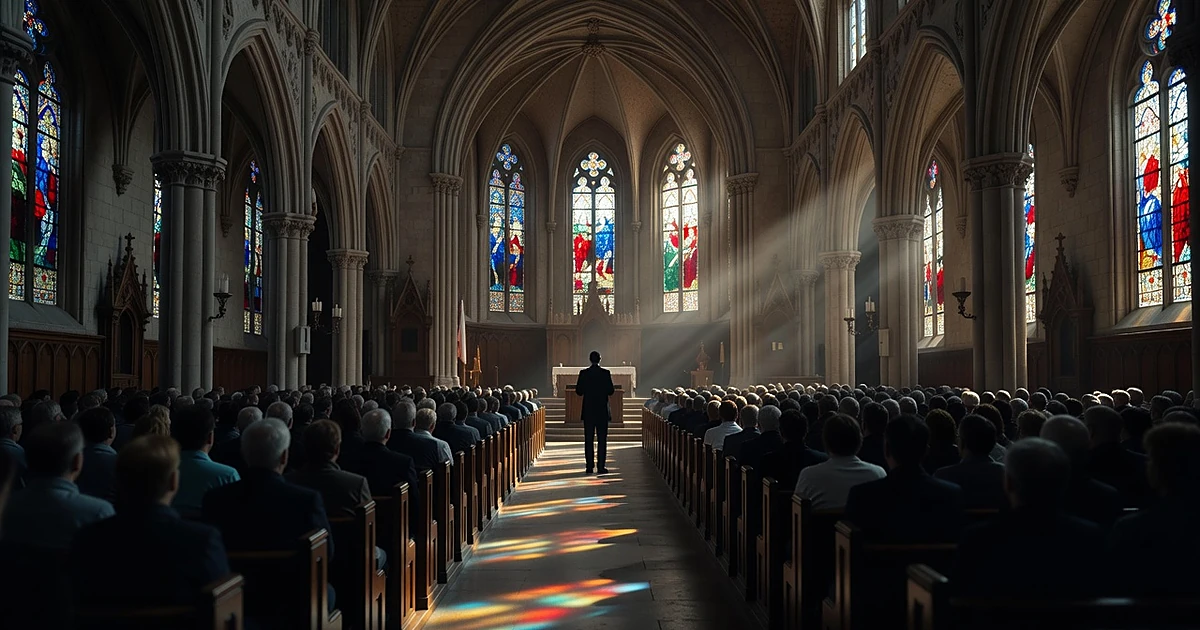
"Koubek explained he had been going to the San Jose Church dating back to 2018. Koubek explained he would go to confession from time to time and believed the victim, Jairo, would snicker after Koubek gave confession."
Koubek told officers he harbored a grudge against Pliego over this perceived mockery. He also told police he was never made aware of an Apparition Chapel, which he believed could have helped him work through personal issues. When he saw Pliego walk into the restaurant where he worked, the affidavit states, "it upset him as he is still holding a grudge against Jairo."
Among his other post-arrest statements: "He is a priest, the guy I stabbed is a priest." And: "He used to make fun of me."
Father Pliego offered a sharply different account. He told police the attack was "totally unprovoked." The affidavit records Pliego's statement that Koubek used to come to the church to pray, but that the pastor had not seen him for several months before the attack.
Whether Koubek's allegation, that Pliego snickered during confession, has any basis in fact remains unaddressed in the available court documents. The claim stands as Koubek's assertion alone. No independent corroboration appears in the affidavit.
Recovery and gratitude
Approximately two days after the stabbing, Father Pliego posted a video message on Facebook addressing his congregation and supporters. His words were measured and grateful:
"My recovery is faster than we anticipated, and it is because of your prayers. I am deeply grateful."
Roughly a week after the attack, Pliego was described as already on the mend, a remarkable turnaround for a man who nearly lost his life to a wound that nicked a blood vessel in his back.
The attack on Father Pliego is part of a broader pattern of violence directed at clergy that should concern every community of faith. In Ukraine, a Russian precision bomb destroyed a Baptist church during a prayer meeting, killing the pastor. In China, authorities have raided house church services and detained pastors and children. The settings differ. The vulnerability of pastors does not.
What the case leaves unanswered
The court documents raise questions that remain open. Koubek's current custody and bond status are not detailed in the available filings. The specific court handling the aggravated assault charge is not identified. Bob's Steak and Chop House has not, as far as the record shows, issued any public statement about the attack that took place on its premises.
Nor has San Jose Catholic Church released a formal institutional statement beyond Father Pliego's personal Facebook message.
The charge, aggravated assault with a deadly weapon, is a serious felony in Texas. But Koubek's own words to police suggest the conduct went beyond assault. He told officers his intent was "to kill him." Whether prosecutors will seek upgraded charges remains to be seen.
Stabbing cases can carry severe consequences. In a separate case, an actor was sentenced to over three decades in prison for stabbing his ex-girlfriend. The facts in Koubek's case, a stated intent to kill, a weapon, multiple wounds, a fleeing suspect, suggest the legal exposure here is significant.
The deeper failure
Set aside the legal questions for a moment and consider what happened in plain terms. A man walked into confession at a Catholic church for years. He convinced himself the priest was mocking him. He nursed that grievance. He stopped attending. Months passed. Then, by chance, the priest walked into the restaurant where the man worked, and the man tried to kill him.
Koubek himself told police he believed an Apparition Chapel could have helped him work through his issues. That is a striking admission. It suggests a man who knew he needed help and felt he didn't get it. It does not excuse picking up a knife.
The witness account from D. Mondragon is especially chilling in its ordinariness. She watched Koubek hug the priest before dinner. She thought the approach at the end of the evening was another friendly gesture. She did not realize what was happening until the priest was being stabbed in the back, repeatedly.
That gap, between the appearance of normalcy and the eruption of violence, is what makes attacks like this so difficult to prevent and so important to prosecute fully. A former youth pastor recently died in jail after being charged in his wife's death years earlier. Violence connected to religious life takes many forms, and none of them should be minimized.
Father Pliego survived because a dinner companion acted fast, because paramedics arrived in time, and because surgeons stopped the bleeding from a nicked blood vessel. He credits prayer. The legal system now owes him, and every pastor who stands before a congregation, a full accounting from the man who told police he meant to kill.
When a priest can't leave a steakhouse without getting stabbed in the back, the question isn't just what went wrong with one man. It's what kind of society lets grievance fester until it turns lethal, and whether the courts will treat it with the gravity it demands.