Kirk family's wrongful death case against Utah Valley University faces a major legal obstacle in state immunity law
Charlie Kirk's family has filed a notice of intent to sue Utah Valley University over alleged security failures that led to his assassination, but legal experts say Utah's unusually broad government immunity statute could block the case entirely.
Attorneys for the Kirk family submitted the filing on Sept. 9, one day before the anniversary of Kirk's death, naming UVU, former university president Astrid Tuminez, and campus police chief Jeffrey Long. The notice alleges that UVU declined additional police officers for Kirk's speaking event, failed to address specific security concerns raised by his team, and had no adequate security plan in place for his visit. Fox News Digital reported that the filing lays out a pattern of institutional negligence the family says cost Kirk his life.
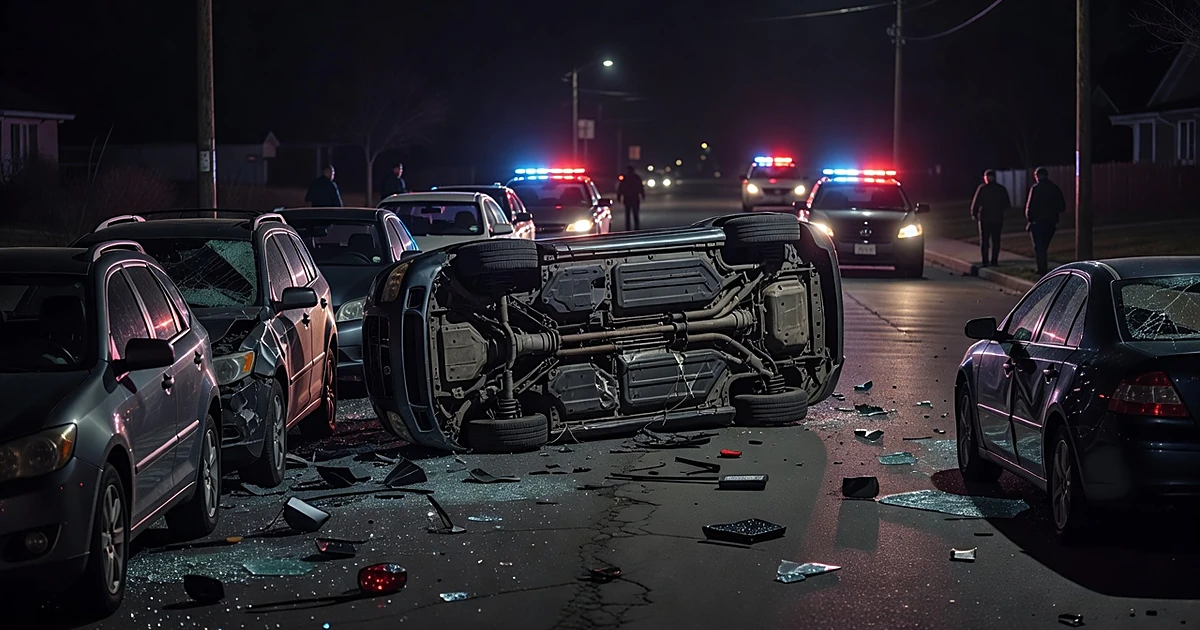
Kirk, who co-founded Turning Point USA in 2012 and built it into one of the most prominent conservative youth organizations in the country, was 31 years old when prosecutors say Tyler Robinson fired a shot from the Losee Center on the UVU campus in Orem, Utah, striking and killing him on Sept. 10, 2025. He left behind his wife, Erika Kirk, and two small children.
The family's case rests on a straightforward argument: UVU knew about specific security vulnerabilities, was warned about them, and failed to act. But two legal experts who reviewed the situation say Utah law gives the university a shield that most states do not.
Utah's immunity statute protects the government even in cases of recklessness
University of Utah law professor Tenielle Brown told Fox News Digital that the Kirk family faces a steep legal climb, not because their evidence is weak, but because Utah's government immunity statute is written so broadly that it covers claims arising from battery, including gunshot wounds. That means even if the family proves UVU acted recklessly, the university may still be immune from liability.
Brown was blunt about the family's prospects:
"Unfortunately, Charlie Kirk's family is going to have a very difficult time prevailing in a wrongful death case in Utah. And that's because Utah's government immunity statute is phrased in such a way that says even if the state and UVU were reckless, they retain immunity in cases that arise out of a battery, and that would include gunshot wounds."
Under Utah law, government entities and their employees enjoy broad immunity from lawsuits tied to a long list of circumstances, assault, battery, false imprisonment, malicious prosecution, and civil rights violations among them. The statute also shields the government when it comes to the performance or failure to perform discretionary functions. For the Kirk family, that language is the central obstacle.
A related legal analysis of the Kirk family's wrongful death effort has explored the same tension between the family's evidence and the statute's broad protections.
Neama Rahmani, president of West Coast Trial Lawyers, echoed Brown's assessment. Rahmani, who has handled lack-of-security cases against government entities, said the fundamental difficulty is holding police or a state institution responsible for another person's criminal act.
"They are tough because you are trying to hold the police or city, county or state responsible for someone else's criminal actions."
Kirk's security team warned UVU police about rooftop access before the shooting
Despite the legal headwinds, the family's filing does contain what Rahmani described as potentially powerful evidence. Before Kirk's appearance at UVU, organizers from Turning Point USA flagged a specific concern to campus police chief Jeffrey Long: rooftop access to the Sorenson Center, a building situated close to where Kirk was scheduled to speak. The Losee Center, where prosecutors say Robinson positioned himself, sits directly west of the Sorenson Center.
Long's response to those concerns, as characterized in the filing, was a brief message to Kirk's security team: "I got you covered."
The Kirk family's legal filing also noted that the risk of a rooftop shooter should have been especially heightened given the attempted assassination of President Trump by a rooftop shooter the previous year, a detail the family's attorneys argue should have made UVU's security planning more rigorous, not less.
Rahmani said that message from Long could matter because it suggests UVU actively assumed a duty to protect Kirk, rather than simply having a general obligation to keep the campus safe.
"That means they're gonna argue that they assume the responsibility to make sure Charlie Kirk was safe, and they failed to do so."
That distinction carries legal weight. Rahmani explained that cases where the government takes on a specific duty tend to be stronger than arguments that the government has a blanket obligation to prevent all crime.
Meanwhile, the criminal case against Tyler Robinson continues to move through the courts. A Utah judge has kept the death penalty in play for Robinson, and prosecutors have named him as the person who fired the fatal shot.
A 2010 case shows how Utah's immunity law has blocked victims before
Brown pointed to a prior case that illustrates the statute's reach. In 2010, Mika Scott, a 19-year-old Utah Valley University student, was raped by Shawn Leonard, a prisoner with a violent criminal record who had escaped from a work-release program. Scott sued Utah County and the Utah County Sheriff's Office, arguing that officials had failed to screen inmates for violence and failed to police the boundaries of job sites to prevent escapes.
Brown described the failures as serious and well-documented:
"They were supposed to screen inmates to make sure that they weren't violent. And then when they went out in the community on the job sites, they were supposed to make sure that they were policing the boundaries so that these inmates couldn't escape and in a really terrible situation."
Scott lost. Despite evidence that the government had been careless, and possibly reckless, the immunity statute blocked her claim because it arose out of a battery. Brown said the outcome was a direct consequence of the statute's unusually broad language.
"And she could have shown carelessness and maybe even recklessness, but because of the government immunity statute and because this claim arose out of a battery, she was not able to prevail against the state."
Brown noted that most states do not grant their governments this level of protection. Utah's statute stands out for covering battery-related claims regardless of how negligent the government's conduct may have been.
The Kirk family's attorney, Brett Parkinson, has described the assassination as "entirely preventable." The Washington Examiner reported that the notice of claim names Utah, Utah Valley University, the UVU Police Department, and other officials as defendants in what amounts to the first formal step toward a lawsuit.
Utah's Supreme Court flagged the problem two decades ago, legislators never acted
The immunity statute's breadth is not a secret, even within Utah's own judiciary. In its 2005 decision in Wagner v. Utah, the state Supreme Court held that civil battery does not require an intent to cause physical or psychological injury, a ruling that further expanded the statute's protective reach. But the court also sent a signal to lawmakers.
Brown described what the justices communicated:
"The court said, it may not be prudent for the state to continue to retain immunity here. And they're kind of signaling to the legislature that the legislature should probably change the statute to allow for suits in cases like Charlie Kirk's."
That was twenty-one years ago. The legislature has not revised the statute. It still says, in Brown's words, "very clearly that you can't sue the state if the claim arises out of a battery."
Brown also raised a structural accountability problem. University presidents and campus police chiefs are not elected officials. The traditional argument for sovereign immunity, that voters can hold government actors accountable at the ballot box, does not apply to people like Tuminez or Long.
"The president of UVU, the campus police, those people are not elected, and so if you were to say sovereign immunity is all about letting people decide whether they're state actors or careless at the ballot box, then you vote them out of office. That doesn't work."
Tuminez stepped down from the UVU presidency in May 2026, after eight years in the role. She and Long are both named in the Kirk family's filing. Sen. Mike Lee has weighed in on the broader case, calling the confession evidence against the murder suspect "damning."
UVU, for its part, offered a brief statement to Fox News Digital: "We are aware of the notice of claim. UVU addresses legal matters consistent with our established processes. Our focus remains on supporting our campus community."
The Kirk family's attorneys did not respond to requests for comment.
A 31-year-old father of two was shot and killed at a public university that was warned about the exact vulnerability the shooter exploited. If Utah's immunity law means the institution that failed him owes his family nothing, then the law itself is the problem, and the legislature that has ignored its own Supreme Court's warning for two decades owns that failure.