Rubio bars all U.S. transactions with International Criminal Court and vows to dismantle it
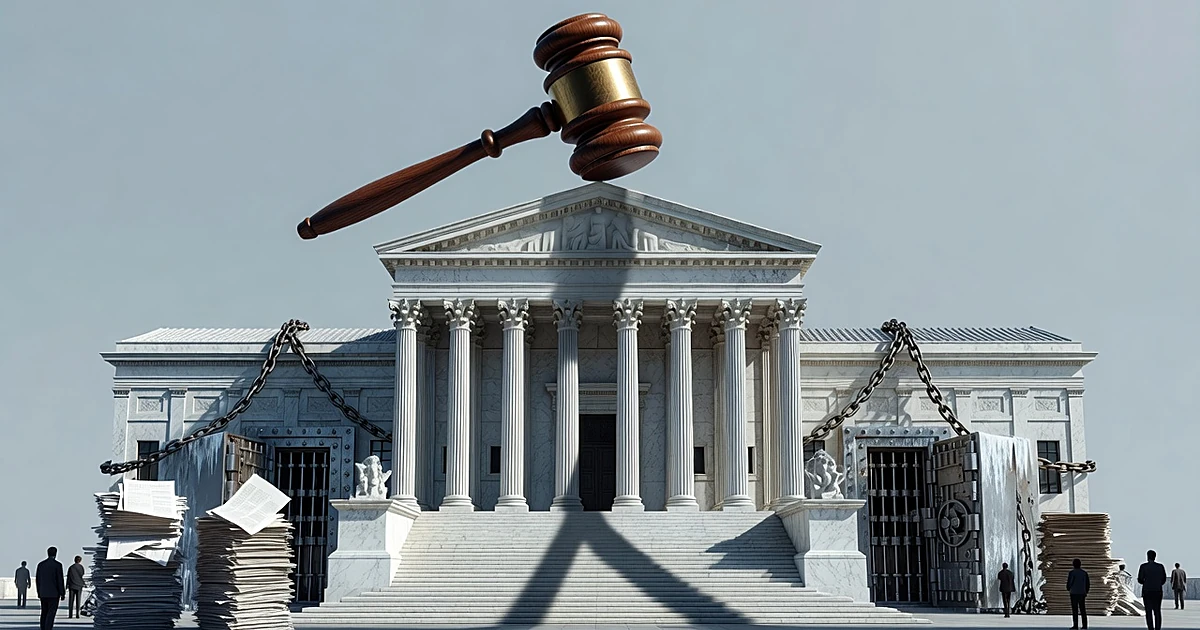
Secretary of State Marco Rubio barred every U.S. transaction with the International Criminal Court and warned that America will dismantle the body piece by piece if prosecution threats against troops, Border Patrol agents, and elected leaders continue.
In a Friday statement from Washington, Rubio said the United States is cutting the court’s economic reach after years of jurisdictional overreach that both parties have rejected. He told allies who rely on American forces for their own defense that they must rein in the tribunal or watch Washington keep applying pressure.
Rubio posted a video on X laying out the new policy in plain terms: America never joined the court, never accepted its authority over U.S. citizens, and will not let global bureaucrats put American service members or border agents in the dock.
The move builds on earlier Trump administration sanctions and marks a sharper break with the idea that an unaccountable court in Europe can sit in judgment of U.S. national-security decisions. Rubio framed the choice as simple: either the ICC ends its threats, or the United States ends the ICC.
Rubio draws a hard sovereignty line
Rubio opened with the bipartisan record. For decades, he said, Republicans and Democrats alike have rejected the claim that the International Criminal Court can prosecute American citizens, military service members, or political leaders.
"For decades now, both Republicans and Democrats have rejected the idea that the International Criminal Court has any power to prosecute American citizens, to prosecute military servicemembers, or political leaders because America never joined the court."
He continued that the country does not need the court and does not want it. Globalist experts an ocean away, he argued, now want the ICC to do more, including cases against Americans defending the country, Border Patrol agents protecting the nation’s borders, and elected leaders charged with national security.
"They want more power, and they want it at the expense of our sovereignty as a nation. And President Trump will never allow the International Criminal Court to prosecute Americans."
His closing message left no ambiguity. The United States and the American people are not subject to the jurisdiction of what he called a fake ICC. Both parties agree on the principle, he said, but only President Trump has shown the resolve to end the threat.
"Either the ICC will end its threats, or we will end the ICC. And we expect our allies, many of whom are part of the ICC and that rely on American service members for their defense, to rein in this rogue court. If they do not, the United States will continue its campaign to dismantle the ICC, piece by piece, until Americans are threatened no longer."
That same week, Rubio had already told Western nations in Athens to join the United States in the unapologetic pursuit of national power over global bureaucratic bodies. The Friday sanctions put concrete economic force behind the speech.
Readers tracking Rubio’s other foreign-policy moves will recognize the pattern: clear red lines, direct pressure, and no apology for putting American sovereignty first.
Years of friction over American troops and allies
The United States refused to sign the 2002 Rome Statute that created the ICC. Britain, Canada, Australia, and most European nations joined. Congress on both sides of the aisle objected to any court that could infringe on American sovereignty.
In 2020, ICC investigators opened an inquiry into American troops allegedly committing war crimes in Afghanistan. Under then-Secretary of State Mike Pompeo, the United States sanctioned two of the prosecutors involved. The Biden administration later reversed those sanctions.
President Trump reopened the fight in February 2025 by sanctioning Karim Khan, then a prosecutor at the ICC, after Khan threatened to jail Israeli Prime Minister Benjamin Netanyahu over alleged war crimes against Palestinians in Gaza. Beginning in June 2025, the administration reimposed sanctions on more than half a dozen ICC officials in a bid to force the tribunal to drop its probes.
This past December, a Trump administration official told Reuters of additional concern: that the ICC might eventually pursue prosecutions of the 47th president, members of his cabinet, or other U.S. officials after a new administration takes office in January 2029. The Friday transaction ban is the broadest step yet to cut off that path.
The same administration has also moved to secure tangible wins abroad, including the release of an American missionary held captive in Niger, underscoring a consistent focus on protecting U.S. personnel and interests.
ICC prosecutor and Senate Democrat push back
ICC deputy prosecutor Nazhat Shameem Khan told Reuters the U.S. sanctions must be condemned. She said they are intended to undermine the rule of law internationally and the work of an independent judicial institution. Khan insisted the court’s investigations and prosecutions will continue across all its situations.
"Our work will continue across all our situations, our investigations and our prosecutions."
Sen. Jeanne Shaheen of New Hampshire, the top Democrat on the Senate Foreign Relations Committee, called the move unfortunate and short-sighted. In an X post she argued the administration was isolating the United States and making it harder to bring perpetrators of atrocities to justice for victims in places like Ukraine and Darfur, rather than focusing on lowering prices for Americans.
Earlier Friday, ex-ICC judge Navanethem Pillay received the Nobel Peace Prize for ensuring that war crimes, crimes against humanity, and genocide are prosecuted. The award landed on the same day Rubio announced the transaction ban, highlighting the gulf between the court’s self-image and Washington’s view of its reach.
Pressure on the Trump administration from Capitol Hill is not limited to Democrats. Senate Republicans have also pressed the White House on stalled arms funding for Taiwan, showing that foreign-policy debates inside the coalition remain active even as the ICC fight unites sovereignty hawks.
What the ban actually does
Rubio’s announcement bars all transactions with the International Criminal Court. The practical aim is to cripple the court’s economic reach and raise the cost of any future attempt to target Americans. Allies who sit inside the ICC system and depend on U.S. military protection were put on notice: rein the court in, or watch the campaign continue piece by piece.
No injuries, arrests, or court closures were reported. The leverage is financial and diplomatic. The message is jurisdictional. American troops who served in Afghanistan, Border Patrol agents holding the line at home, and elected officials making security policy are not, in this administration’s view, fair game for a court the United States never joined.
Rubio’s rising profile in these fights is no accident. Recent polling shows Rubio outperforming other Trump-aligned figures in early 2028 matchups, and the ICC confrontation gives him a clear sovereignty lane.
President Trump has also kept a sharp eye on overseas risks that could land on American desks, recently flagging a Siberia lab death as a problem for Russia as dangerous microbes grow stronger. The through-line is the same: American leaders intend to decide American exposure, not outsource it.
The United States has now told the International Criminal Court, and the allies who enable it, that threats against American troops, border agents, and elected leaders will be met with sustained economic pressure until those threats stop. Sovereignty is not a talking point. It is the policy.