Top military commanders formally opposed extending Iran war deployments, classified orders book reveals
Senior U.S. military leaders have formally warned Secretary of War Pete Hegseth that six months of sustained operations against Iran are degrading homeland defense and depleting critical weapons stockpiles, a rare institutional pushback now spilling into public view.
The chiefs of four-star commands overseeing Europe, the Pacific, and Latin America all logged formal objections in the Aug. 14 edition of the Secretary of War Orders Book, a classified document published twice a month that tracks the worldwide availability of American warships, aircraft, personnel, and weapons systems. The Washington Post broke the story Saturday, citing sources familiar with the assessment who characterized the overall tenor of the military's warning in three words: "too much for too long."
A "non-concur" in the orders book does not block an order. Commanders who log one still carry out their directives. But the designation is a formal, on-the-record objection, a signal that the officer believes the mission as currently structured poses unacceptable risk. When four separate combatant commands and the Chief of Naval Operations all file one in the same edition, it amounts to the closest thing the uniformed military has to a collective vote of no confidence in the operational tempo.
Destroyer readiness has cratered to roughly one-quarter of the fleet
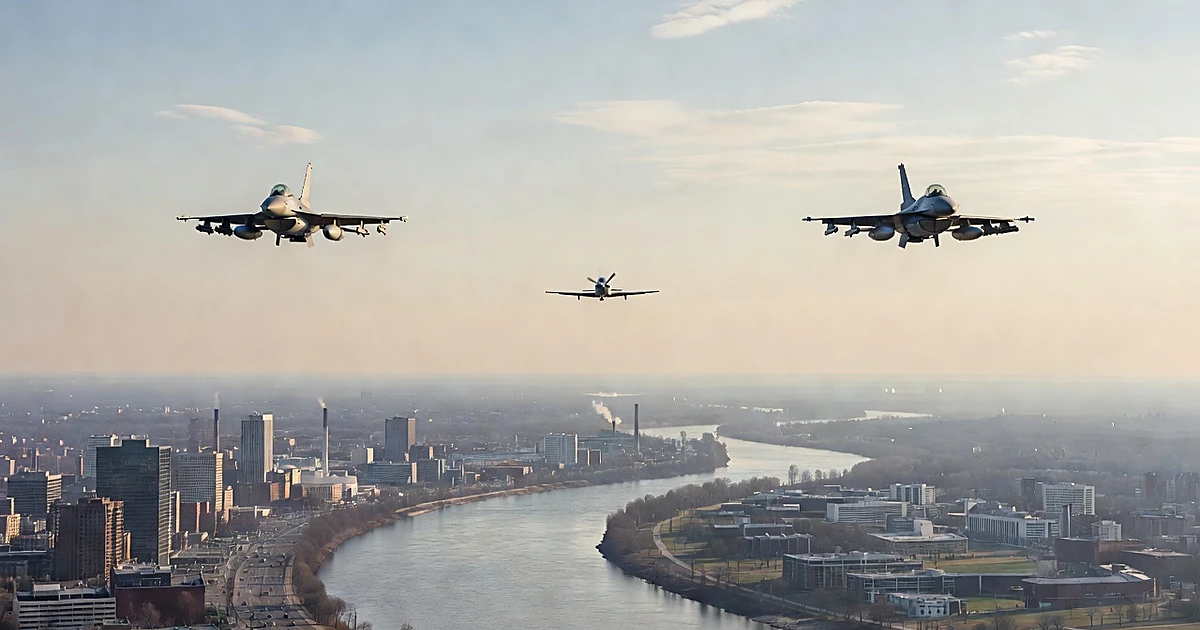
The war began Feb. 28 with U.S. and Israeli airstrikes on Iran. President Trump has kept more than 50,000 Central Command troops on alert for months while pressing Tehran to reopen the Strait of Hormuz and accept American conditions for ending the conflict. The Aug. 14 orders book directs some Middle East forces to remain through September and others into 2027.
That timeline is what triggered the pushback. Adm. Daryl Caudle, the Chief of Naval Operations, told Hegseth the Navy cannot sustain its current pace without a defined end date. At a recent public event in Norfolk, Virginia, Caudle acknowledged the strain openly.
"Very challenging for our sailors... but the enemy gets a vote."
Caudle also said he "pushes back hard" on the extensions, a notable public admission from a sitting CNO. The numbers back him up: only about one-quarter of the destroyer fleet is currently ready to deploy, a sharp drop from prewar levels.
Adm. Samuel Paparo, the U.S. Pacific Command chief, filed his own non-concur. Paparo objected to continually supplying an aircraft carrier strike group and destroyers to the Iran fight, assets that would otherwise patrol the Western Pacific, where China's navy has been expanding operations for years. Every ship sent to the Middle East is a ship not watching the Taiwan Strait.
Hegseth's tenure at the Pentagon has already produced friction with the brass on multiple fronts. He halted Army promotions for four officers linked to generals he removed, and his willingness to override institutional preferences has drawn both praise from the administration's allies and resistance from career military leaders.
Europe and Latin America commanders say homeland defense is eroding
The non-concurrences were not limited to the Navy and Pacific Command. Commanders of U.S. European Command and U.S. Southern Command both warned Hegseth that lending ships and surveillance aircraft to Central Command has degraded their own homeland-defense missions. Those commands are responsible for monitoring Russian military activity near NATO's borders and tracking drug trafficking and migration routes in the Western Hemisphere, missions that do not pause because Washington is focused on Tehran.
Army and Air Force leaders took a different posture. Both service chiefs signed off on the extensions but flagged what the reporting describes as significant risks. Among those risks: Patriot air-defense crew deployments are slated to be extended further, and the interceptor stockpile has been depleted by both the Iran war and previous transfers to Ukraine.
The 82nd Airborne Division mobilized 2,000 soldiers in March and is expected to remain in the region at least through September, with further extensions anticipated. The division would be central to any ground invasion of Iran, a scenario that remains on the table as long as Tehran refuses to meet American demands.
Earlier this summer, Hegseth also removed the top Army commander in Europe, a decision that reshaped the command structure at a moment when European theater assets were already being siphoned to the Middle East.
A collapsed ceasefire and reimposed blockade widened the strain
The war's trajectory explains why the military's patience is fraying. A June memorandum of understanding, the terms and parties of which remain unclear in public reporting, briefly offered a path toward de-escalation. But Iranian attacks on commercial shipping collapsed that agreement, and Washington reimposed its naval blockade of Iranian ports in early August. A Congressional Research Service report posted this month documented the reimposition.
That blockade demands a constant naval presence. Destroyers, carrier strike groups, and surveillance aircraft all have to stay on station to enforce it. Each extension order compounds the maintenance backlog, burns through crew rest cycles, and pushes the next deployment further into the future for units waiting at home.
Pentagon spokesman Sean Parnell, in a statement to the Post, said force-commitment decisions rest on "current threat assessments, presidential priorities, and advice from the Joint Chiefs chairman and combatant commanders." He added that the Department of War "does not discuss internal operational processes," including the orders book or "specific concurrences, non-concurrences, or risk assessments."
The Trump administration has also disputed reports of munitions shortages, though the scope of that dispute remains unspecified in available reporting.
Hegseth's broader reform agenda at the Pentagon has generated its own set of legal and bureaucratic battles. A federal judge recently voided one of his directives on supply-chain policy, and his decision to cut the Pentagon's recognized faiths list from 211 to 31 drew sharp criticism from religious-liberty advocates. Those fights have consumed political capital at a moment when the secretary needs buy-in from the same uniformed leaders now filing formal objections to his war orders.
What the non-concurrences do, and don't, mean
Filing a non-concur is not insubordination. Every commander who logged one will still execute the orders in the Aug. 14 book. But the designation creates a paper trail. If destroyer readiness continues to fall, if a Patriot battery runs dry at the wrong moment, if a crisis erupts in the Pacific or along the southern border while assets are tied up in the Persian Gulf, the orders book will show that the responsible commanders objected in advance and were overruled.
That paper trail matters in Washington. It shifts accountability upward, to the secretary and to the president who set the policy. And it gives Congress a documented basis for oversight hearings if the war drags deeper into 2027 without a resolution.
Hegseth has also used his authority to reward frontline service, awarding upgraded valor medals to three Abbey Gate Marines on the fifth anniversary of the Kabul airport attack, a gesture that earned goodwill with rank-and-file troops even as tensions with senior leaders mount.
The open questions are substantial. How depleted are Patriot interceptor stocks? What specific conditions has Trump set beyond reopening the Strait of Hormuz? How many anonymous sources described the orders book to the Post, and what positions do they hold? None of those answers are public yet.
What is public is a set of facts that should concern every taxpayer who expects the military to be ready for more than one problem at a time: four combatant commands objecting on the record, a destroyer fleet at roughly 25 percent readiness, depleted missile stocks, and an orders book that stretches some deployments into 2027 with no defined end date.
Wars have a way of consuming everything a nation feeds them. The generals just put it in writing.